Prefix understanding Normal Worksheets for Ages 4-8
3 filtered results
-
From - To
Explore our engaging "Prefix Understanding Normal Worksheets" designed for children ages 4-8. These resources introduce young learners to the concept of prefixes, enhancing their vocabulary and literacy skills in a fun and interactive way. Featuring easy-to-follow activities, our worksheets help children identify and use common prefixes, promoting confidence in reading and comprehension. Perfect for teachers and parents alike, these user-friendly printables provide clear instructions and visually appealing designs to keep kids motivated. Support your child's language development with our expertly crafted worksheets, fostering a strong foundation for future learning. Start your prefix adventure today!
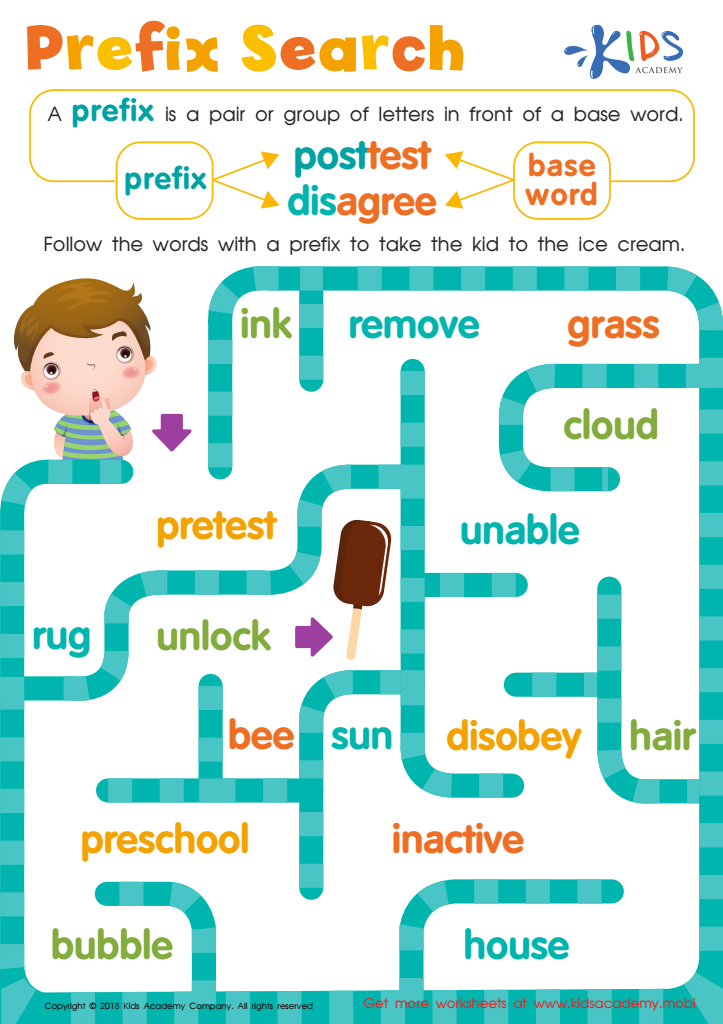
Reading: Prefix Search Worksheet
 Assign to My Students
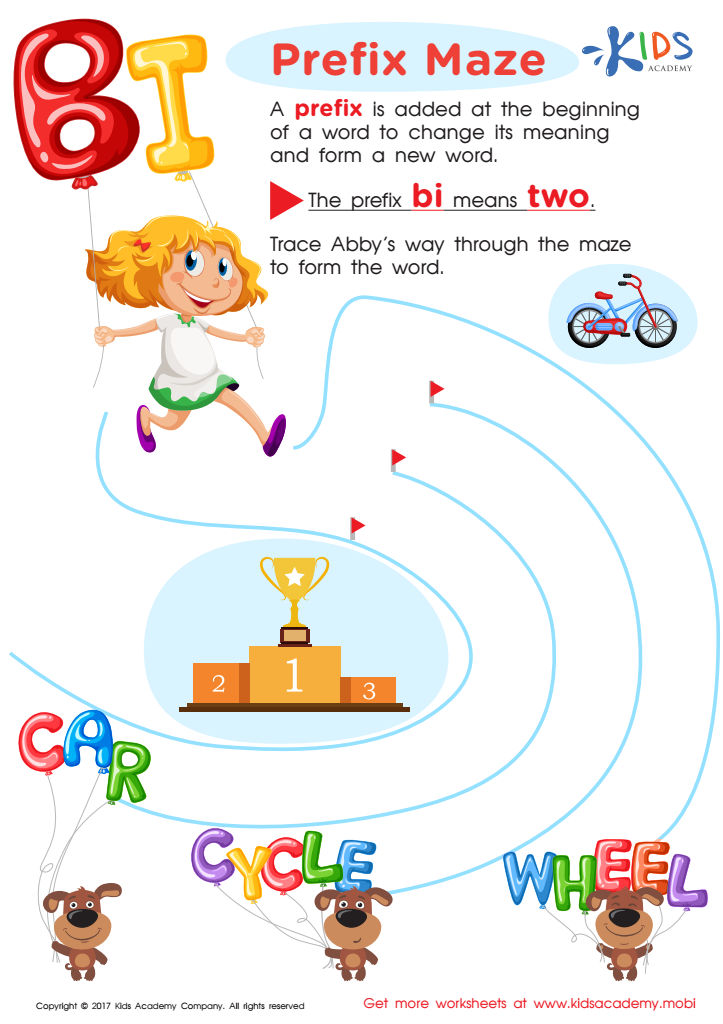
Prefix Bi Words Worksheet
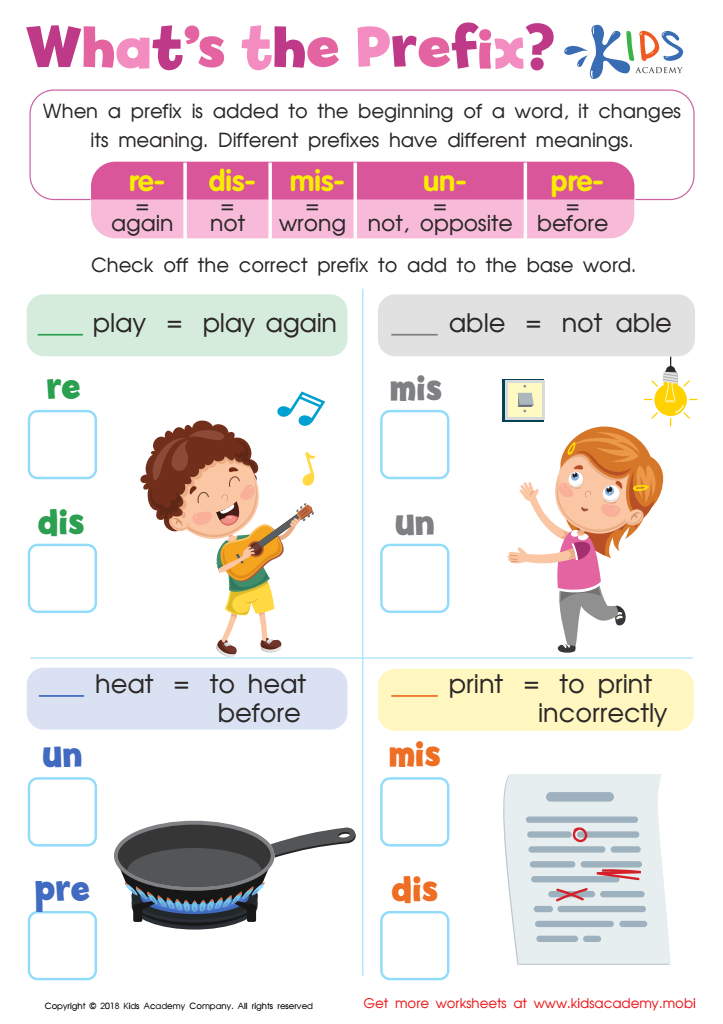
Reading: What Is the Prefix Worksheet






Understanding prefixes is an essential component of language development for children ages 4-8. At this stage, children are beginning to explore the structure of words, and prefixes provide a great starting point for vocabulary expansion. Prefixes help children decipher the meanings of unfamiliar words, promoting comprehension skills crucial for reading and communication.
Firstly, when children learn prefixes, they gain the ability to determine the meanings of new words based on familiar parts. For example, understanding that "un-" means "not" helps them grasp words like "happy" versus "unhappy." This skill not only boosts literacy but also encourages a love for learning and reading.
Secondly, prefix awareness fosters critical thinking. Children learn to manipulate language, enhancing their creative expression. Teachers and parents can leverage this by engaging children in games and activities that incorporate prefix usage, making learning dynamic and exciting.
Moreover, developing a strong foundation in language early on can significantly impact their academic success. A vocabulary-rich environment stimulates curiosity and effective communication skills, preparing children for future learning.
In conclusion, fostering an understanding of prefixes is vital for enhancing vocabulary, comprehension, and overall communication skills, making it deserving of attention from both educators and parents.








