Recognizing shapes Normal Worksheets for Ages 4-8
3 filtered results
-
From - To
Unlock your child's potential with our "Recognizing Shapes Normal Worksheets for Ages 4-8" from Kids Academy. Tailored for young learners, these engaging, educational resources help children master essential shape recognition skills. Filled with creative activities and vibrant illustrations, our worksheets ensure learning is fun and effective. Kids will identify, trace, match, and color various shapes, honing their fine motor skills, spatial understanding, and cognitive development. Perfect for home or classroom use, our worksheets align with early education standards, supporting a strong foundation in math and geometry. Boost your child's confidence and curiosity with Kids Academy's expertly designed shape recognition worksheets.
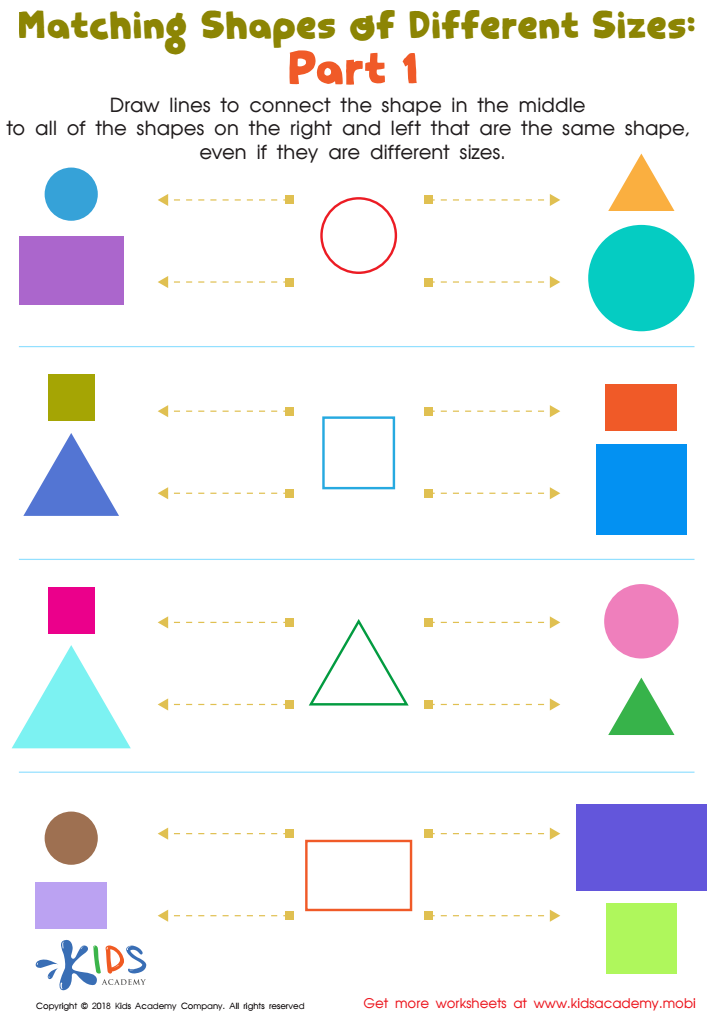
Geometry: part 1 Worksheet
 Assign to My Students
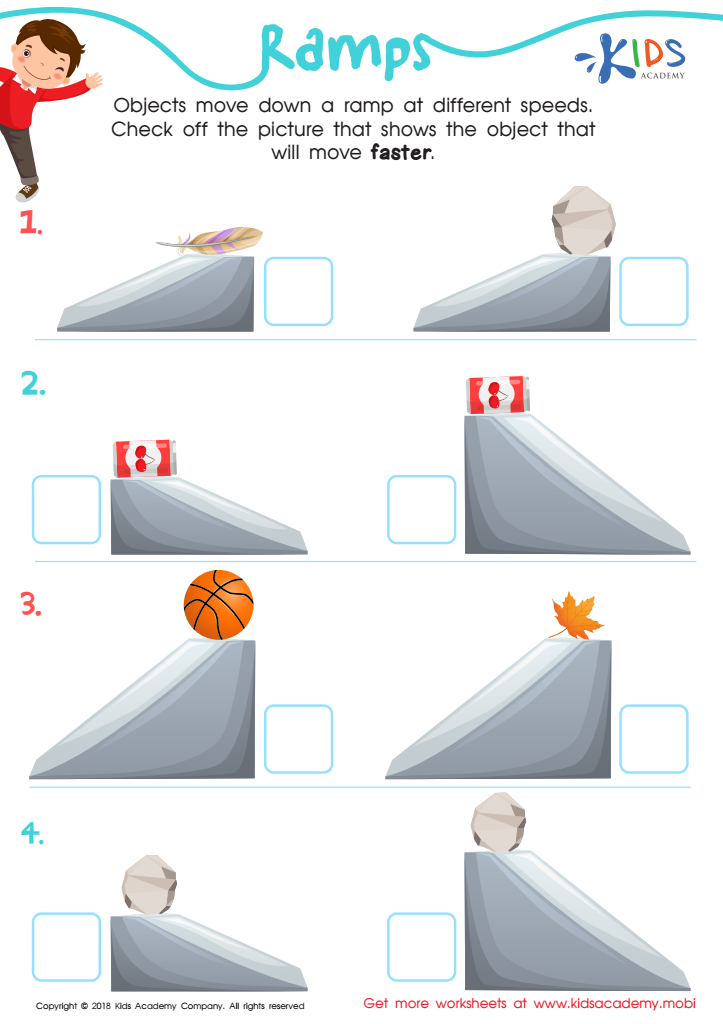
Ramps Worksheet
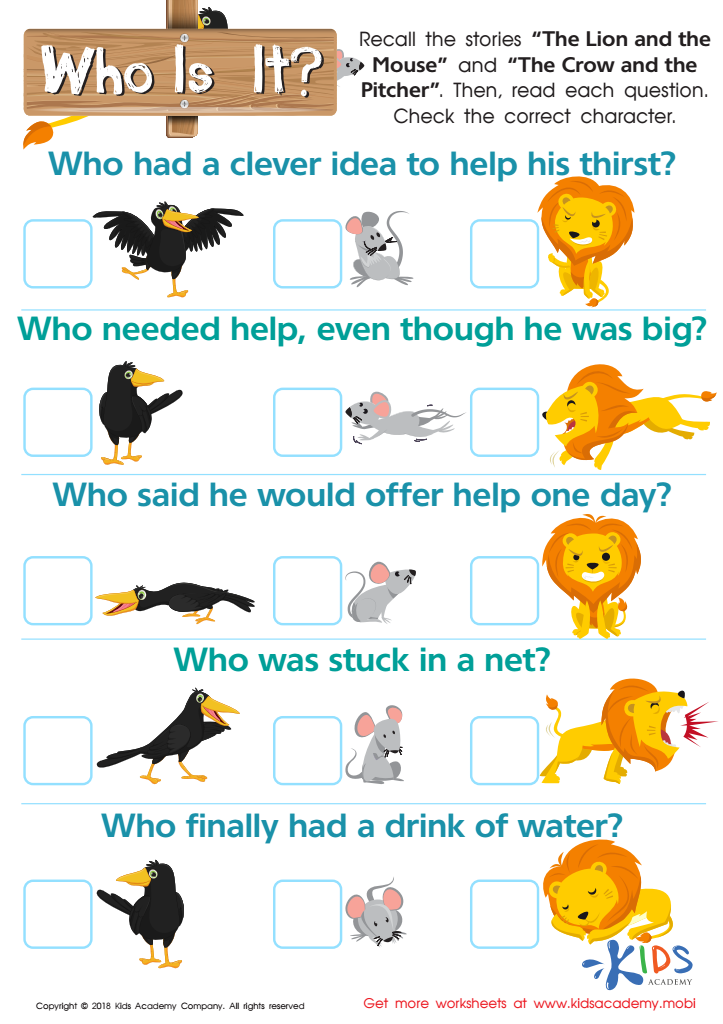
Who Is It? Worksheet








Recognizing shapes is a fundamental aspect of early childhood development, crucial for children aged 4-8. For parents and teachers, fostering an understanding of shapes goes beyond simple identification; it forms the foundation for numerous cognitive and educational benefits.
Firstly, shapes are integral to spatial reasoning, an essential skill in understanding and navigating the world. When children recognize and differentiate shapes, they improve their spatial awareness, which is critical in activities like reading and math. For instance, distinguishing between shapes helps in recognizing numbers and letters, crucial for literacy and numeracy skills.
Moreover, recognizing shapes can enhance problem-solving abilities. By categorizing and relating shapes, children develop logical thinking and pattern-recognition skills, fundamental for mathematics and science. Handling shape-related tasks also nurtures fine motor skills and eye-hand coordination, important for daily activities and more complex tasks later in life.
Shapes also offer a gateway to creativity and expression. Artistic endeavors, like drawing and crafting, often begin with simple shapes, giving children a medium to explore their creativity and build confidence.
Parents and teachers play a critical role in this developmental stage by incorporating shape recognition in playful learning activities. Encouraging children to explore and identify shapes in their environment can transform mundane interactions into enriching educational experiences, setting a robust foundation for their future learning journey.








