Understanding multiplication Normal Worksheets for Ages 4-8
3 filtered results
-
From - To
"Understanding Multiplication Normal Worksheets for Ages 4-8" are designed to introduce and develop essential multiplication skills in a simple, engaging manner. These worksheets use fun, interactive exercises to build a solid foundation for young learners. Through colorful visuals, clear instructions, and practical problems, children gradually grasp the concept of multiplication, making math enjoyable and accessible. Tailored to individual learning paces, each worksheet aims to foster confidence and a love for learning. Perfect for both classroom and home use, these resources provide early grade students with the tools they need to succeed in their mathematical journey.
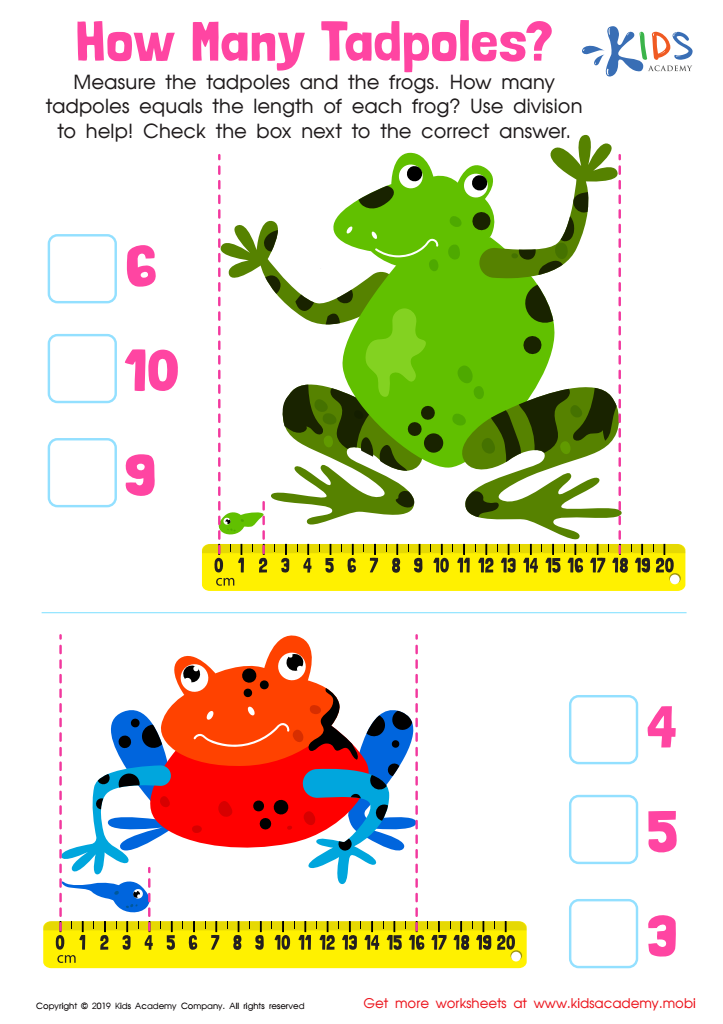
How Many Tadpoles Worksheet
 Assign to My Students
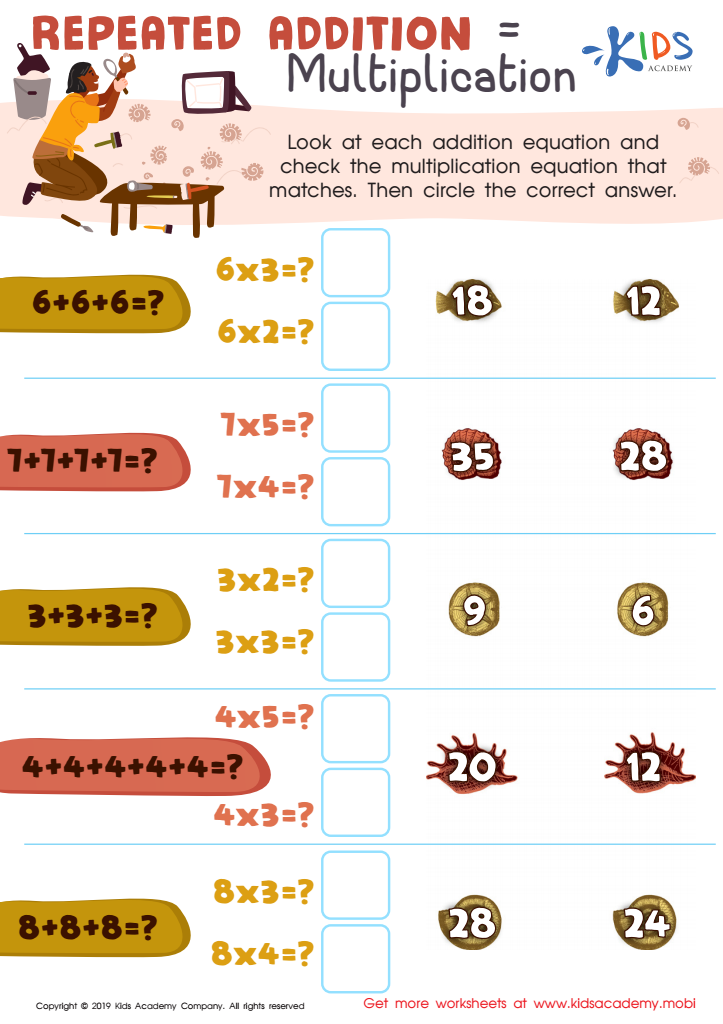
Repeated Addition = Multiplication Worksheet
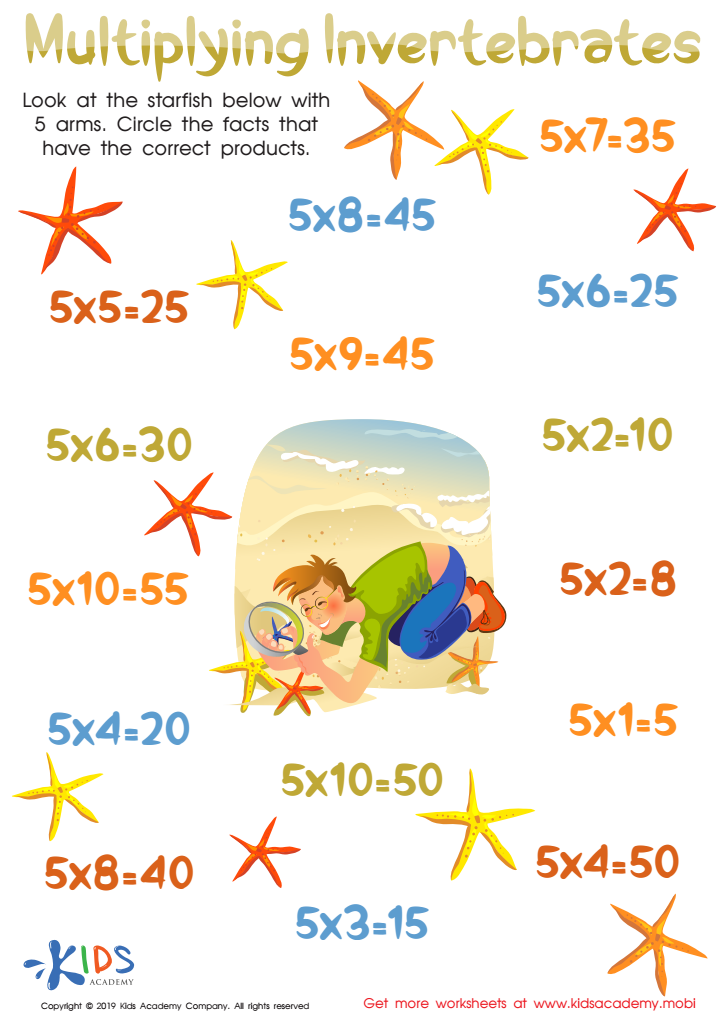
Multiplying Invertebrates Worksheet








Understanding multiplication at an early age, particularly for children aged 4-8, is vital for their overall mathematical development. Introducing multiplication concepts early provides a strong numerical foundation, helping kids grasp more complex mathematical operations as they progress through their education. First, comprehension of multiplication enhances number sense, enabling children to see patterns and understand relationships between numbers. This not only boosts their confidence but also makes math more engaging and less intimidating.
Parents and teachers can introduce multiplication through playful, everyday activities. For instance, arranging groups of objects—like toys or fruits—into sets and counting the total helps kids visualize how multiplication operates as repeated addition. This practical approach demystifies multiplication, transforming it from an abstract concept into something tangible and relatable.
Moreover, early multiplication skills foster critical thinking and problem-solving abilities. As children learn to break down multiplication problems and understand the logic behind them, they develop strategic thinking that extends beyond math into other subjects and everyday situations. By ensuring children are familiar with multiplication early on, parents and teachers facilitate a smoother transition to higher-level arithmetic. This early intervention can prevent math anxiety, encourage a positive attitude towards learning, and lay the groundwork for future academic success.








