Understanding timelines Normal Worksheets for Ages 4-8
3 filtered results
-
From - To
Explore our engaging "Understanding Timelines Normal Worksheets" designed specifically for children ages 4-8! These worksheets provide a fun and interactive way for young learners to grasp the essential concept of timelines. With vibrant illustrations and relatable examples, kids will develop their sequencing and comprehension skills as they learn to organize events chronologically. Perfect for enhancing critical thinking and story-telling abilities, our worksheets cater to various learning styles. Encourage your child to visualize their past, present, and future effectively! Download our easily accessible worksheets today and foster a love for learning while building foundational skills that will benefit them for years to come.
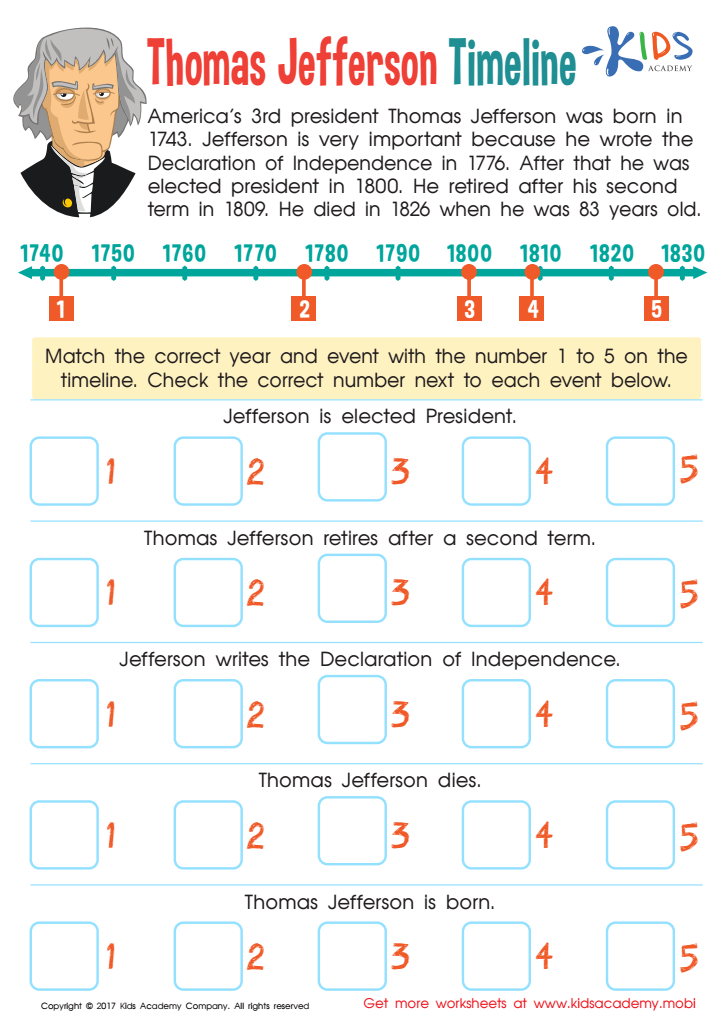
Thomas Jefferson Timeline Worksheet
 Assign to My Students
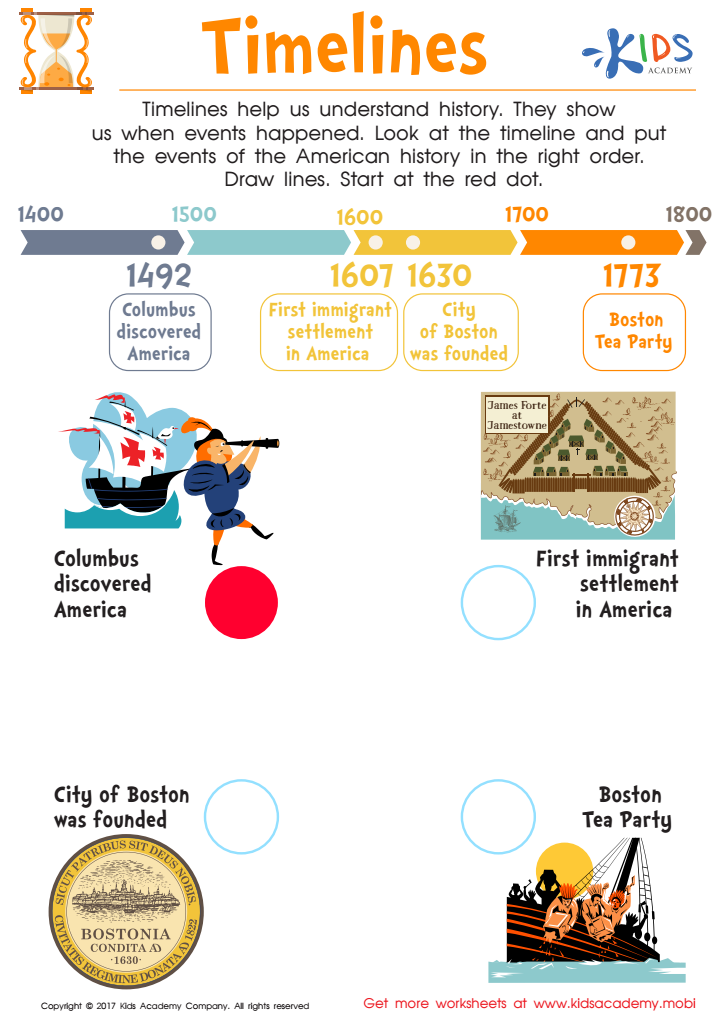
American History Timeline Worksheet
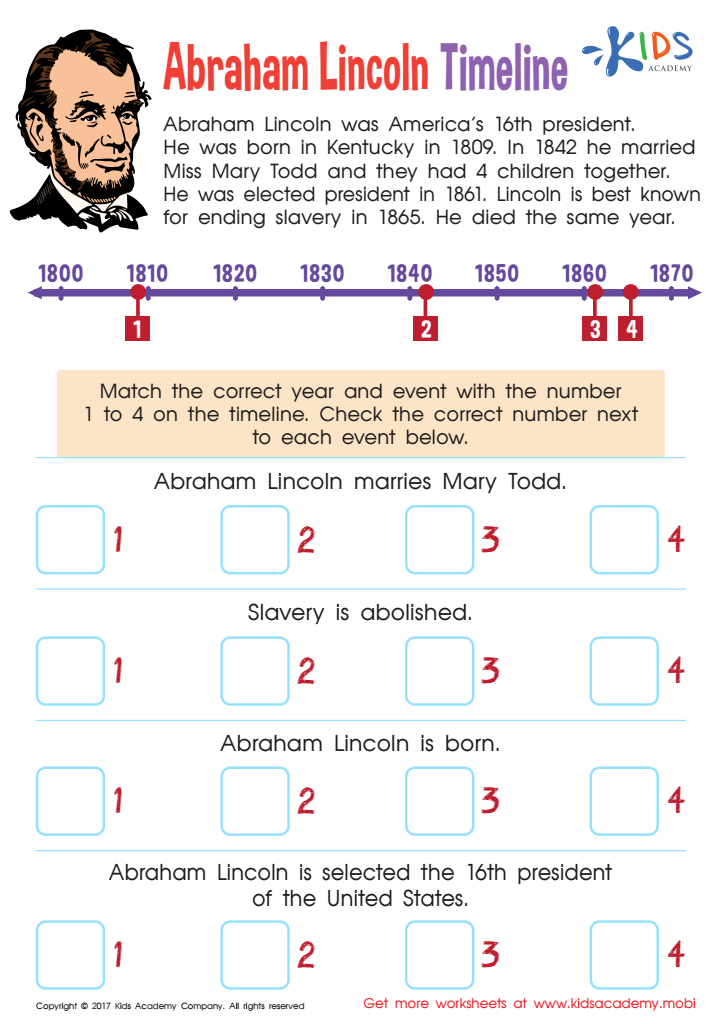
Abraham Lincoln Timeline Worksheet







Understanding timelines is essential for children aged 4-8, and parents and teachers should prioritize this learning for several reasons. First, comprehension of timelines helps children organize their thoughts and understand sequential events, which is foundational for cognitive development. At this age, kids are beginning to grasp concepts of past, present, and future, and timelines provide a concrete visual aid to help them process these ideas.
Additionally, mastering timelines fosters critical thinking skills. Children learn to differentiate between what happened first, what comes next, and where events fit in a broader context. This skill is crucial for developing narrative skills, as they can better describe stories and experiences.
Furthermore, talking about timelines can strengthen emotional intelligence. By connecting events to feelings and experiences, kids learn empathy as they better understand others’ perspectives. Lastly, timelines can cultivate an interest in history and culture, sparking curiosity about how various events interconnect.
Ultimately, engaging with timelines not only enhances academic skills but also enriches children’s understanding of the world around them, setting a foundation for lifelong learning and cognitive growth. Empowering children with these skills at an early age equips them for future complexities in both learning and life.








