
Word Formation Normal Worksheets for Ages 4-8
3 filtered results
Difficulty Level
Grade
Age
-
From - To
Subject
Activity
Standards
Enhance your child's language skills with our engaging "Word Formation Normal Worksheets for Ages 4-8." Designed for young learners, these worksheets foster vocabulary growth and word-building proficiency through fun, interactive activities. By matching letters, forming new words, and recognizing patterns, children develop essential literacy skills in an enjoyable way. Perfect for at-home practice or classroom use, our expertly crafted worksheets adapt to varying difficulty levels, ensuring progress tailored to your child's pace. Empower your little one's learning journey with these creative tools and watch their confidence soar as they master the art of word formation!
Favorites
With answer key
Interactive
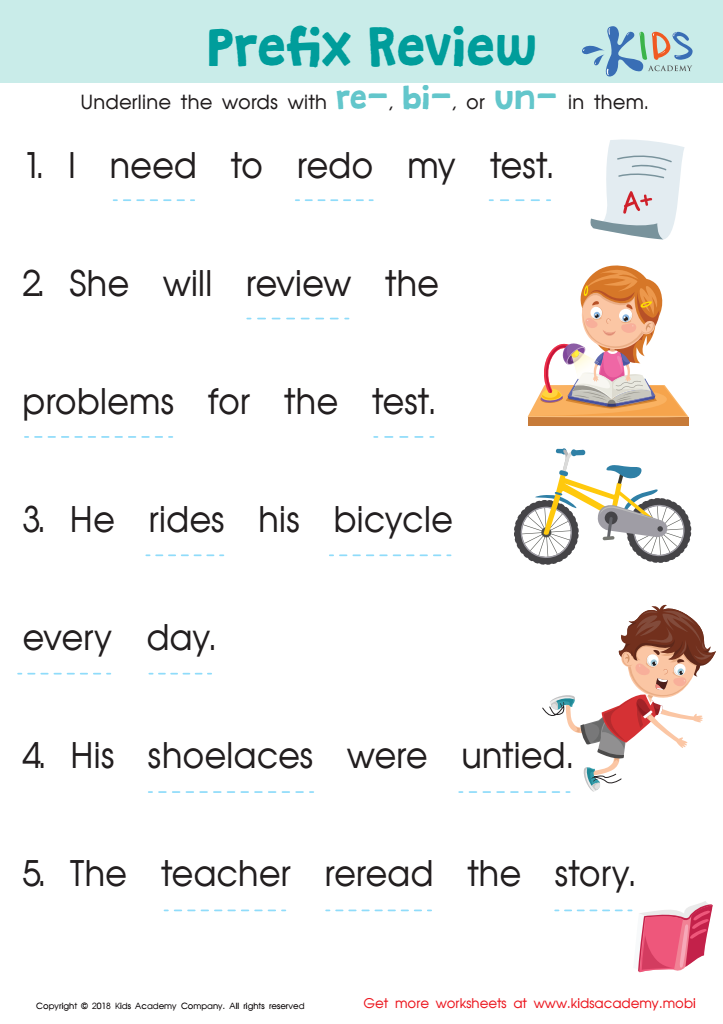
Prefix Review Worksheet
Learning prefixes is key for effective communication. Help your child master re-, bi-, and un- with a Kids Academy worksheet. Ask them to go through each sentence, underlining words with one of the prefixes. This will help them appreciate how prefixes alter the meaning of a root word.
 Assign to My Students
Prefix Review Worksheet
Worksheet
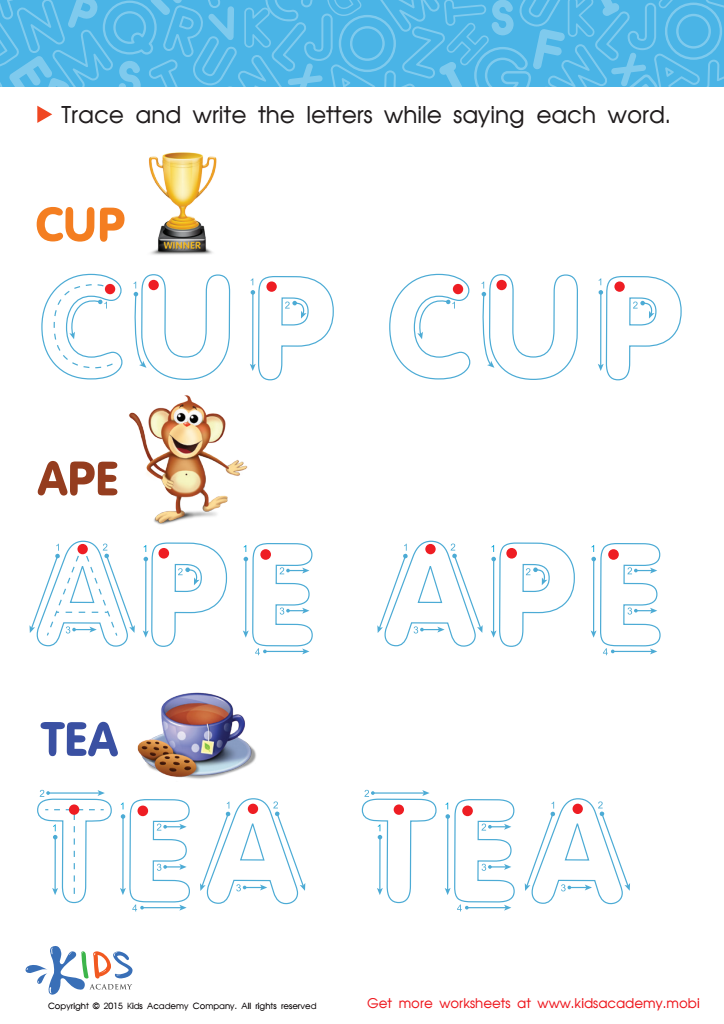
A Cup, an Ape and Tea Spelling Worksheet
Check out Kids Academy's new English vocab worksheet! You'll find three lines with three words each. Practice your pronunciation and writing by writing them one by one. We have more free spelling word worksheets on our website, so download and practice today!
A Cup, an Ape and Tea Spelling Worksheet
Worksheet
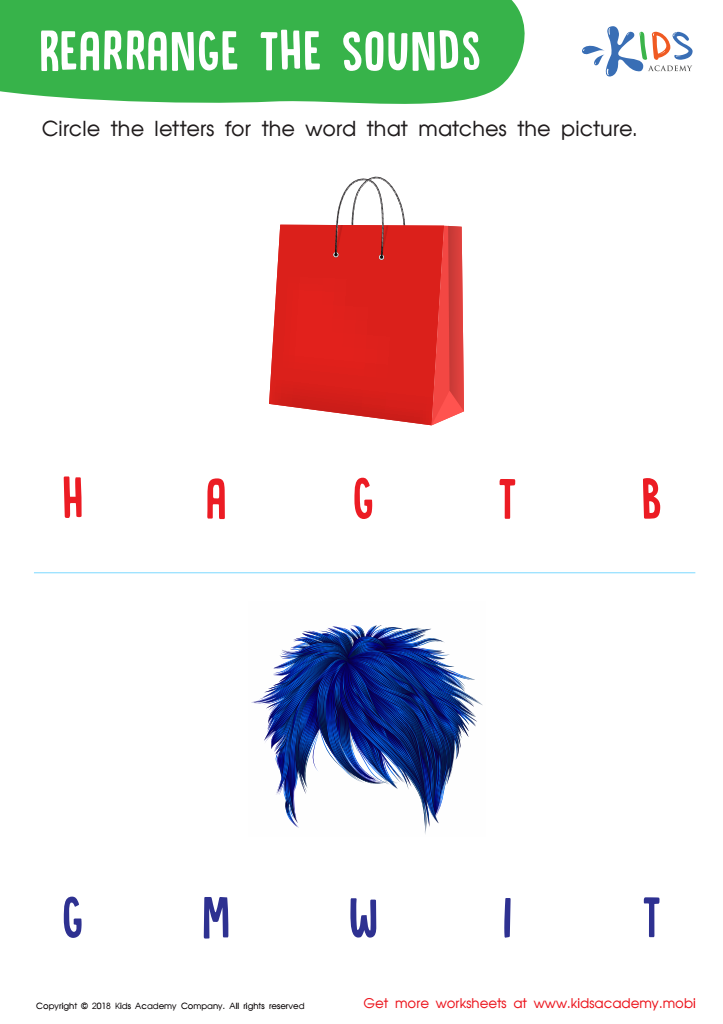
Rearrange the Sounds Worksheet
Ask students if they can identify the objects in the worksheet and spell the words. Guide them to find and circle the letters that match the picture. This exercise should be easy-peasy for advanced spellers.
Rearrange the Sounds Worksheet
Worksheet
Join Kids Academy for Free
Who is primarily going to use this learning content?







Word Formation Normal is the typical developmental progression of language skills in children between the ages of 4 to 8. It encompasses a child’s expanding vocabulary, understanding of word meanings, grasp of grammar, and ability to form coherent sentences. Parents and teachers should be deeply invested in this development for several crucial reasons:
First, strong word formation skills are fundamental to literacy. Children who can effectively understand and create words are better equipped to decode written language and eventually read with fluency. This capability serves as a critical foundation for all future learning, as reading proficiency is a key predictor of academic success.
Second, word formation contributes to enhanced communication abilities. As children grow more adept at expressing their thoughts clearly and accurately, their confidence increases, along with their ability to interact socially and build relationships. These skills are essential for emotional and social development.
Additionally, language development is closely tied to cognitive growth. Engaging with language diversifies children's mental processes, supports memory, and stimulates intellectual curiosity.
Finally, monitoring word formation progression enables early detection of language-related issues such as dyslexia or speech delays. Early intervention can then be implemented to address these concerns, ensuring children stay on track with their peers both academically and socially.
In summary, caring about Word Formation Normal is integral to fostering well-rounded development, encompassing literacy, communication, cognitive progress, and social skills.








