Pattern recognition Normal 2D Shapes Worksheets for Ages 4-8
3 filtered results
-
From - To
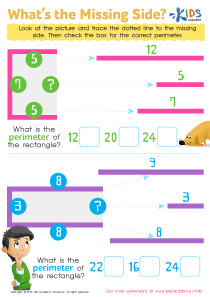
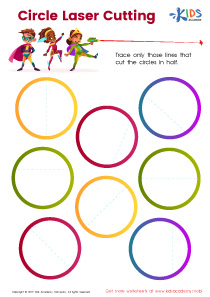
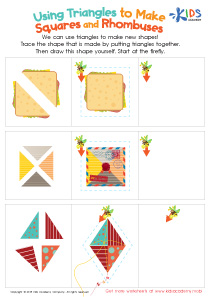
Enhance your child's pattern recognition skills with our engaging Normal 2D Shapes Worksheets, perfect for ages 4-8! These printable worksheets focus on helping young learners identify, compare, and sequence common 2D shapes like circles, squares, triangles, and more. Designed by educational experts, these activities aim to develop essential math skills through fun and interactive exercises. Each worksheet provides ample practice to reinforce shape recognition and logical thinking, preparing children for future math success. Ideal for both classroom and at-home learning, our 2D Shapes Worksheets transform math into a joy-filled adventure. Download and start learning today!
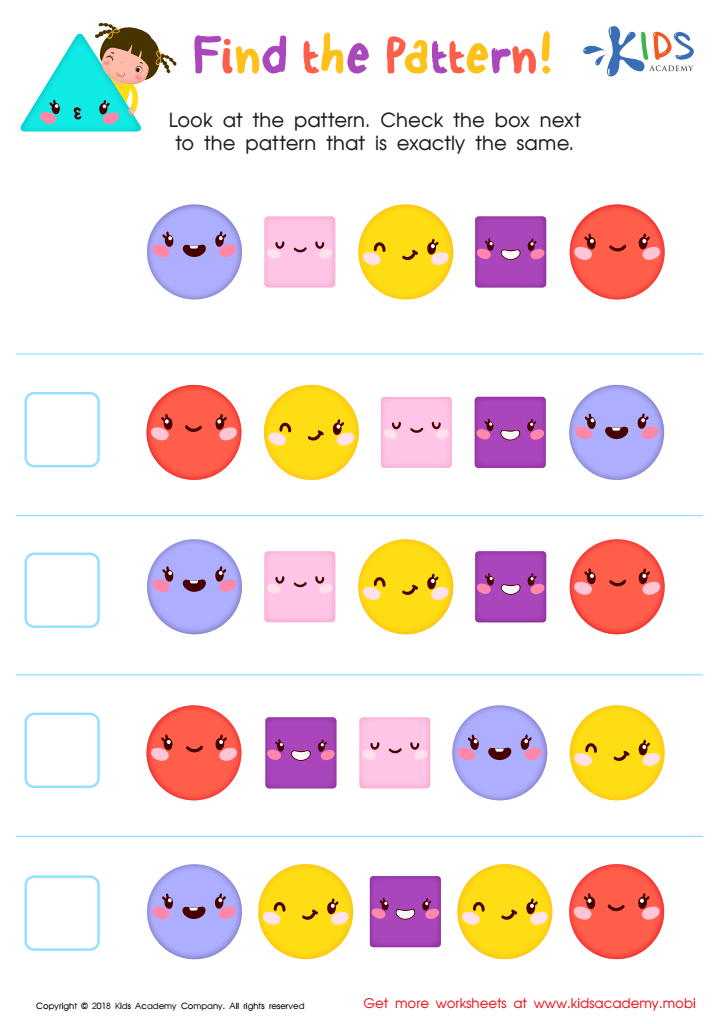
Find the Pattern Worksheet
 Assign to My Students



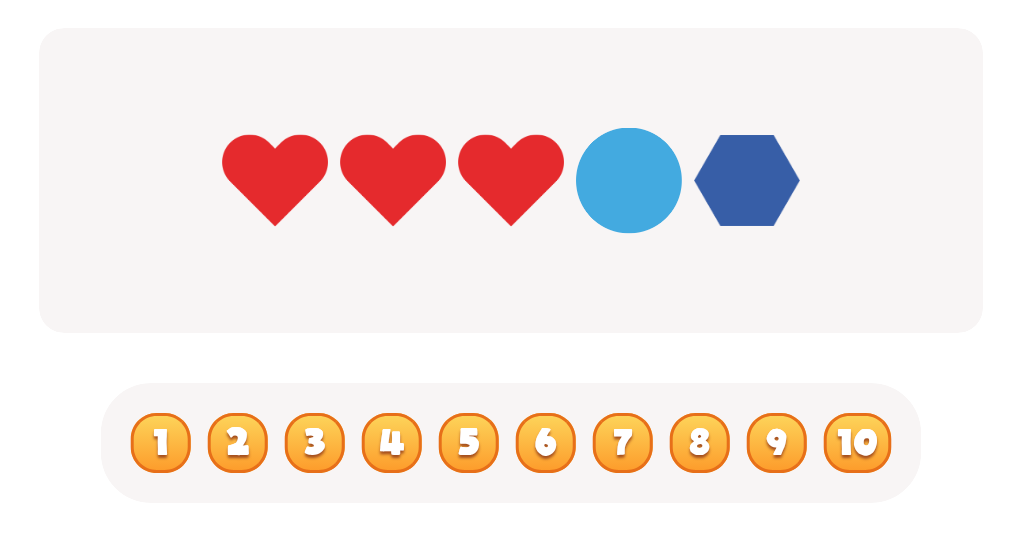

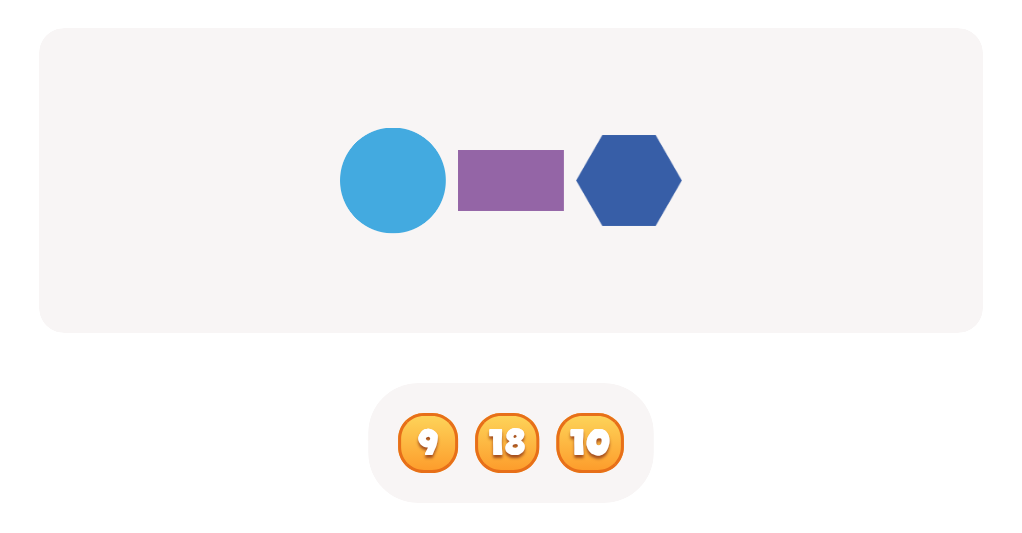
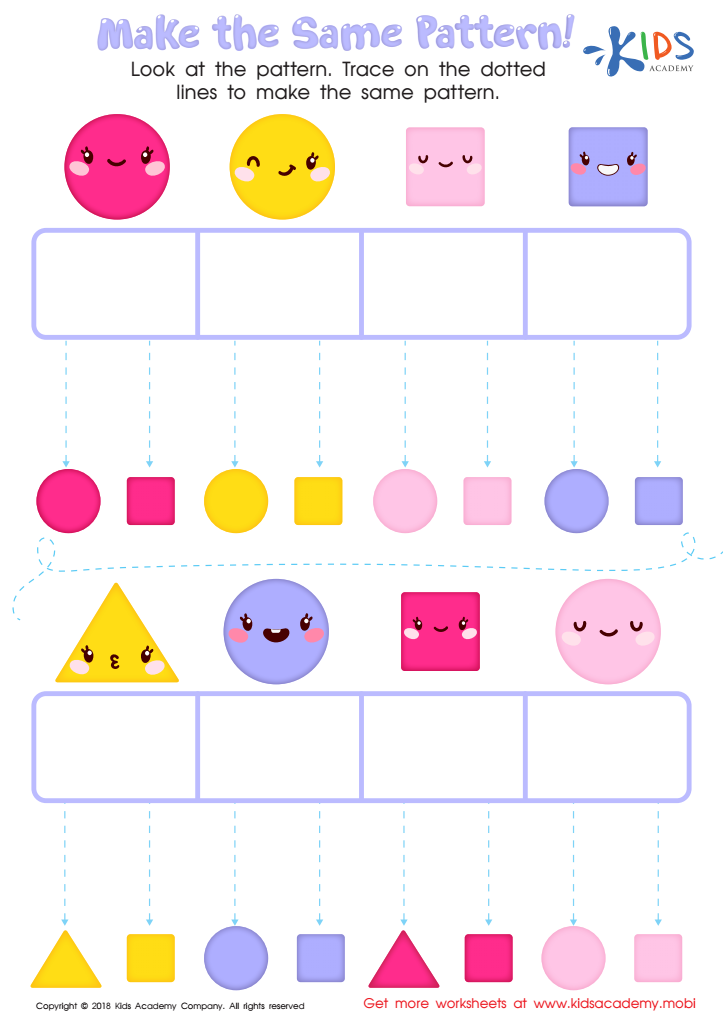
Make the Same Pattern Worksheet
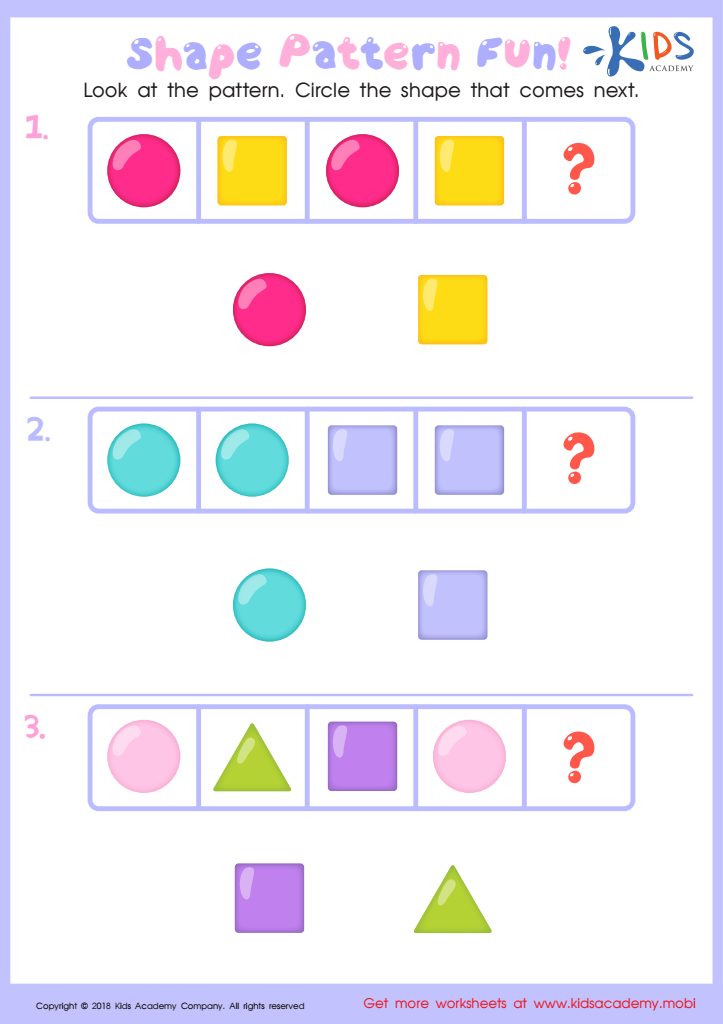
Shape Pattern Fun Worksheet








Pattern recognition and understanding 2D shapes form foundational skills critical for early childhood development, particularly for the age group of 4 to 8 years. Young children have brains that are highly receptive to learning visual and spatial information. Introducing them to pattern recognition and 2D shapes helps enhance their cognitive, mathematical, and problem-solving skills.
Understanding patterns nurtures sequencing abilities and logical thinking, which are prerequisites for advanced math, reading, and daily life activities. When children recognize and continue patterns, they develop the basis for comprehending more complex concepts like addition, subtraction, and later, multiplication and division. Recognizing 2D shapes enhances spatial awareness, which is critical not only for geometry but also for everyday tasks like navigation and organizing spaces.
Moreover, engaging with patterns and shapes aids in language development by enabling children to describe combinations and dimensions, thus broadening their vocabulary. It also boosts their fine motor skills through drawing and manipulation of shapes, and their concentration and patience improve as they work through these activities.
Attentive cultivation of these abilities ensures children’s success across various subjects and practical life, making pattern recognition and 2D shapes indispensable parts of early childhood education. Teachers and parents can facilitate this by providing supportive resources and engaging activities, thereby giving children a well-rounded, solid educational foundation.