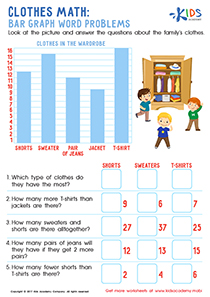
Logical Reasoning Normal Addition and Subtraction Word Problems Worksheets for Ages 4-8
4 filtered results
-
From - To
Unlock your child's potential with our engaging "Logical Reasoning Normal Addition and Subtraction Word Problems Worksheets" designed specifically for ages 4-8. These worksheets provide a fun and interactive way for young learners to develop essential math skills while enhancing their logical reasoning abilities. Each thoughtfully crafted word problem encourages critical thinking and reinforces addition and subtraction comprehension through relatable scenarios. Whether learning at home or in the classroom, these worksheets serve as a valuable resource to boost your child’s confidence in math. Perfect for early grade teachers and parents alike, watch your child thrive as they tackle these imaginative challenges!
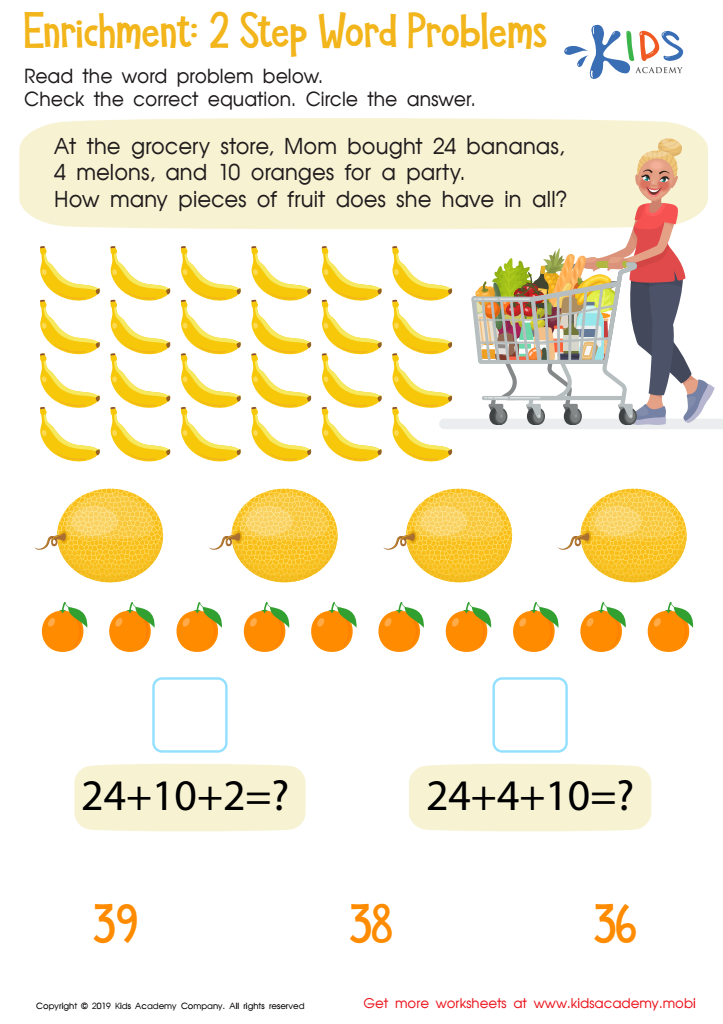
Enrichment -2 Step Word Problems Worksheet
 Assign to My Students
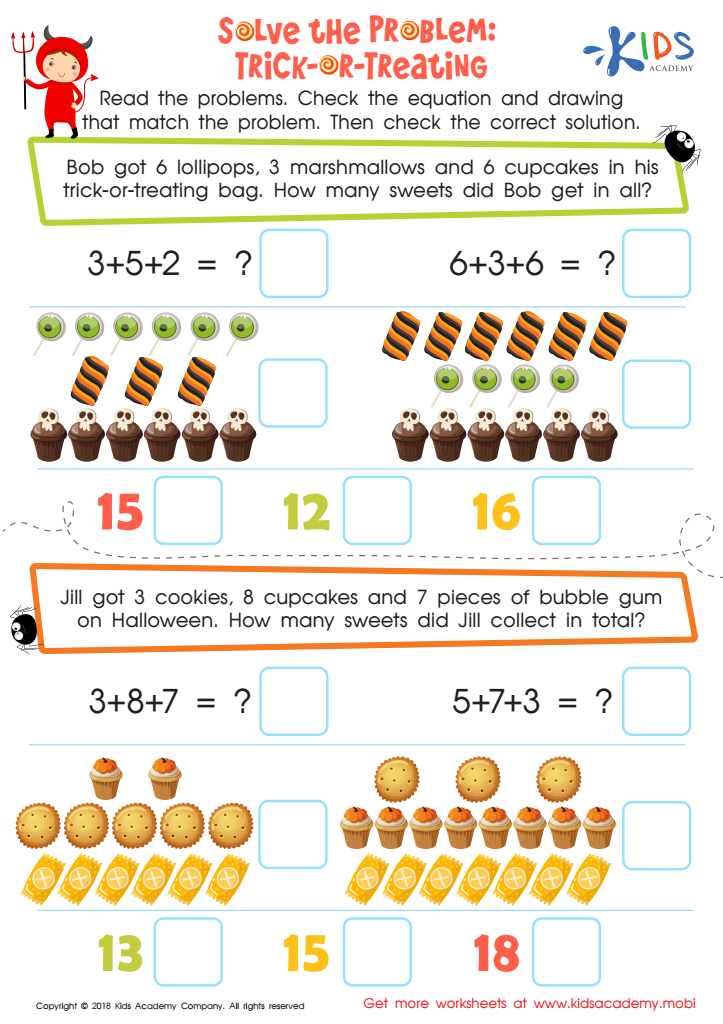
Solve the Problem: Trick–or–treating Worksheet
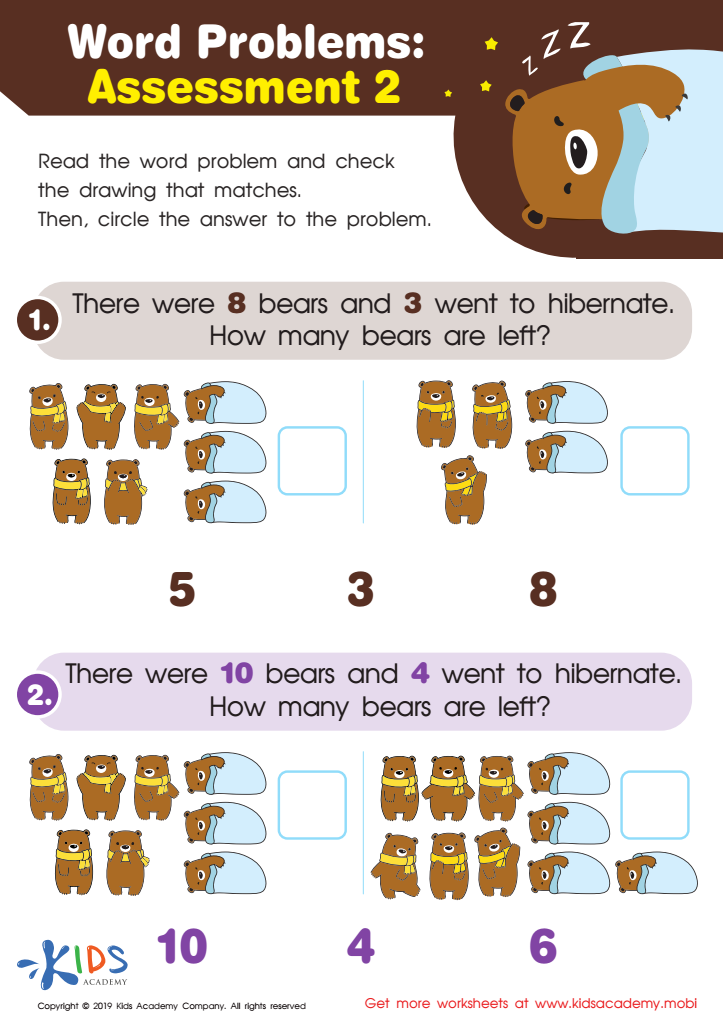
Word Problems: Assessment 2 Worksheet
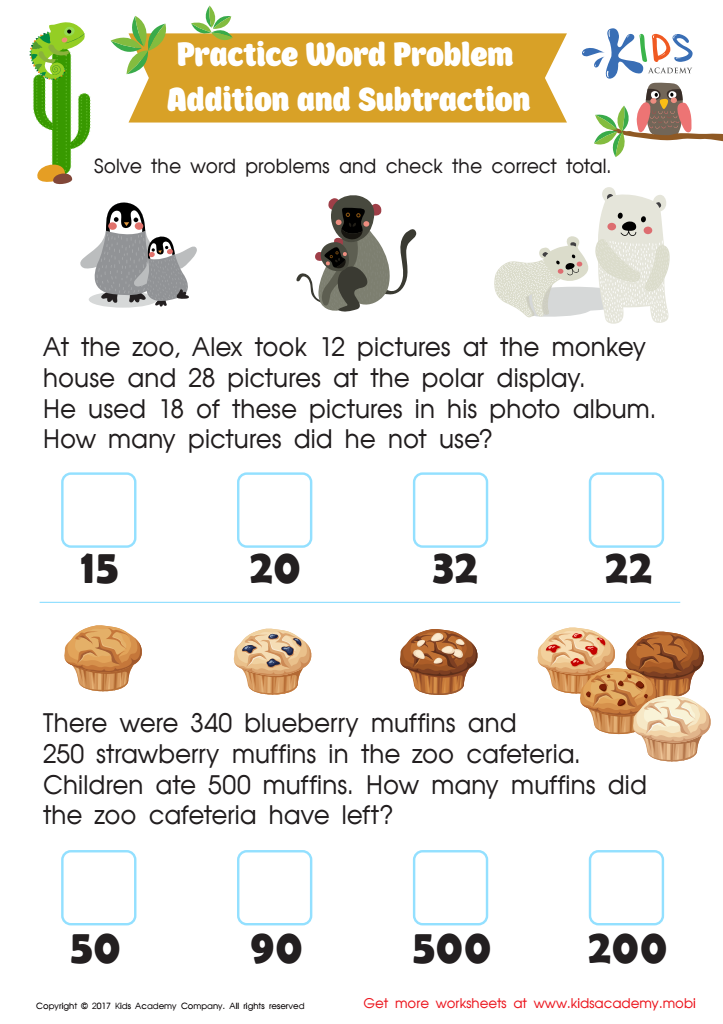
Addition and Subtraction: Word Problems Worksheet








Parents and teachers should care about Logical Reasoning in normal addition and subtraction word problems for children aged 4-8 because it lays the foundation for critical thinking and problem-solving skills. At this stage, children are developing cognitive abilities that help them understand numerical concepts, and engaging with word problems helps enhance their comprehension and analytical skills.
When children tackle addition and subtraction word problems, they learn to break down information, identify relevant data, and apply mathematical operations to real-life situations. This not only strengthens their arithmetic skills but also fosters logical reasoning and decision-making. Word problems train young minds to approach questions systematically, think ahead, and evaluate different outcomes based on their calculations.
Moreover, mastering these skills at an early age often leads to greater confidence in mathematics, reducing math anxiety and promoting a positive attitude toward learning. By integrating these problems into daily activities or educational curriculums, parents and teachers can create a supportive learning environment that encourages curiosity and persistence. Ultimately, such foundational knowledge sets the stage for future academic achievements across all subjects, contributing to well-rounded development for children.