Following instructions Normal Addition & Subtraction Worksheets for Ages 4-8
4 filtered results
-
From - To
Enhance your child's math skills with our "Following Instructions Normal Addition & Subtraction Worksheets for Ages 4-8." Designed to stimulate young minds, these printable worksheets are perfect for building a strong foundation in basic math. Featuring a variety of engaging activities, they help children practice addition and subtraction while also improving their ability to follow instructions. Easy to use at home or in the classroom, these worksheets are ideal for making learning fun and effective. Equip your child with the essential skills they need for academic success. Visit Kids Academy and download your worksheets today!
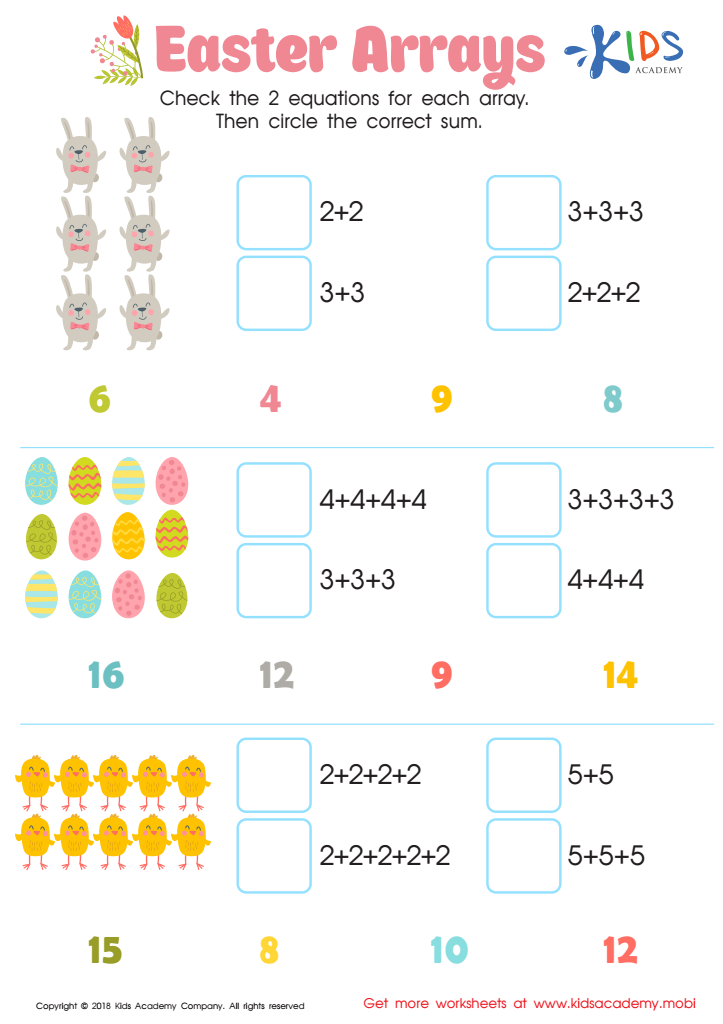
Easter Arrays Worksheet
 Assign to My Students
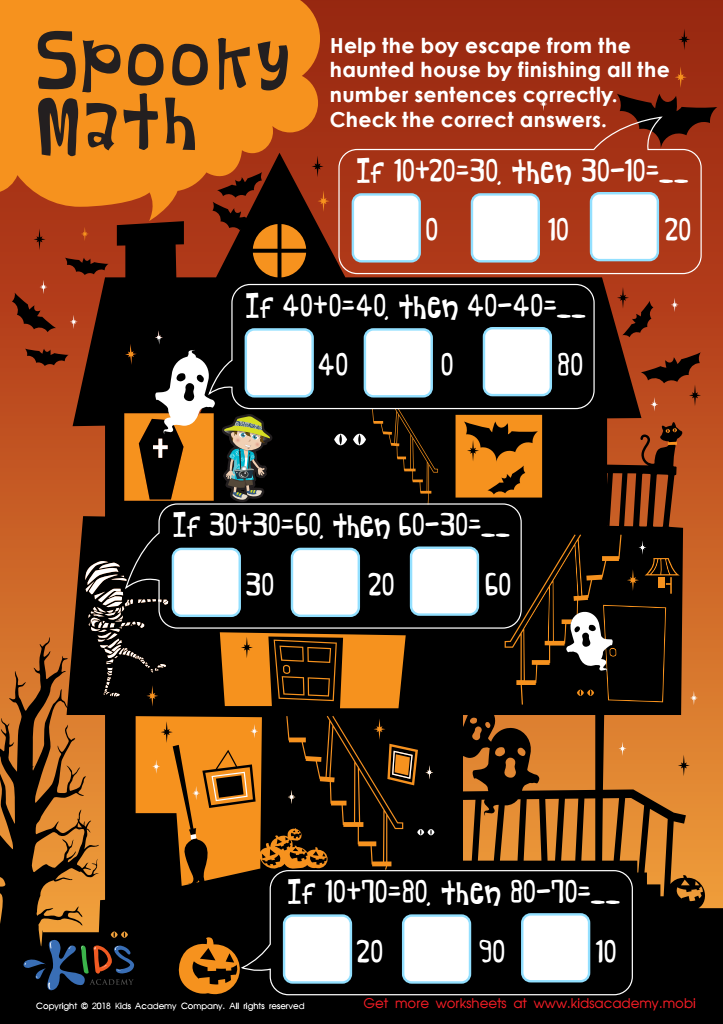
Subtract Tens: Spooky Math Worksheet
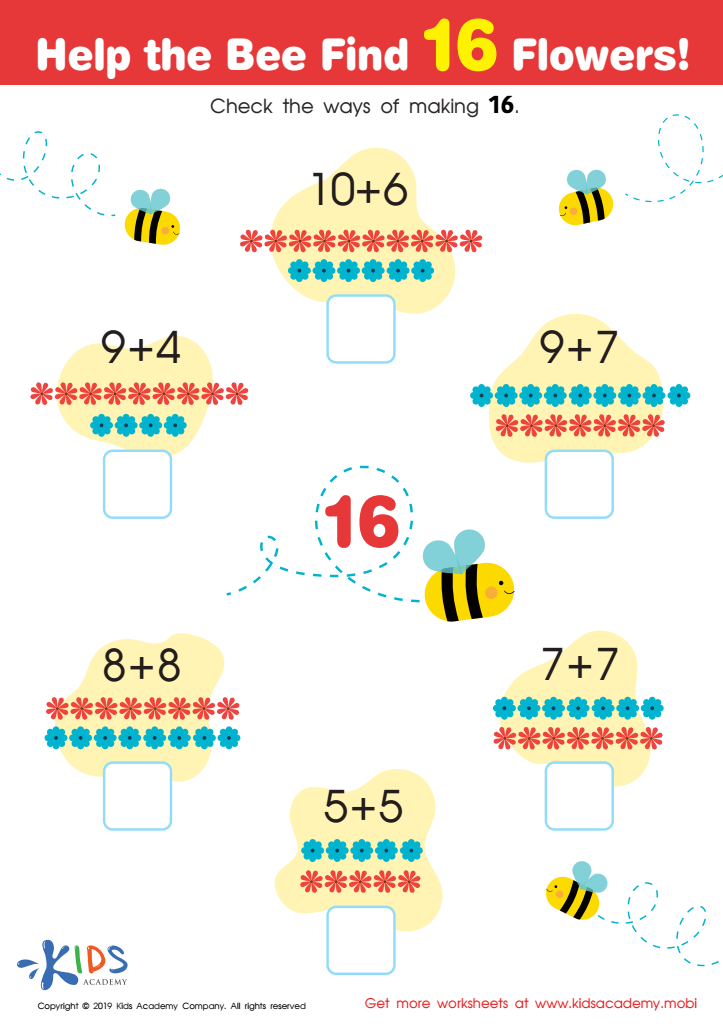
Help the Bee Find 16 Flowers Worksheet
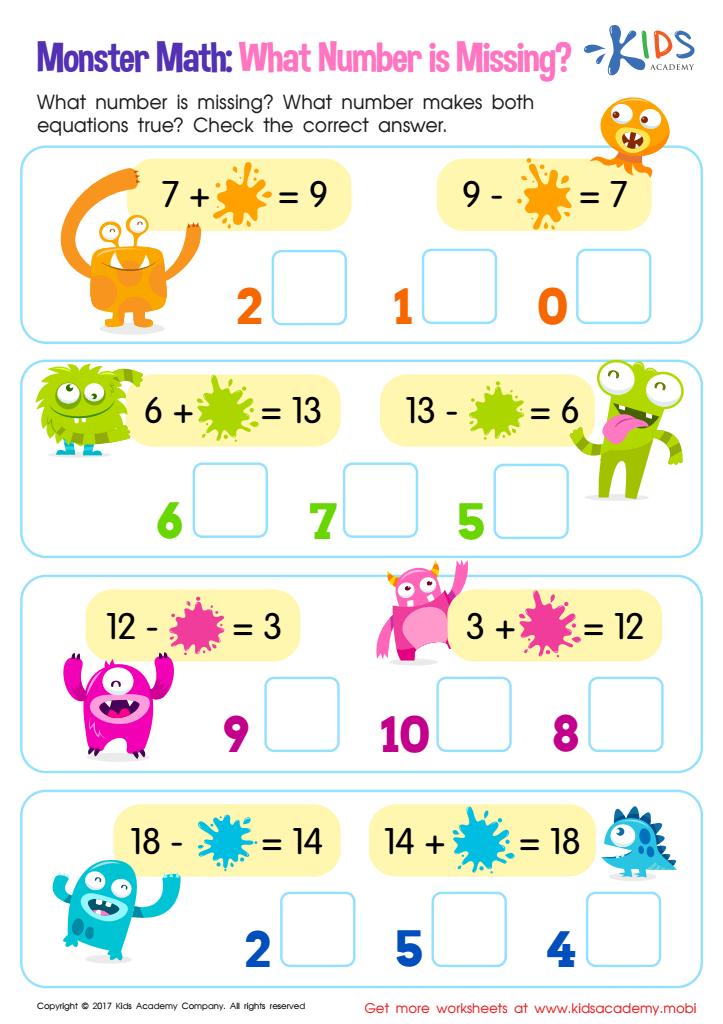
Missing Number: Monster Math Worksheet








Parents and teachers should prioritize teaching young children (ages 4-8) the basics of following instructions, as well as fundamental addition and subtraction, because these skills are foundational for their overall development and future learning.
Following instructions enhances cognitive development and attention skills, which are crucial in a structured educational setting. When children learn to follow instructions, they develop their listening abilities, which aids in meeting academic and behavioral expectations. It also encourages discipline and the capacity to understand and execute multi-step processes, skills that are essential in more complex subjects they will encounter later.
Moreover, acquiring basic addition and subtraction skills serves as the underpinning for all subsequent math education. These operations are foundational, serving as building blocks for more complex mathematical concepts such as multiplication, division, and eventually algebra and geometry. Math proficiency at an early age supports logical thinking, problem-solving skills, and cognitive development. Regular practice also boosts children’s confidence and interest in math-related tasks, reducing the likelihood of math anxiety in later years.
Together, these skills help establish a well-rounded academic foundation, preparing children for future educational challenges. By focusing on these fundamental areas, parents and teachers support children in developing essential life skills, fostering academic success and the curiosity to learn.








