Understanding regrouping Normal Addition & Subtraction Worksheets for Ages 4-8
4 filtered results
-
From - To
Explore our "Understanding Regrouping Normal Addition & Subtraction Worksheets" designed specifically for children aged 4-8. These interactive and engaging worksheets provide a hands-on approach to mastering essential math skills. By introducing the concept of regrouping in addition and subtraction, children will build their understanding of working with larger numbers in a fun and accessible way. Each worksheet is designed to enhance problem-solving abilities and boost confidence in math. With vibrant visuals and clear instructions, our resources make learning enjoyable for young learners. Perfect for classroom activities or at-home practice, these worksheets are a great tool to support your child's mathematical journey!
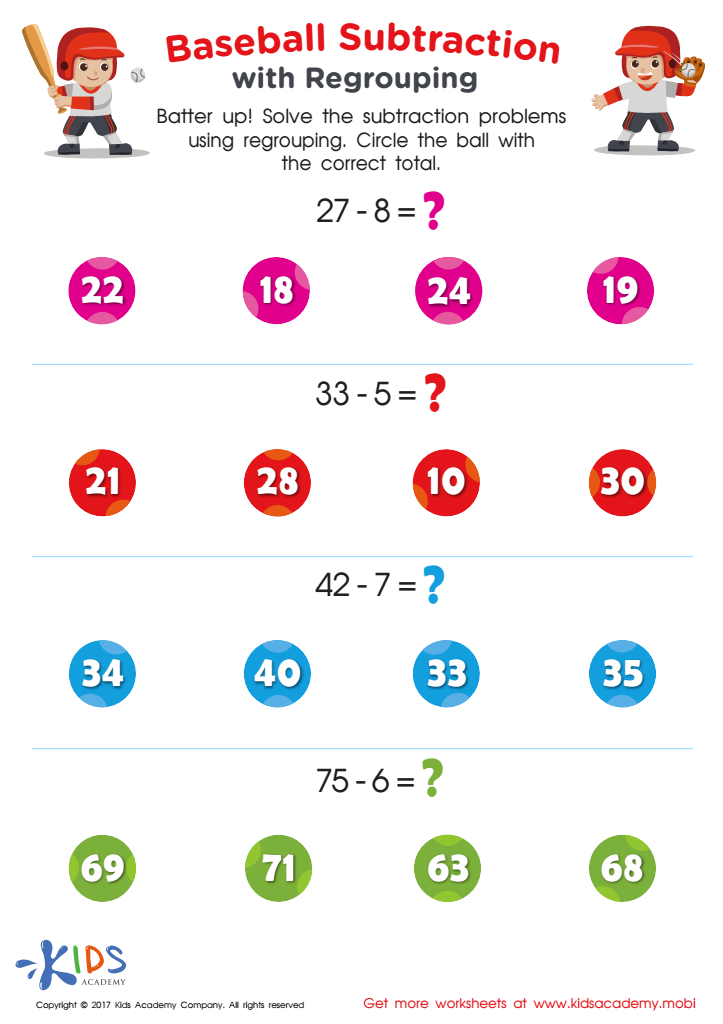
Subtraction With Regrouping for 2nd Grade Worksheet
 Assign to My Students
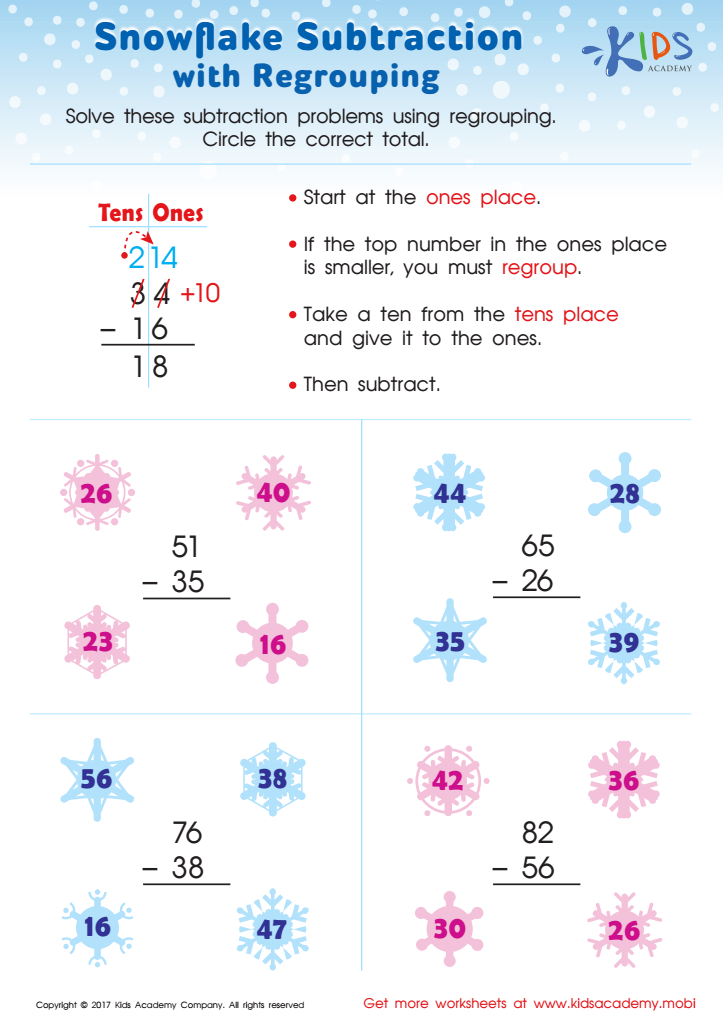
Subtraction With Regrouping Worksheet: Snowflake
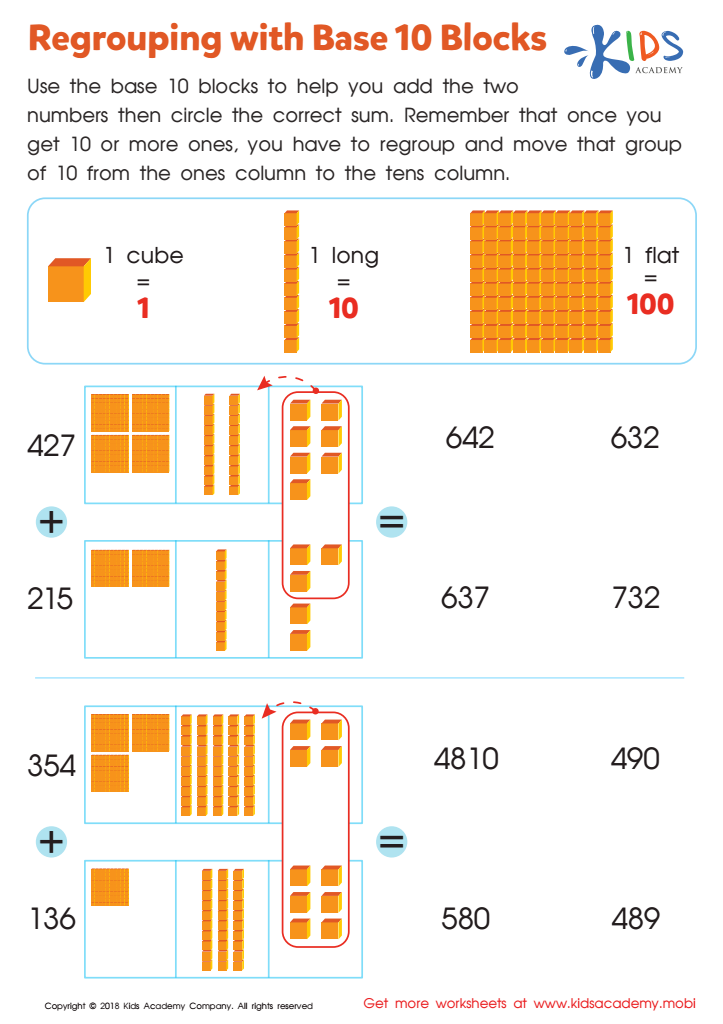
Regrouping with Base 10 Blocks Worksheet
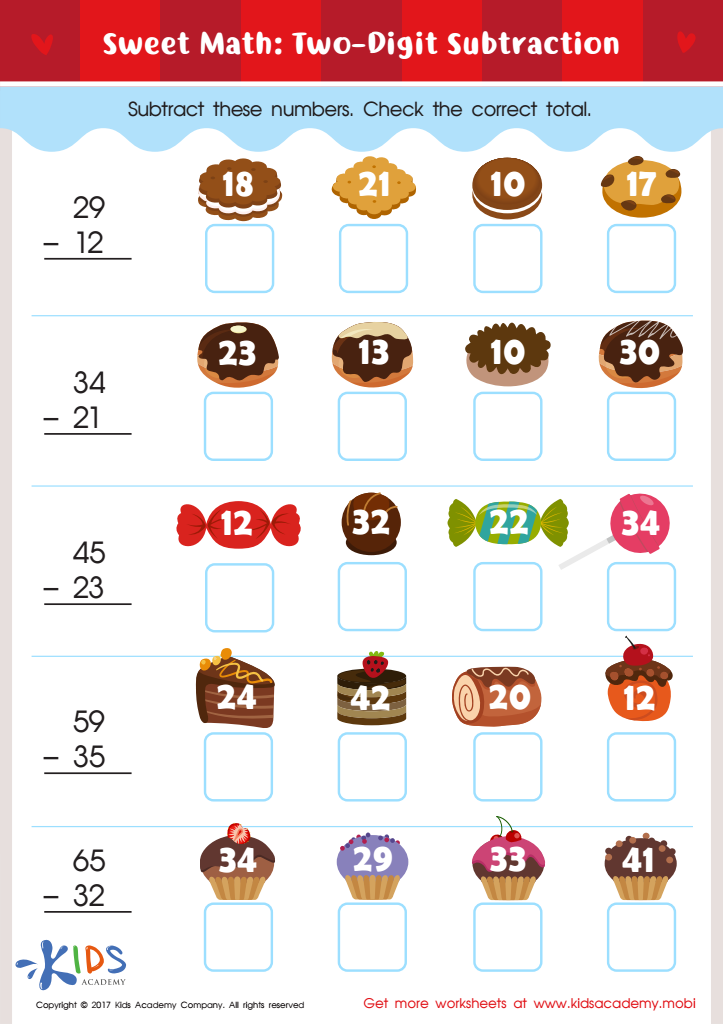
Two Digit Subtraction Worksheet








Understanding regrouping in normal addition and subtraction is essential for children aged 4-8, as it lays a strong foundation for mathematical proficiency. At this developmental stage, children are starting to grasp basic mathematical concepts. Regrouping supports their understanding of how numbers work together, promoting a deeper comprehension of place value. By learning to manipulate numbers, children cultivate critical problem-solving and analytical skills.
Parents and teachers should care because this foundational knowledge not only affects a child's current performance but also predicts future success in mathematics. Mastery of regrouping enables students to tackle more complex math problems confidently. Furthermore, it aids in fostering resilience, as children learn to approach challenges systematically.
Additionally, teaching regrouping methods through engaging activities can strengthen the parent-child or teacher-student bond, making math fun rather than intimidating. Through collaborative learning, children develop teamwork and communication skills that extend beyond math. Investing in understanding regrouping ensures children do not struggle later when they encounter more advanced concepts. Ultimately, a firm grasp of these basic principles is crucial to empowering young learners and preparing them for a lifetime of successful mathematical engagement.








