Understanding times tables Normal Advanced Times Tables up to 12 Worksheets for Ages 4-8
3 filtered results
-
From - To
Welcome to our "Understanding Times Tables" resource page! Designed for children aged 4-8, our engaging worksheets focus on mastering the advanced times tables up to 12. This essential skill builds a strong foundation in mathematics and enhances problem-solving abilities. Our user-friendly materials promote interactive learning, allowing children to practice multiplication concepts through fun exercises. By using these worksheets, children will gain confidence and improve their arithmetic skills while preparing for more complex math challenges ahead. Foster a love for learning with our creative and educational approaches to understanding times tables. Explore our collection today to support your child's math journey!
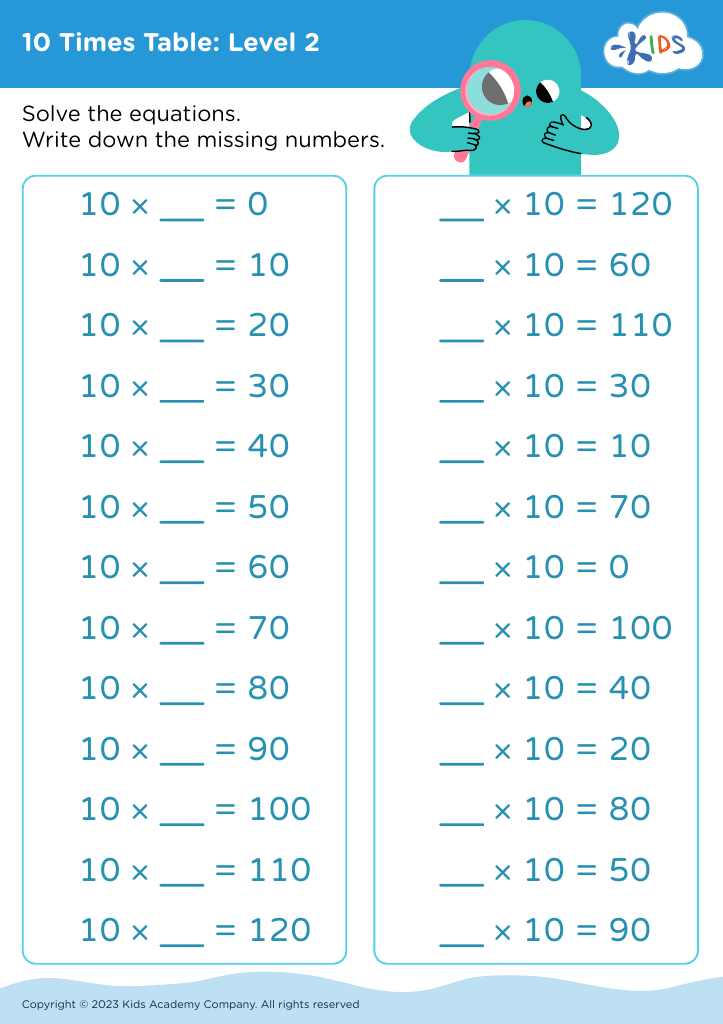
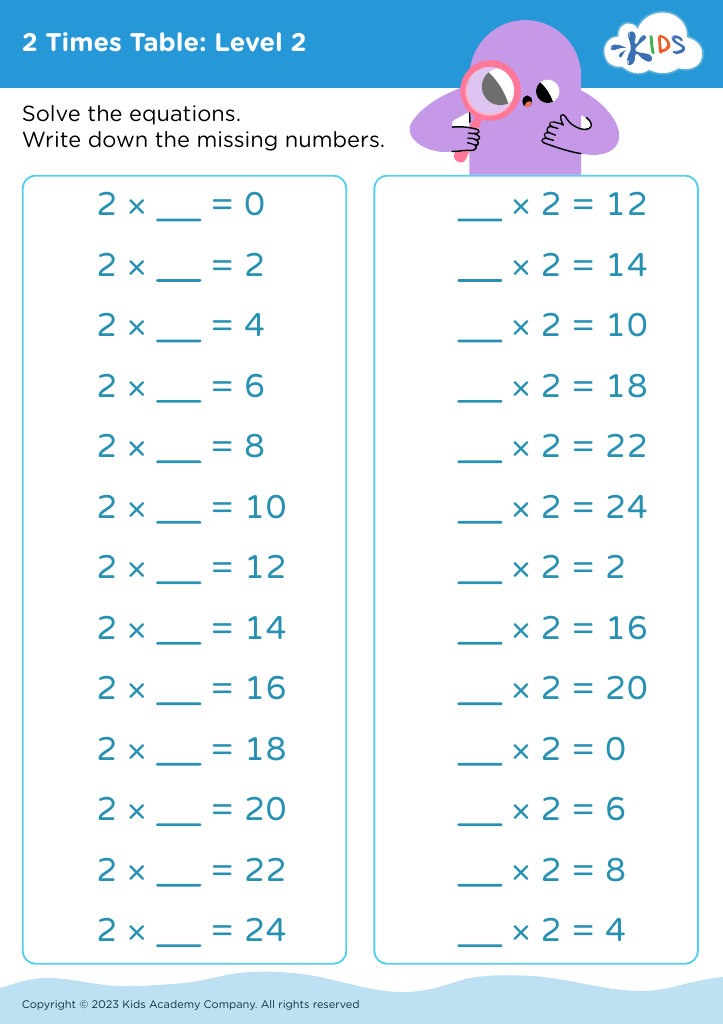
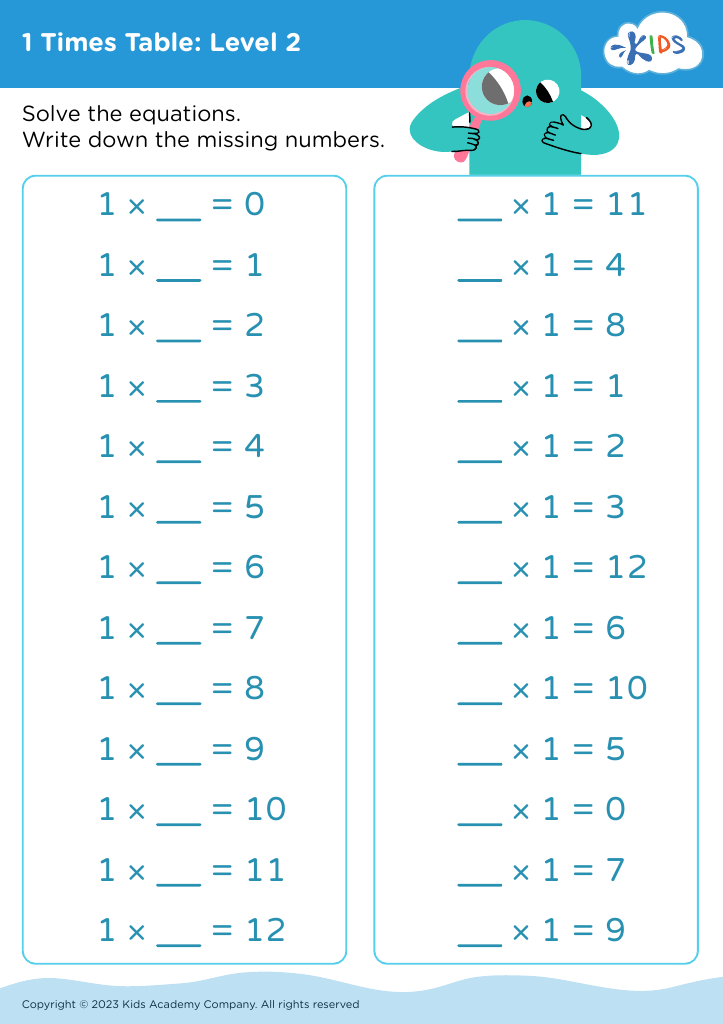



Understanding times tables is crucial for children aged 4-8, as it lays a solid foundation for their mathematical skills. Mastery of multiplication tables enhances arithmetic fluency, allowing kids to perform calculations more efficiently. This skill is essential not just for their current studies but also for future mathematical concepts like fractions, division, and algebra.
For parents and teachers, emphasizing times tables fosters problem-solving abilities. By learning to multiply, children develop critical thinking skills and the capacity to tackle more complex mathematical tasks later on. Additionally, having a firm grasp of multiplication enhances confidence in math-related activities, reducing anxiety during assessments or standardized tests.
Moreover, understanding times tables teaches persistence and discipline, as children practice and memorize over time. This perseverance translates into other subjects, reinforcing a growth mindset. With engaging strategies such as games or visual aids, adults can make learning fun and interactive.
In essence, promoting times tables not only supports immediate math skills but also nurtures a love for learning, empowering children to embrace challenges and view math as an enjoyable subject rather than a daunting one. Through this support, parents and teachers can play a vital role in shaping a positive educational experience for young learners.








