
Matching skills Normal Numbers Worksheets for Ages 4-8
4 filtered results
Difficulty Level
Grade
Age
-
From - To
Subject
Activity
Standards
Introduce your young learners to the world of numbers with our exciting "Matching Skills Normal Numbers Worksheets" tailored for kids aged 4-8. These engaging and educational worksheets combine fun activities with essential learning, focusing on identifying, matching, and writing numbers. Perfect for enhancing early math skills, our resource helps children build a strong numerical foundation while developing critical thinking and hand-eye coordination. Our expertly designed worksheets are suitable for home or classroom use, ensuring that learning numbers becomes both enjoyable and effective. Turn number learning into a delightful adventure with our matching skills worksheets!
Favorites
With answer key
Interactive
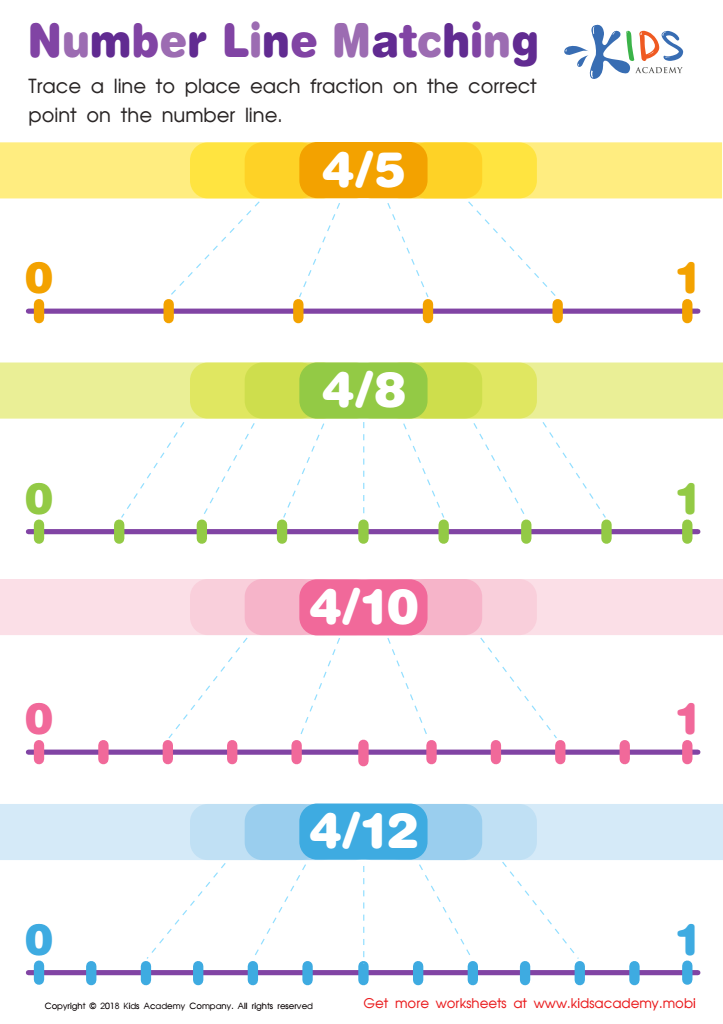
Number Line Matching Worksheet
Math can be fun! Have your child count points on the number line, then identify and trace fractions above it. It's a great way for them to learn and have some fun!
 Assign to My Students
Number Line Matching Worksheet
Worksheet
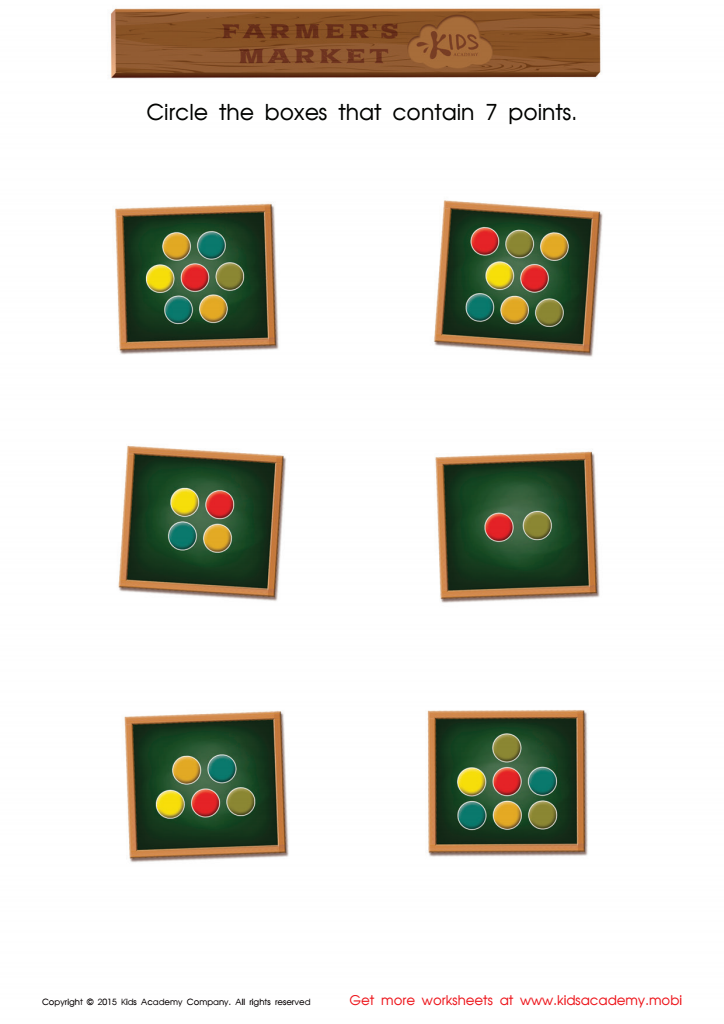
Count and Match Points 7 Math Worksheet
Help your child count and recognize similar numbers by using this fun, colorful worksheet. Guide them to count the dots in each box, then circle those with a total of 7. It's a great way for your child to see how different arrangements lead to the same number.
Count and Match Points 7 Math Worksheet
Worksheet
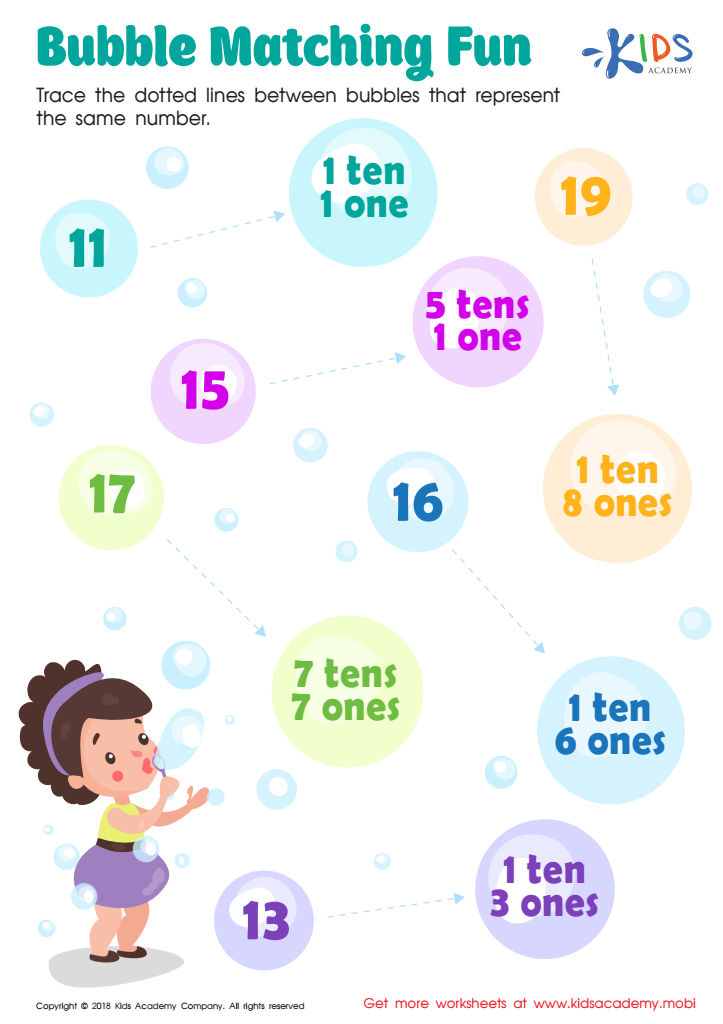
Bubble Matching Fun Worksheet
Try this fun worksheet to stimulate your young one's learning! Test their number matching skills by having them trace the dotted lines between bubbles representing the same numbers. Look through the exercise with your child and watch their understanding of how two numbers can add up to the same value grow!
Bubble Matching Fun Worksheet
Worksheet
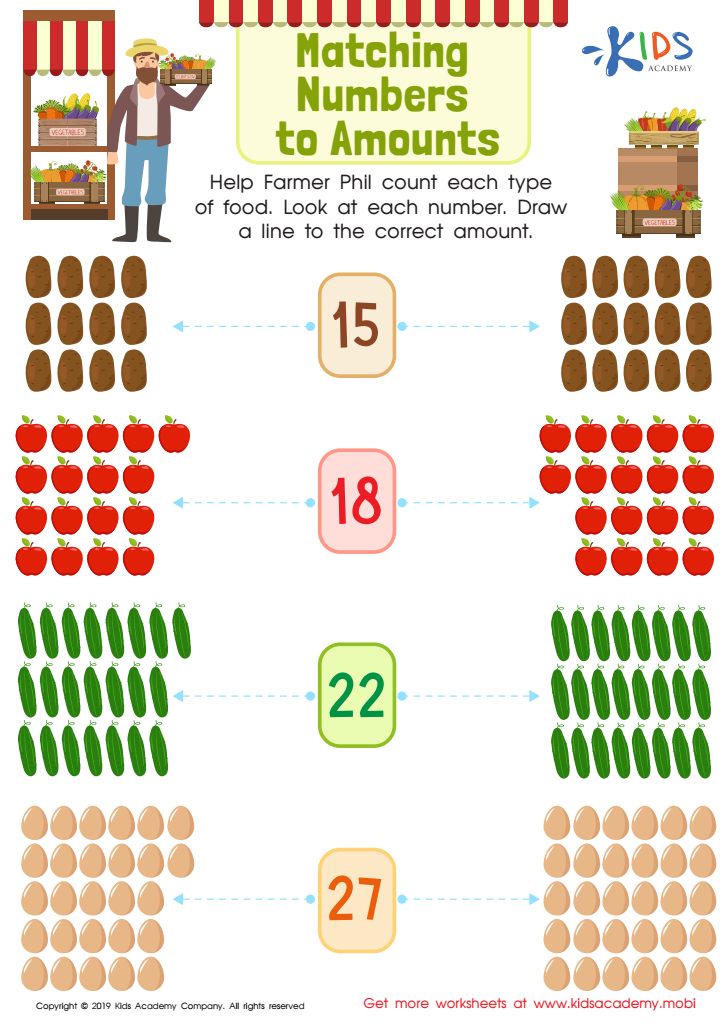
Matching Numbers to Amounts Worksheet
Farmer Phil needs your kid's help! Ensure they know the basics of math such as counting, adding and subtracting. Before beginning, help your child identify and count the different foods in the picture. Then, draw a line to the correct amount.
Matching Numbers to Amounts Worksheet
Worksheet
Join Kids Academy for Free
Who is primarily going to use this learning content?




.jpg)



Matching skills and number recognition are foundational elements in early childhood development, particularly for children aged 4-8. Parents and teachers should care about fostering these skills for several important reasons.
Firstly, matching skills help refine a child’s visual discrimination, allowing them to notice details and make connections between objects and their corresponding numbers. This ability to recognize patterns and similarities is crucial in many aspects of learning and problem-solving.
Secondly, working with normal numbers (i.e., the numbers 1-10, or further as appropriate) sets the stage for mathematical literacy. Early familiarity with numbers helps children understand the concept of quantity, order, and grouping. It also prepares them for more complex mathematical concepts like addition, subtraction, and even early multiplication and division.
Additionally, fostering these skills builds a strong cognitive foundation that supports other areas of learning such as reading and writing. Numbers and matching activities can also be a great way to develop fine motor skills when children use manipulatives like counting beads or drawing numbers.
Finally, early success in math can build a child’s confidence and stimulate their interest in more advanced subjects later on. Children who find joy and competence in their early mathematical activities are more likely to approach future learning with enthusiasm and a positive attitude.
In conclusion, investing in matching skills and normal number recognition at an early age provides children with the essential tools they need for academic success and lifelong learning.








