Recognizing Patterns Normal Math Worksheets for Ages 4-8
3 filtered results
-
From - To
Introduce your child to the fascinating world of patterns with our "Recognizing Patterns Normal Math Worksheets for Ages 4-8." These engaging worksheets are designed to captivate young minds while developing crucial early math skills. Through vibrant visuals and enjoyable activities, children will learn to identify, compare, and extend patterns in ways that are both fun and educational. Perfectly tailored for kids aged 4-8, these worksheets align with school curriculums, making learning seamless and effective. Empower your child's mathematical journey with tools that foster creativity, critical thinking, and a solid foundation in recognizing patterns. Discover more today at Kids Academy!
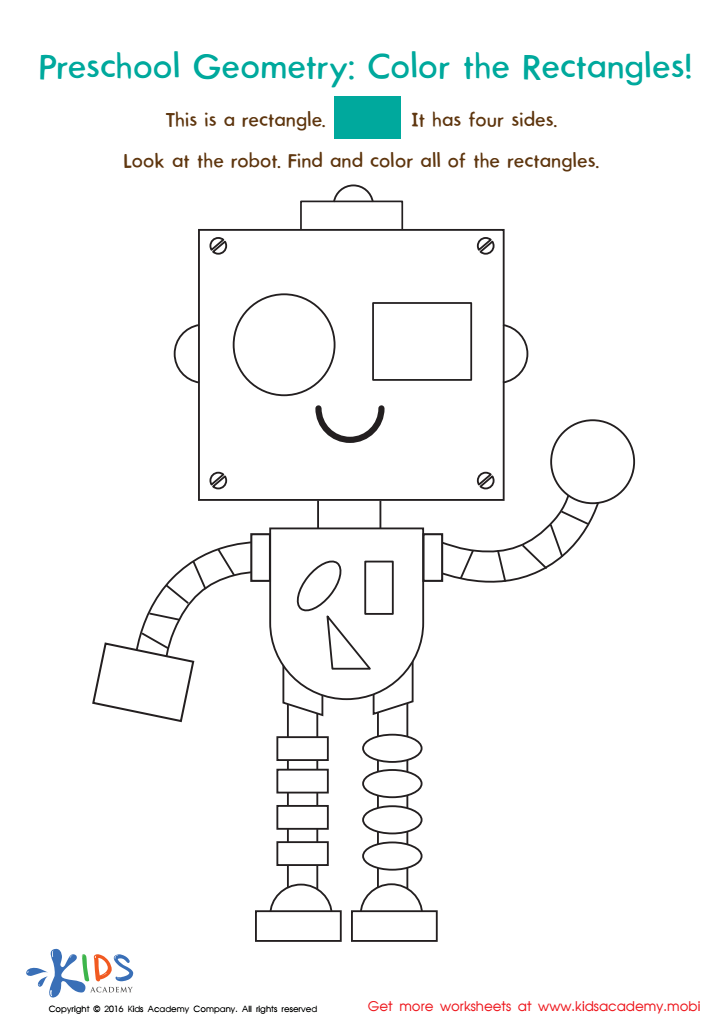
Geometry Worksheet
 Assign to My Students
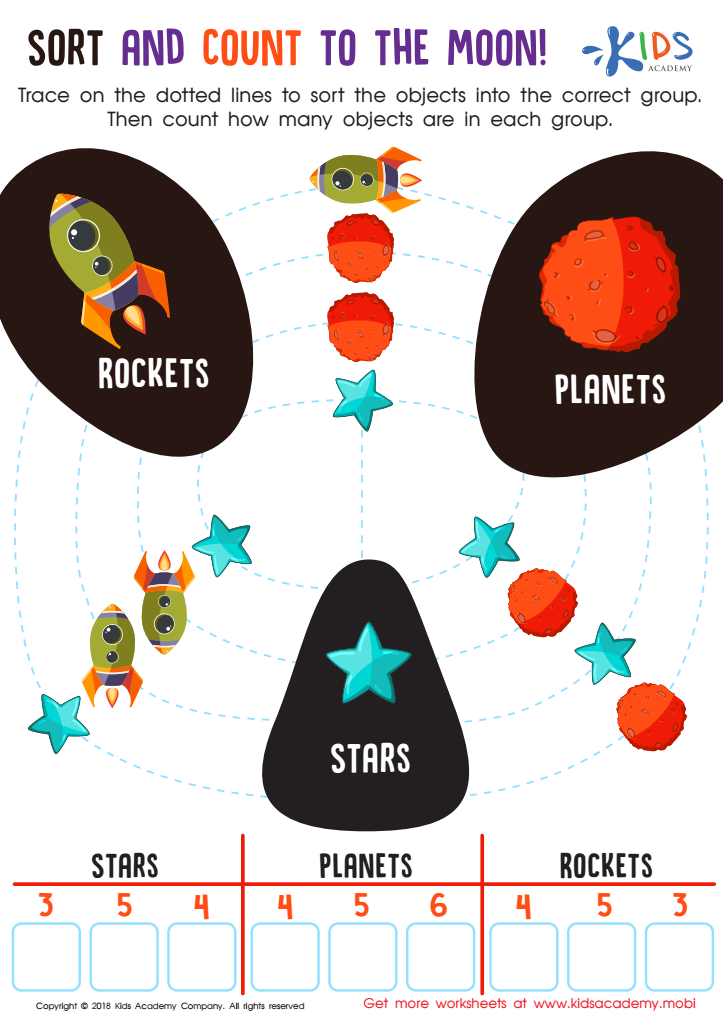
Sort and Count to the Moon Worksheet
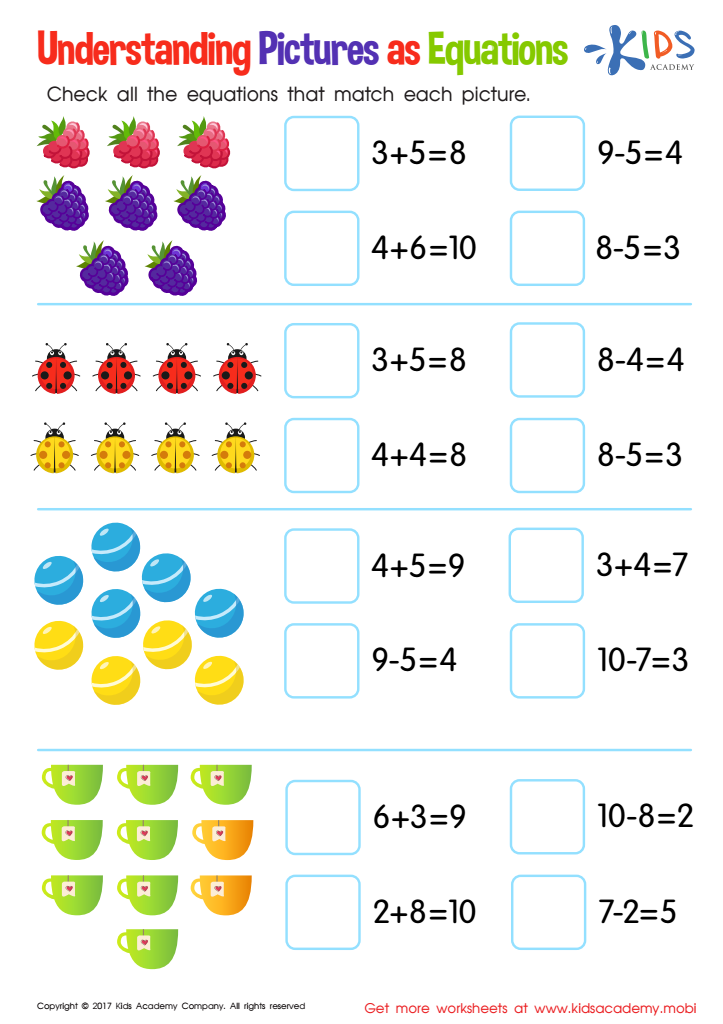
Understanding Pictures as Equations Worksheet







Recognizing patterns is a fundamental skill in early math education that holds significant importance for children aged 4-8. This skill involves identifying and predicting sequences, whether in numbers, shapes, or even colors, and serves as the groundwork for more advanced mathematical concepts.
When children recognize patterns, they develop critical thinking and problem-solving skills, which are essential across various aspects of learning. Pattern recognition enhances cognitive development by helping kids understand relationships and connections in the world around them. This learning extends beyond math to reading, science, and daily activities, as patterns help in organizing and categorizing information effectively.
Moreover, pattern recognition promotes a sense of order and predictability which is comforting to young learners. It builds their confidence as they start seeing the logic and structure in math, making the subject less intimidating and more approachable. Understanding patterns also prepares students for algebraic thinking later on, assisting in grasping more complex functions and relationships.
For teachers and parents, focusing on patterns can be an engaging and fun activity that stimulates curiosity and joy in learning. Games, songs, and hands-on activities can teach patterns effortlessly, fostering an enriching educational environment. Thus, emphasizing pattern recognition in early childhood not only boosts mathematical aptitude but also enhances overall cognitive development, making it essential for young students' academic growth.








