Understanding times tables Normal Times Tables Worksheets for Ages 4-8
3 filtered results
-
From - To
Introducing "Understanding Times Tables - Normal Times Tables Worksheets for Ages 4-8". Our curated collection of worksheets is designed to simplify the learning journey for young minds, making multiplication engaging and accessible. Tailored for children aged 4-8, these activities nurture foundational math skills and enhance their grasp of multiplication concepts through interactive exercises. Each worksheet offers a mix of visual aids and repetitive practice to reinforce learning and build confidence. Perfect for classroom use or at-home practice, our times tables worksheets pave the way for math success. Visit Kids Academy for a seamless, enjoyable, and educational experience in mastering times tables!
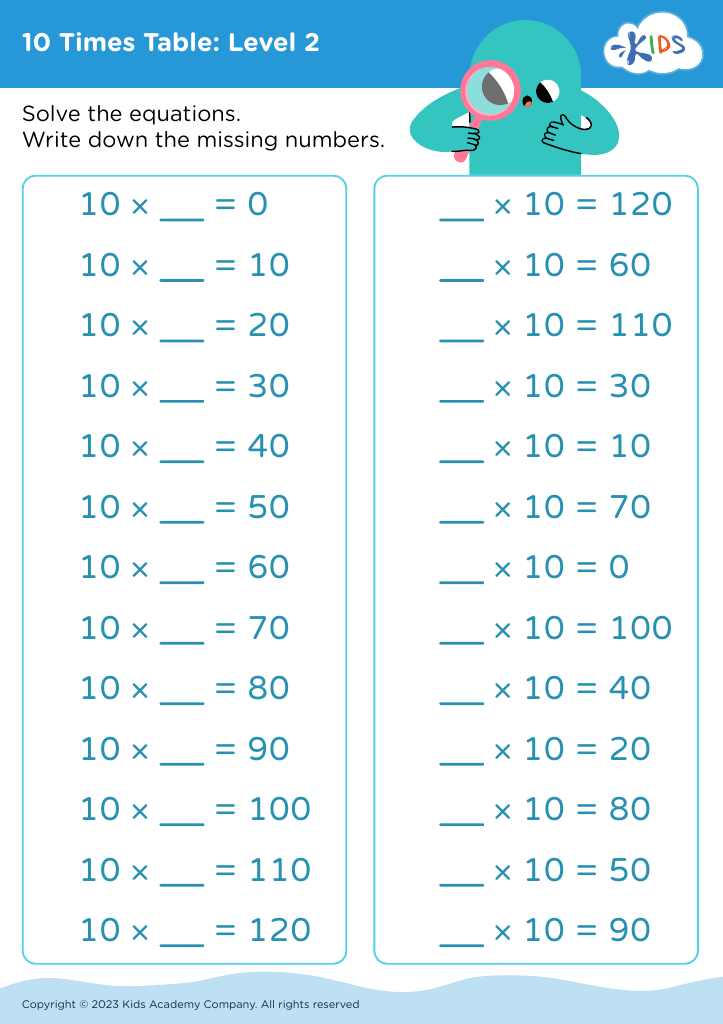
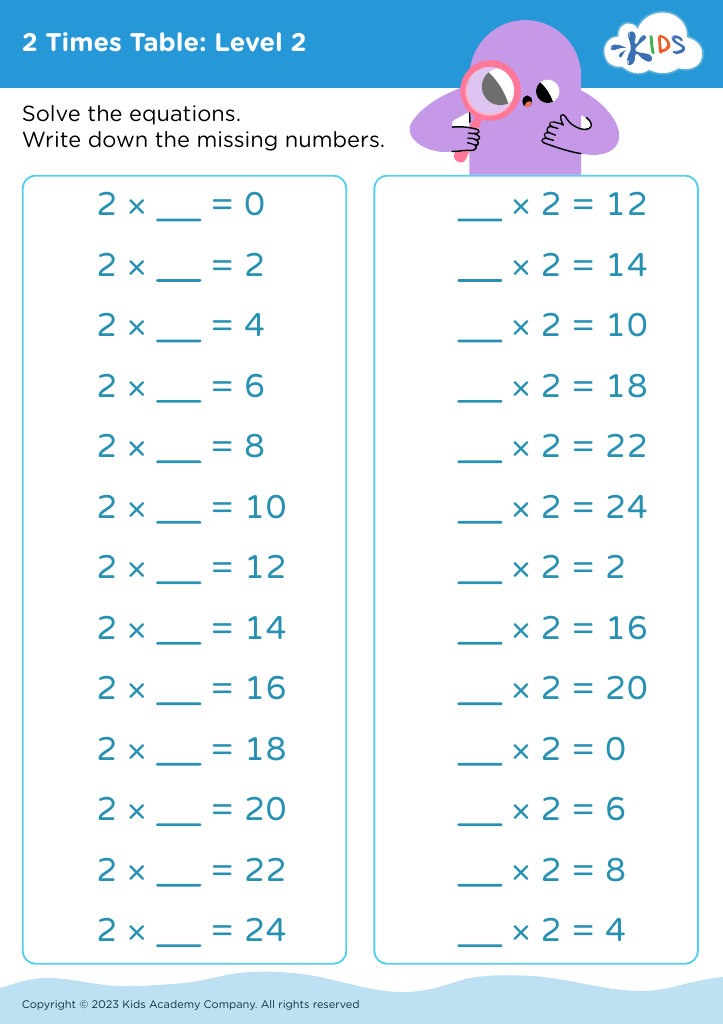
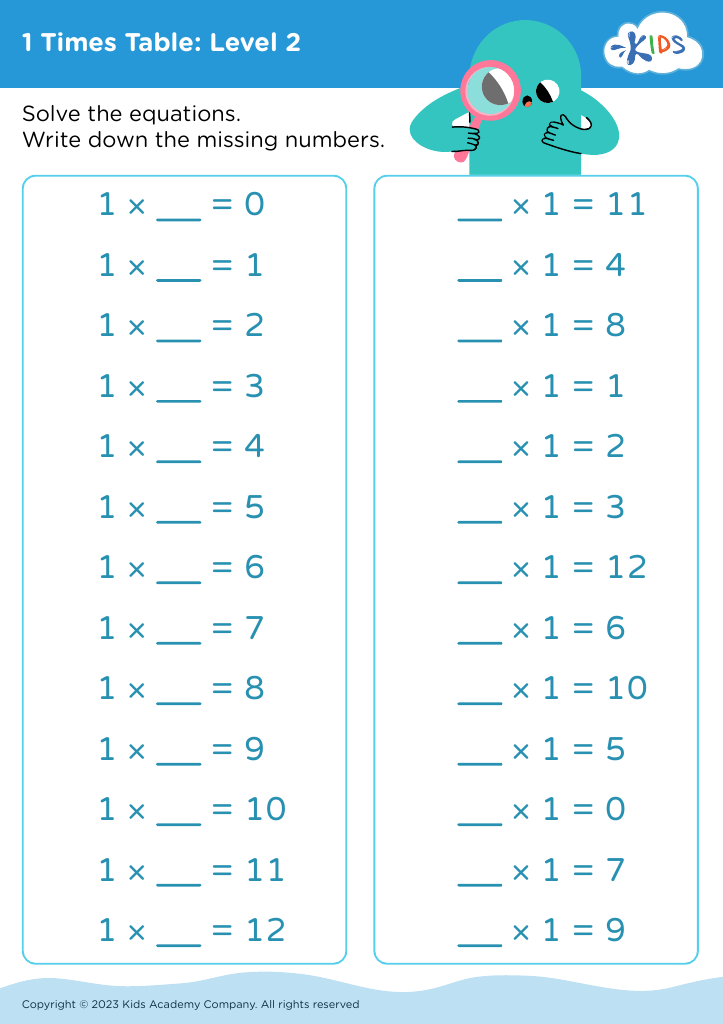





Understanding times tables is a fundamental skill that serves as the building block for many areas of mathematics, making it crucial for parents and teachers to emphasize their importance for children aged 4-8. Mastery of times tables facilitates quicker and more efficient problem-solving, enabling young learners to tackle more complex math topics such as fractions, division, and algebra with greater ease in later years.
Early introduction to times tables familiarizes children with the concept of multiplication, fostering number sense and stimulating cognitive development. Engaging in times tables practice enhances memory, sharpens concentration, and builds both confidence and capability in mathematical reasoning. These skills lay a strong foundation for academic success across various subjects, as well as in everyday tasks involving measurements, time management, and financial literacy.
Moreover, understanding times tables early on reduces math anxiety and builds a positive attitude toward learning. When children realize they can successfully recall and apply multiplication facts, their overall confidence in tackling academic challenges improves. Parents and teachers who prioritize mastering times tables help cultivate a lifelong interest in learning and intellectual curiosity, empowering children to approach future academic endeavors with a resilient and determined mindset.








