Logical Reasoning Normal Two-step Word Problems Worksheets for Ages 4-8
3 filtered results
-
From - To
Discover our engaging "Logical Reasoning Normal Two-Step Word Problems Worksheets" designed for children ages 4-8! These worksheets focus on developing critical thinking and problem-solving skills through fun, interactive math challenges. Each carefully crafted problem encourages young learners to apply logical reasoning to find solutions, promoting confidence in their academic abilities. Perfect for home or classroom use, our resources help kids practice essential skills while boosting concentration and analytical thinking. Ideal for early grade teachers and parents alike, these worksheets cultivate a solid foundation in mathematics. Start your child's journey to mastering two-step word problems today!
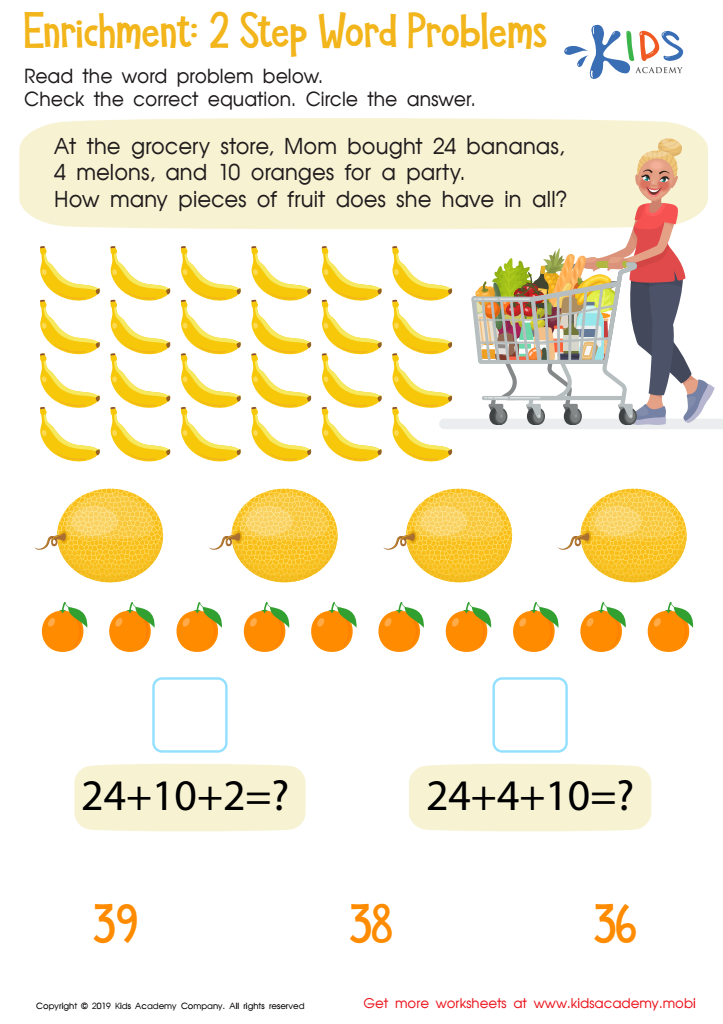
Enrichment -2 Step Word Problems Worksheet
 Assign to My Students
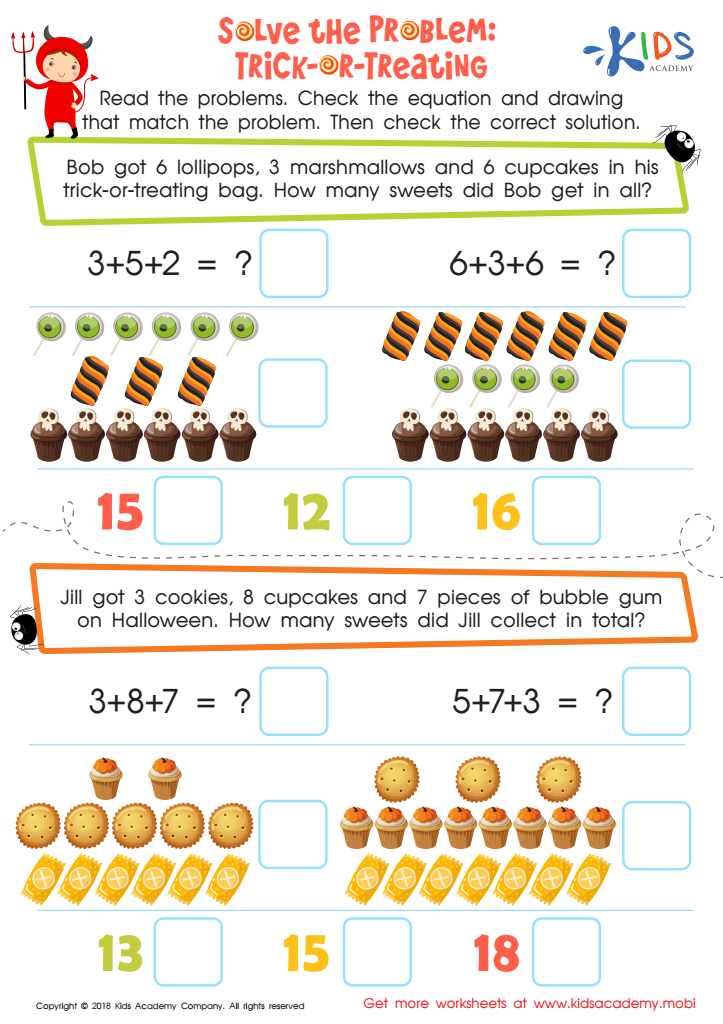
Solve the Problem: Trick–or–treating Worksheet
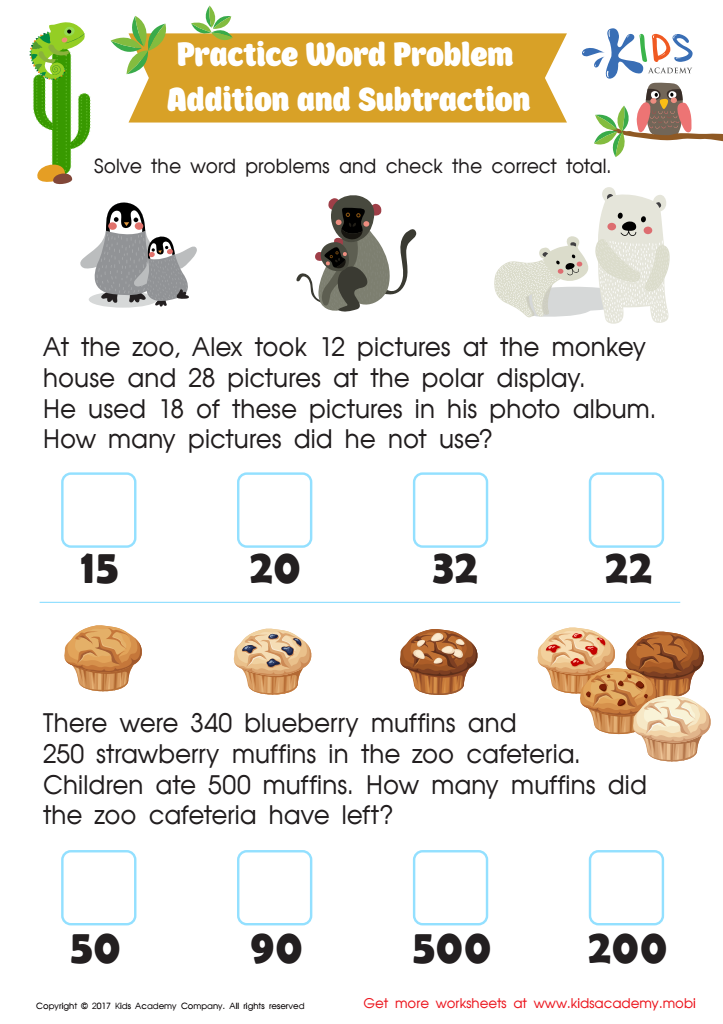
Addition and Subtraction: Word Problems Worksheet



Logical reasoning and two-step word problems are crucial components of a child’s early mathematical development for several reasons. For children aged 4-8, engaging with two-step word problems not only enhances their comprehension of quantitative relationships but also fosters critical thinking skills. These problems often require children to process information, identify the necessary operations, and solve them sequentially, embodying the essence of logical reasoning.
Moreover, developing logical reasoning impacts a child’s ability to tackle more complex problems as they progress in their education. It promotes mental flexibility, allowing them to approach various challenges creatively. In the broader educational context, these skills empower children to navigate everyday scenarios, turning abstract math concepts into practical knowledge.
Teachers and parents play a pivotal role in nurturing these skills during pivotal developmental years. By incorporating logical reasoning in conversations and activities, they can create a supportive learning environment. Solving two-step word problems together is not just about math but imbues children with essential life skills such as patience, perseverance, and resilience in problem-solving.
Ultimately, fostering logical reasoning prepares children for future academic challenges, while also enriching their cognitive and social development at this formative stage.