Contextual understanding Normal Building Vocabulary Worksheets for Ages 4-8
5 filtered results
-
From - To
Enhance your child's vocabulary with our engaging Contextual Understanding Normal Building Vocabulary Worksheets, ideal for ages 4-8! These worksheets are designed to help young learners grasp words in context, strengthening their comprehension and language skills. Each activity encourages kids to explore vocabulary through relatable scenarios and imaginative exercises, making learning both enjoyable and effective. As children engage with colorful illustrations and interactive tasks, they develop essential reading skills that lay the foundation for future academic success. Tailored to meet the needs of early learners, our worksheets are perfect for teachers and parents aiming to foster a lifelong love of learning. Explore now!
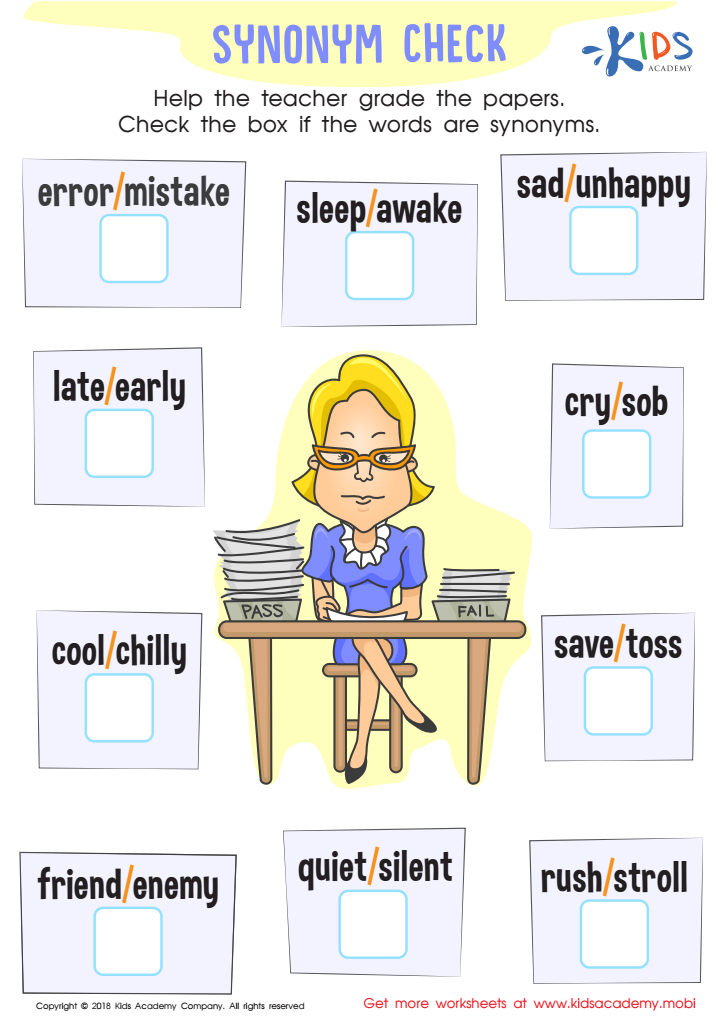
Synonym Check Worksheet
 Assign to My Students











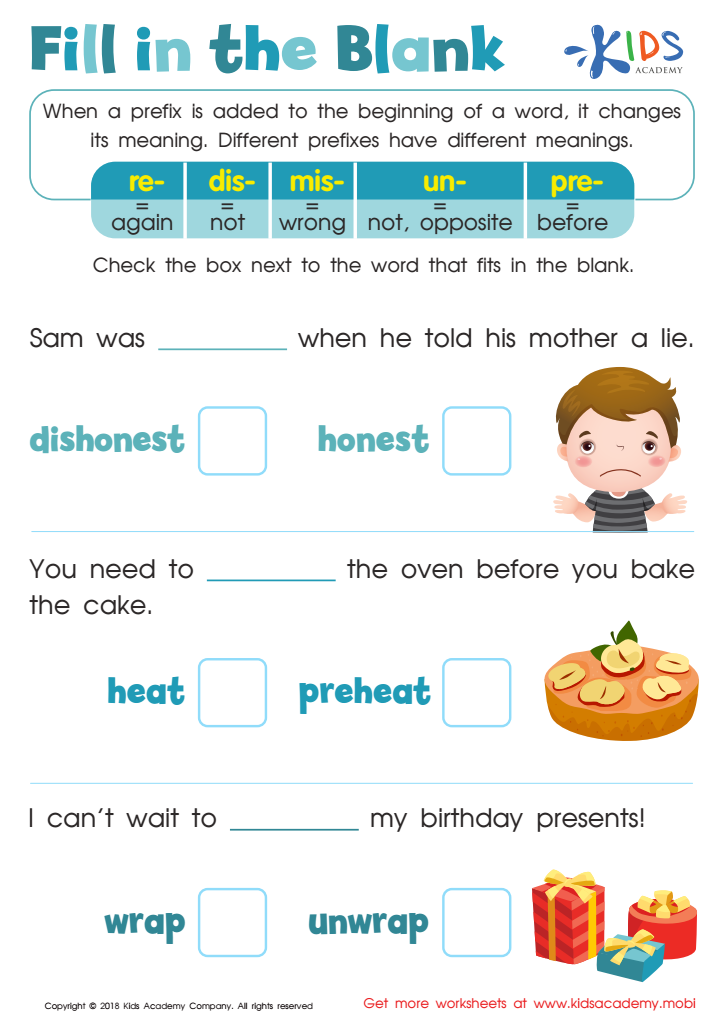
Reading: Fill in the Blank Worksheet
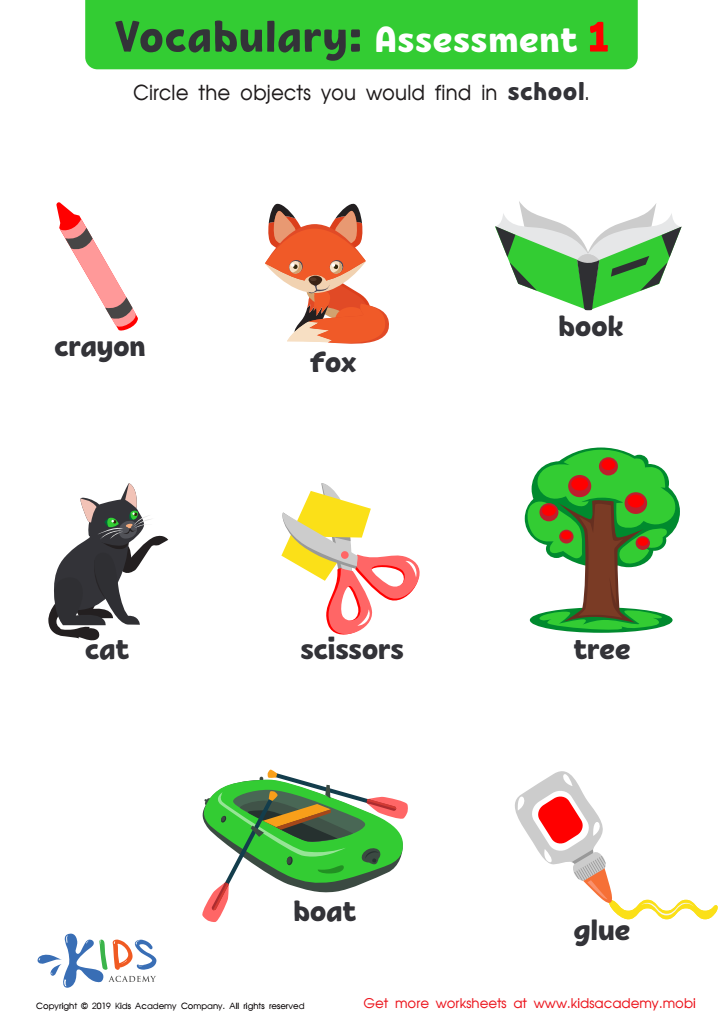
Vocabulary: Assessment 1 Worksheet
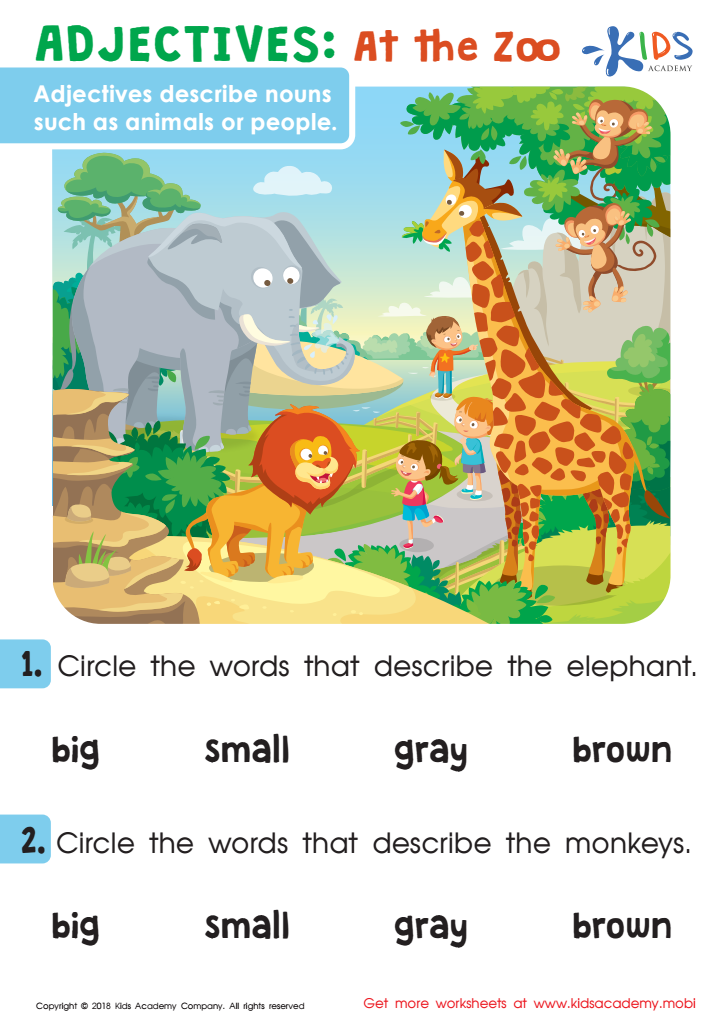
Adjectives: At The Zoo Worksheet
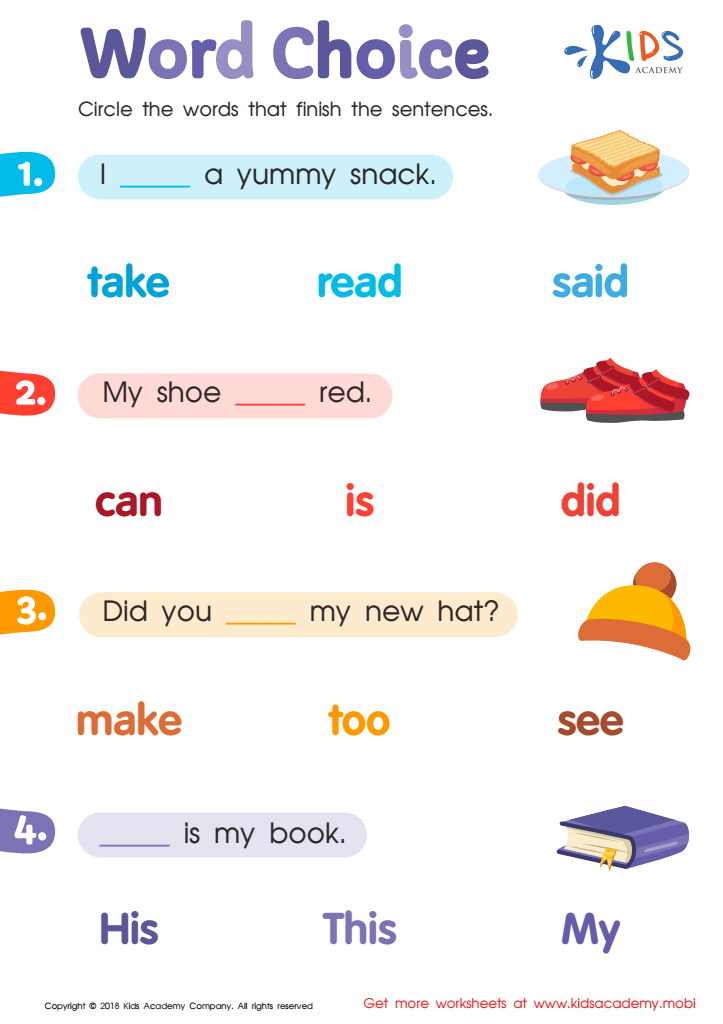
Word Choice Worksheet








Contextual understanding and vocabulary building are crucial components of early literacy development for children aged 4 to 8. During this formative period, children's brains are particularly receptive to language acquisition. When parents and teachers prioritize these areas, they empower children to make meaningful connections between words and their usage in real-life scenarios, enhancing comprehension and communication skills.
Building vocabulary in context allows children to grasp not just the meaning of words but also their nuances and relevant applications. This promotes critical thinking and helps them navigate complex ideas in various subjects. For instance, knowing the word "habitat" becomes significantly more impactful when children learn it through stories about animals and their environments.
Moreover, a robust vocabulary positively influences reading proficiency, as children with richer language skills are better equipped to decode and understand texts. This early foundation can set them on a path to academic success, fostering both confidence and a love for reading. Thus, by emphasizing contextual understanding and vocabulary growth, parents and teachers not only support cognitive development but also inspire a lifelong appreciation for learning. Engaging children with diverse language experiences ultimately enriches their overall educational journey.








