Moral lesson understanding Normal Building Vocabulary Worksheets for Ages 4-8
3 filtered results
-
From - To
Our “Moral Lesson Understanding Normal Building Vocabulary Worksheets for Ages 4-8” are expertly tailored to enhance young learners' reading and vocabulary skills. By integrating essential vocabulary-building exercises with captivating moral lessons, these worksheets offer an engaging way for children to absorb important life values while advancing their language abilities. Each worksheet is designed to be age-appropriate, ensuring that the activities are both challenging and attainable. Perfect for at-home practice or classroom use, these materials foster critical thinking and ethical understanding in a fun, educational format, laying the foundation for both linguistic success and strong moral character development.
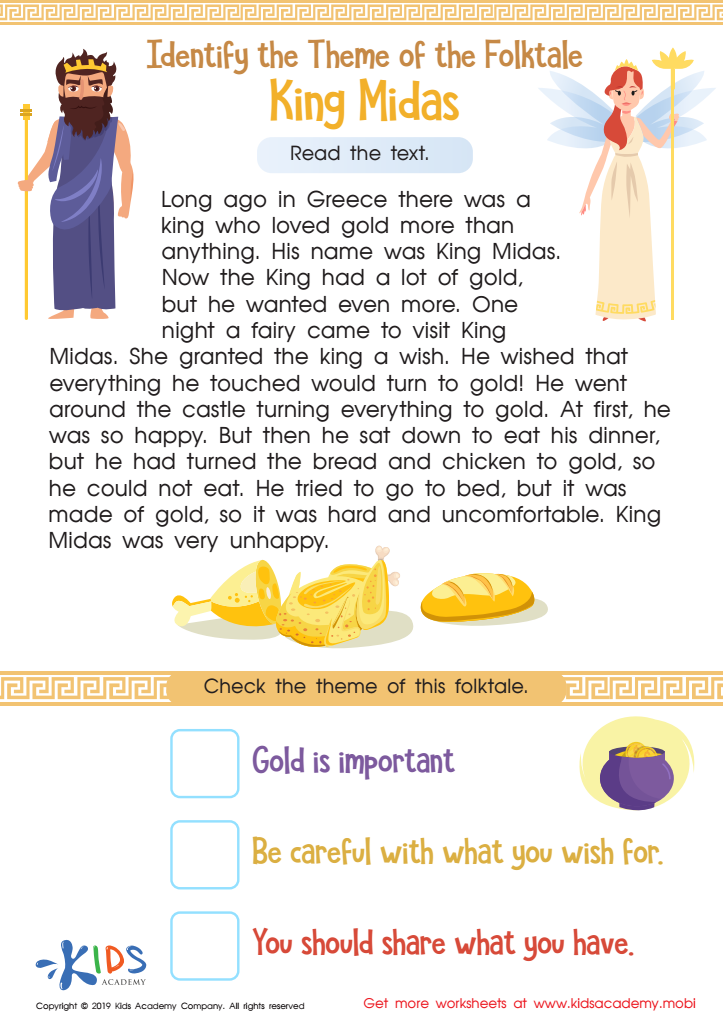
King Midas Worksheet
 Assign to My Students











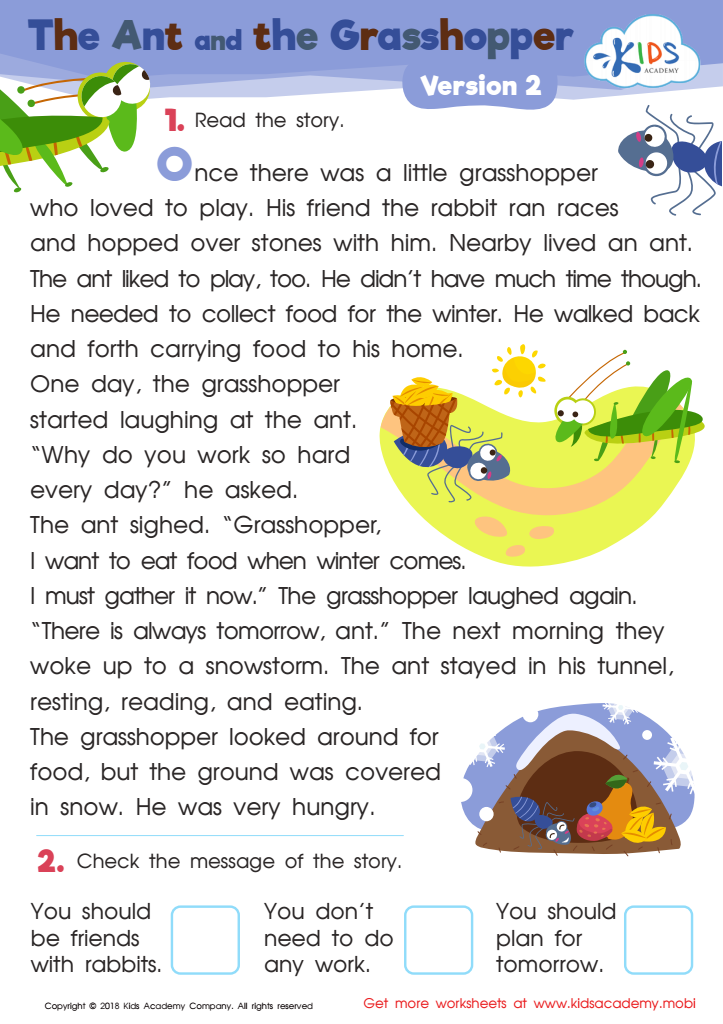
The Ant and The Grasshopper Version 2 Worksheet
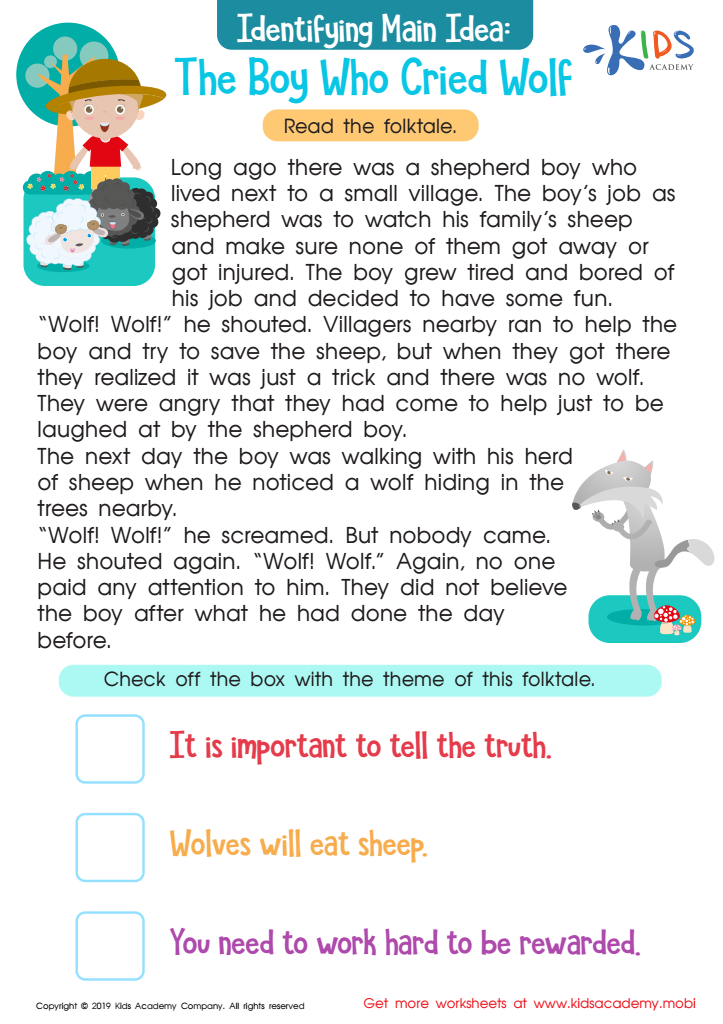
The Boy Who Cried Wolf Part 2 Worksheet








Understanding moral lessons and building a robust vocabulary are crucial aspects of early childhood development. Parents and teachers should prioritize these areas for several reasons.
Firstly, moral lessons help children differentiate between right and wrong, laying the foundation for ethical behavior. When children understand concepts like honesty, kindness, and empathy, they are better equipped to navigate social interactions and form healthy relationships. This foundation of moral understanding contributes to a well-rounded character and responsible citizenship as they grow.
Secondly, building a strong vocabulary between the ages of 4 and 8 is essential for cognitive development. A rich vocabulary enhances children’s ability to express their thoughts, understand others, and perform better academically. With an expanded lexicon, children can grasp more complex ideas, follow instructions accurately, and enjoy reading more deeply. This linguistic prowess is correlated with better performance in all school subjects, including math and science.
Integrating moral lessons with vocabulary building can also be highly effective. For instance, discussing stories that illustrate moral dilemmas not only teaches ethical principles but also introduces new words and concepts. By prioritizing these elements, parents, and teachers equip children with the tools they need to succeed both socially and academically, fostering a generation of well-spoken, thoughtful, and ethical individuals.








