
Understanding suffixes Normal Building Vocabulary Worksheets for Ages 4-8
3 filtered results
Difficulty Level
Grade
Age
-
From - To
Subject
Activity
Standards
Enhance your child's vocabulary with our engaging "Understanding Suffixes" worksheets, designed for ages 4-8. These fun and interactive worksheets introduce young learners to the concept of suffixes, helping them understand how adding different endings to base words changes their meanings. The activities are crafted to promote critical thinking and language skills, making learning both enjoyable and effective. Perfect for home or classroom use, our worksheets include various exercises that encourage students to identify and apply suffixes in a fun way. Spark your child's love for words and boost their vocabulary with these essential resources today!
Favorites
With answer key
Interactive
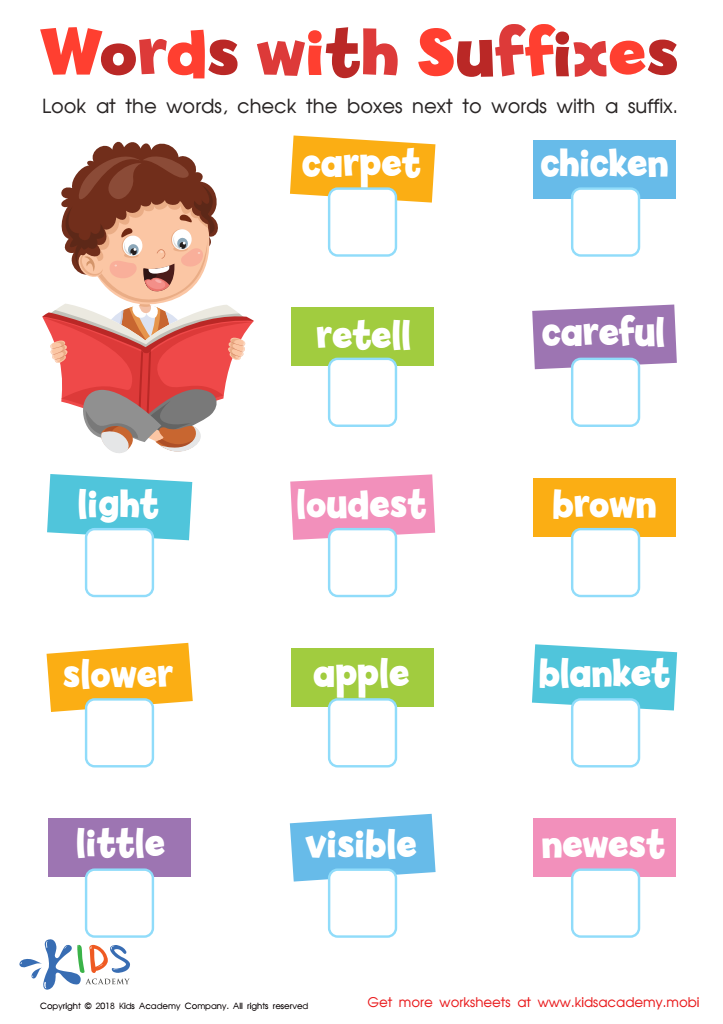
Reading: Words With Suffixes Worksheet
Help your students understand suffixes and build reading fluency with this worksheet. Have them read each word, then choose the ones with a suffix. Practicing this will lead to better comprehension and more confident reading. Save it for future use in language and reading classes.
 Assign to My Students
Reading: Words With Suffixes Worksheet
Worksheet











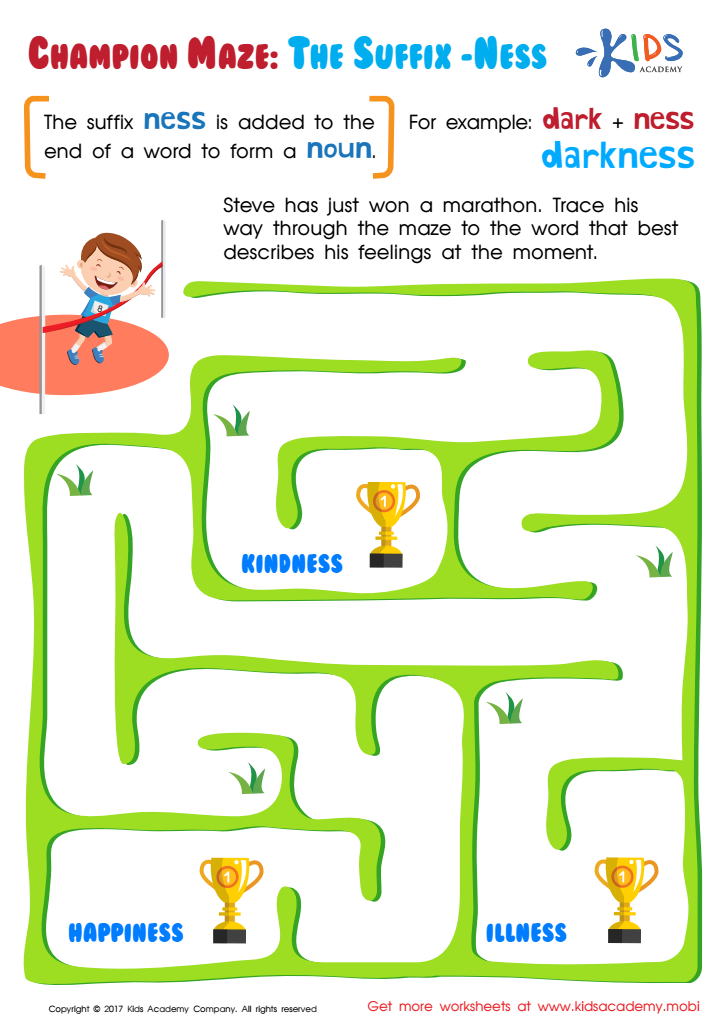
Suffix Ness Worksheet
Words are amazing! Add an ending and they can change part of speech. Make nouns out of adjectives with -ness. This worksheet has a fun maze to help learners increase vocabulary and language skills.
Suffix Ness Worksheet
Worksheet
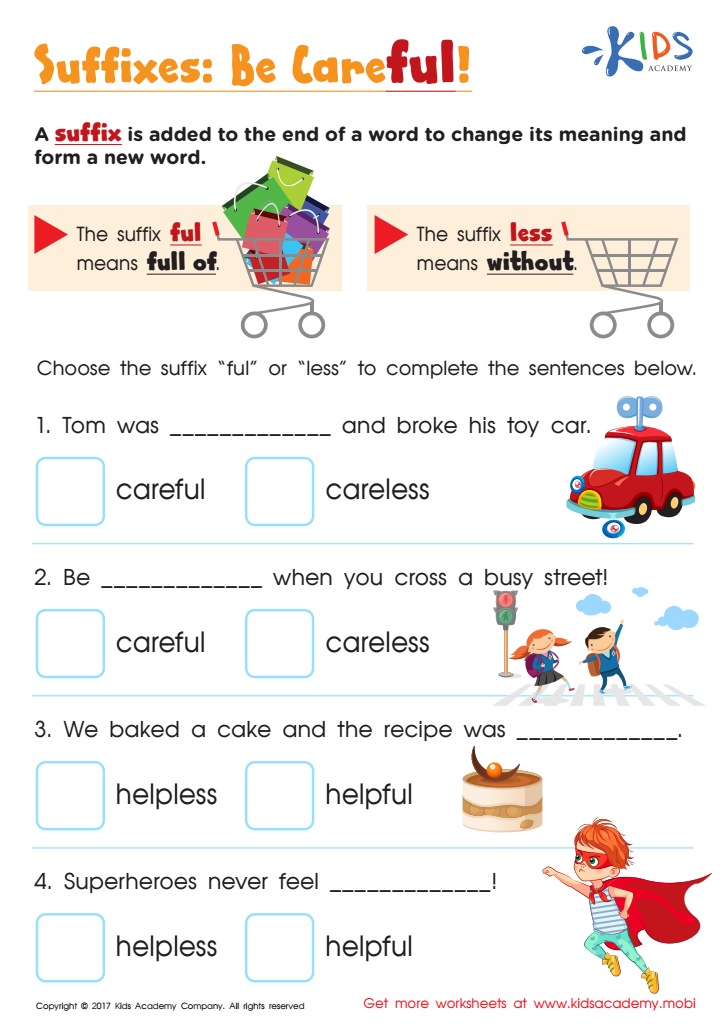
Suffixes Ful and Less Worksheet
Uh oh! Careful and careless might look similar, but have very different meanings. To avoid mix-ups, learn to spot and use the right suffixes. Use this suffixes ful and less worksheet to help your child master common suffixes!
Suffixes Ful and Less Worksheet
Worksheet
Join Kids Academy for Free
Who is primarily going to use this learning content?


.jpg)





Understanding suffixes is crucial for children aged 4-8 as it significantly aids in their language development and vocabulary building. Suffixes, which are letters added to the end of a word, help expand the meanings and enhance the complexity of words. When children learn suffixes, they not only amplify their existing vocabulary but also foster reading comprehension and context clues, critical skills for academic success.
For parents and teachers, grasping the importance of suffixes means they can actively engage children in learning activities that enhance language skills. Teaching suffixes encourages word exploration and creativity, vital for effective communication. For example, by understanding that "-er" refers to someone who performs an action (like "teacher"), children can make logical connections with new words, enhancing their linguistic abilities.
Moreover, an enriched vocabulary leads to increased confidence in their reading and writing, laying a foundation for future learning. Additionally, when children explore different suffixes, they develop critical thinking skills as they analyze and deduce meanings. Therefore, focusing on suffixes is not just about language instruction; it’s an investment in a child's overall cognitive and academic growth, making it imperative for parents and teachers to prioritize this aspect of learning.








