Contextual understanding Normal Reading Worksheets for Ages 4-8
6 filtered results
-
From - To
Discover the joy of learning with our Contextual Understanding Normal Reading Worksheets, designed specifically for young readers aged 4-8. These engaging worksheets encourage children to explore and comprehend text within its context, enhancing their critical thinking and reading skills. Each worksheet features age-appropriate, appealing illustrations, and thought-provoking questions that facilitate a deeper understanding of stories and information. Perfect for classroom use or homeschooling, our resources help children develop essential literacy skills while making learning fun. Unlock your child's potential and watch them thrive as they navigate the world of reading with confidence and curiosity! Start their learning journey today!
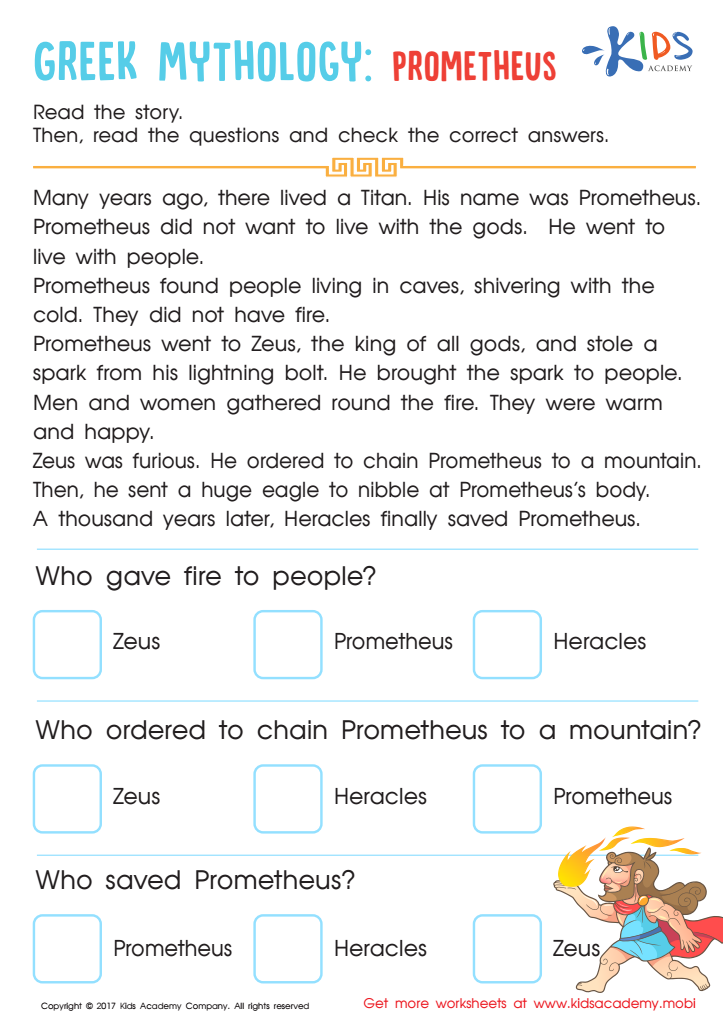
Prometheus Story Worksheet
 Assign to My Students
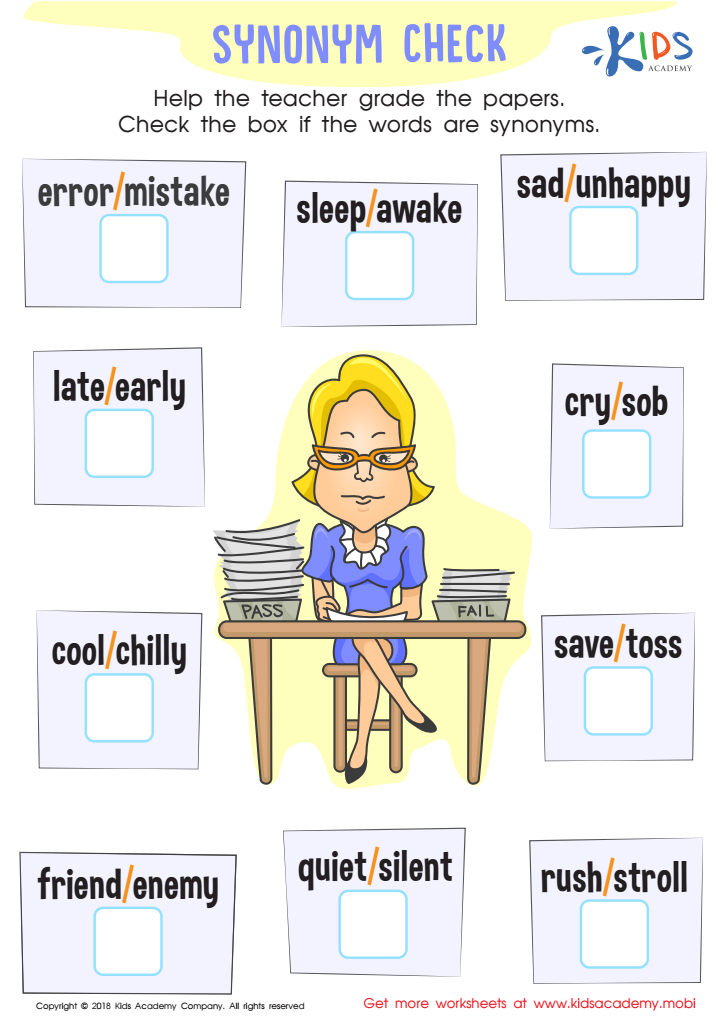
Synonym Check Worksheet
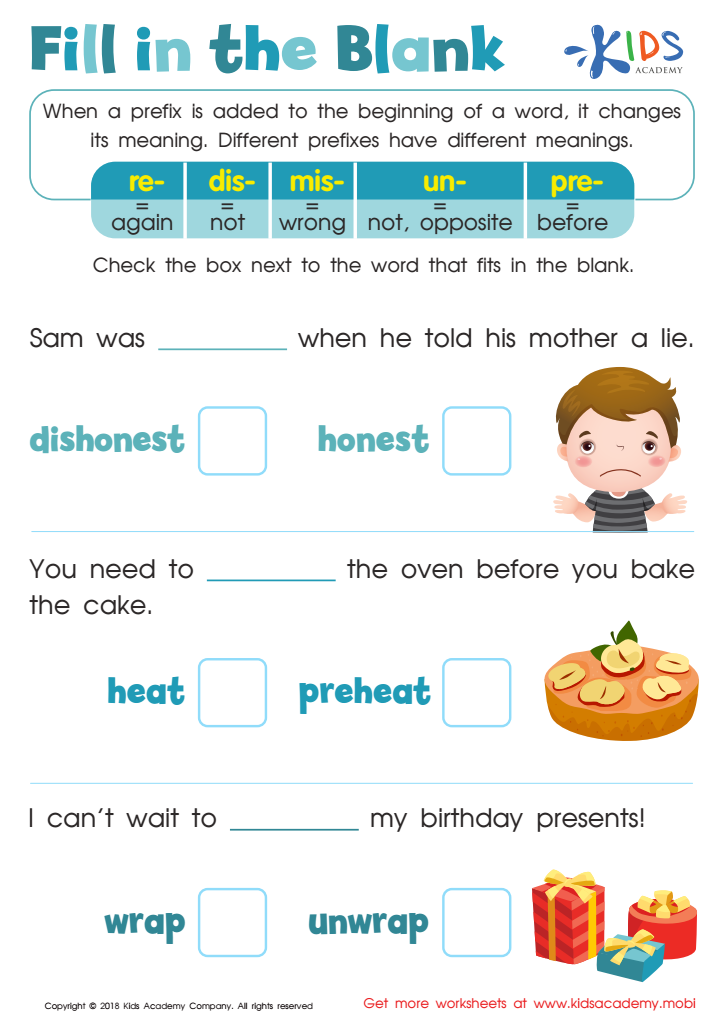
Reading: Fill in the Blank Worksheet
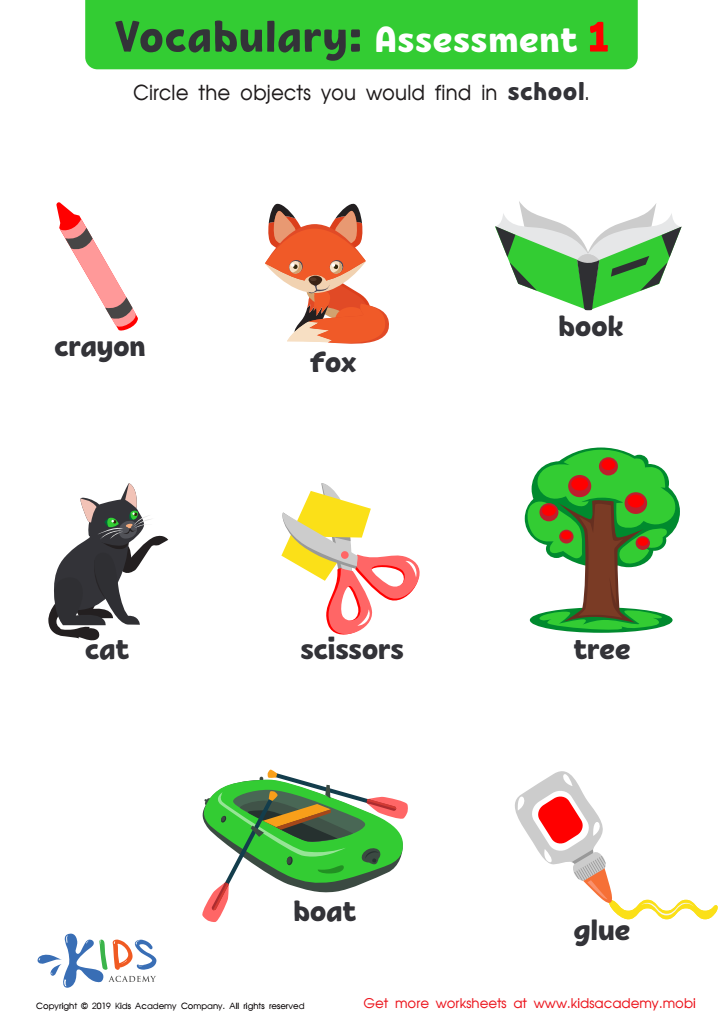
Vocabulary: Assessment 1 Worksheet
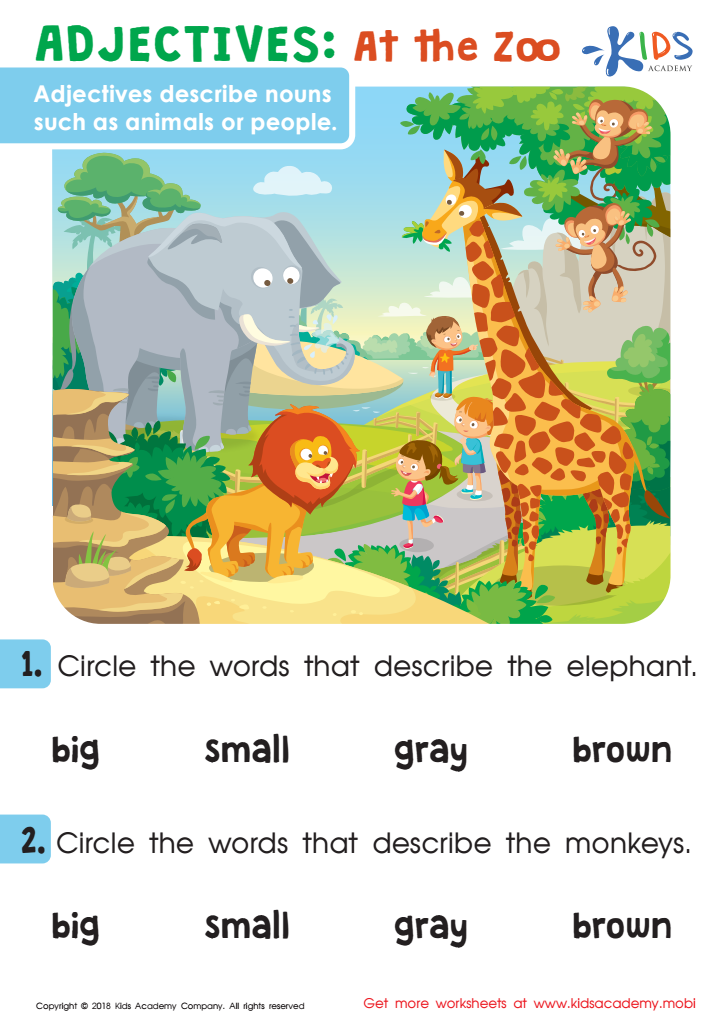
Adjectives: At The Zoo Worksheet
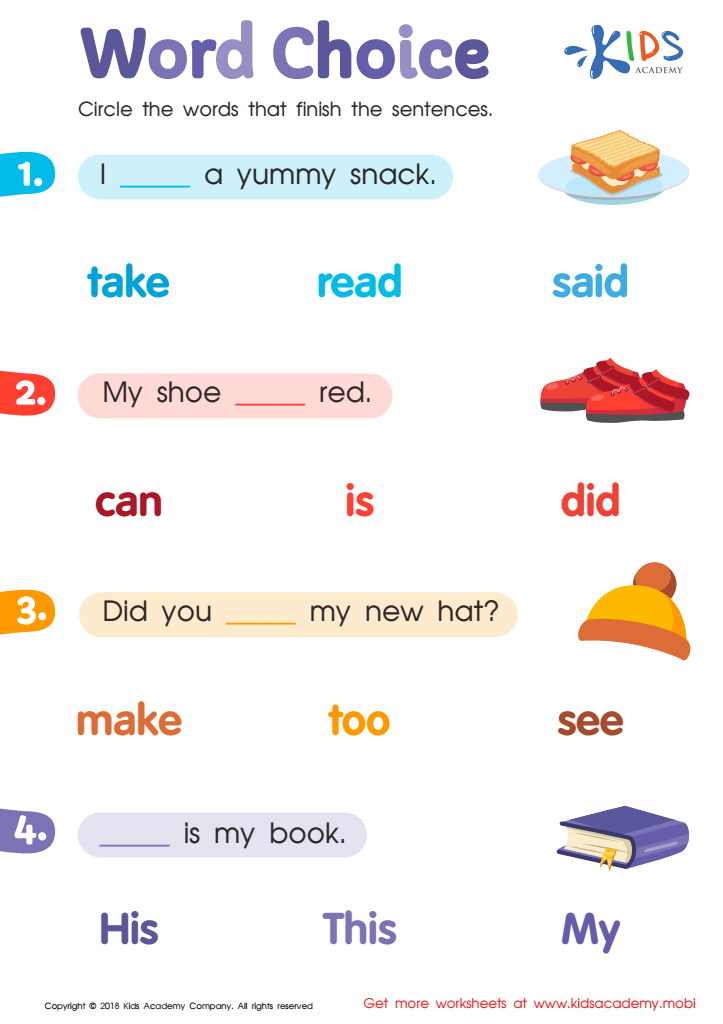
Word Choice Worksheet








Contextual understanding in reading is crucial for children aged 4-8, as it supports their overall literacy development and cognitive growth. At this age, children strive to make sense of their world, and the ability to contextually interpret texts helps them connect language to their experiences, emotions, and knowledge. When parents and teachers focus on contextual understanding, they encourage children to think critically about what they read, fostering deeper comprehension and retention.
Furthermore, children who grasp the context of a story can better infer meanings and make predictions, skills that are essential for good reading habits. This understanding also enhances their vocabulary, as they learn new words in relation to familiar situations. By engaging with reading material in context, children become more proficient in articulating their thoughts and feelings.
Moreover, fostering contextual understanding promotes a love for reading, making it a pleasurable activity rather than a chore. Parents and teachers play a pivotal role here; their guidance in discussing stories, asking open-ended questions, and making connections to real-life situations enrich the reading experience. Overall, cultivating contextual understanding not only improves literacy skills but also nurtures children’s critical thinking abilities, laying the foundation for lifelong learning.








