Rhyming skills Normal Reading Worksheets for Ages 4-8
3 filtered results
-
From - To
Enhance your child's rhyming skills with our specialized Normal Reading Worksheets designed for ages 4-8. These engaging activities aid in phonetic development, vocabulary expansion, and early reading proficiency. Our expertly crafted worksheets make learning rhymes fun and educational, fostering a love for reading from an early age. Bright illustrations and interactive exercises help children recognize rhyming patterns and sounds. Allow your little ones to strengthen their reading foundations and boost their confidence with these enjoyable and effective worksheets. Perfect for use at home or in the classroom, our resources support both independent and guided learning experiences.
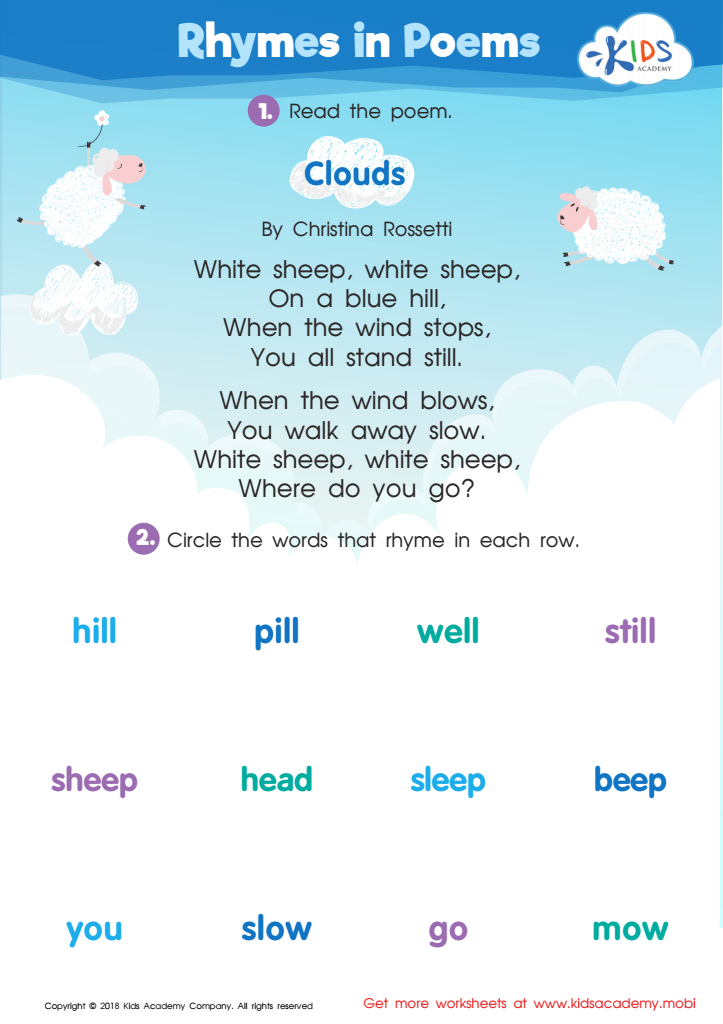
Rhymes in Poems Worksheet
 Assign to My Students
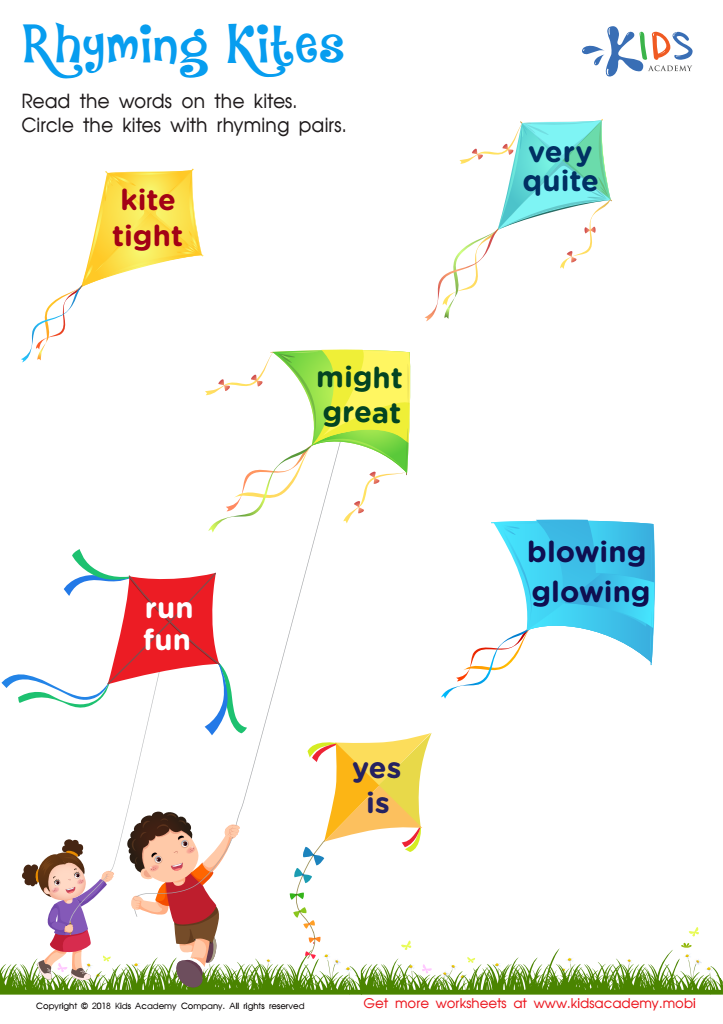
Rhyming Kites Worksheet
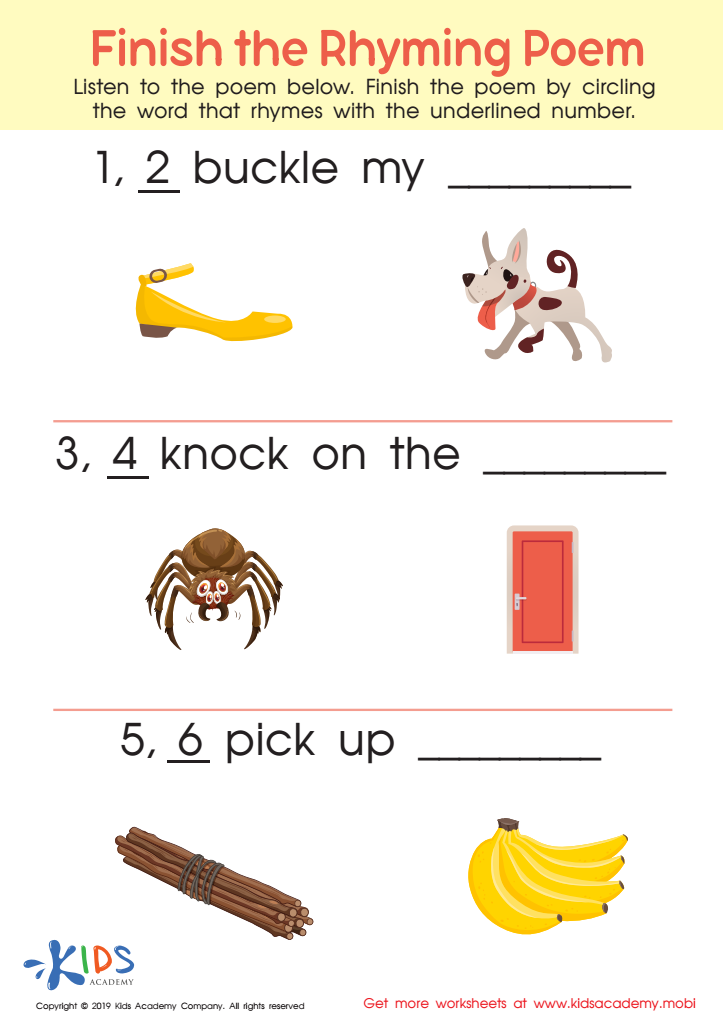
Finish Rhyming Poem Worksheet








Rhyming skills are crucial for young children, especially those between the ages of 4-8, as they significantly contribute to normal reading development. For both parents and teachers, fostering rhyming abilities can act as a cornerstone for a child's literacy foundation. Rhymes introduce children to the concept of phonemic awareness—which is the ability to identify and manipulate the individual sounds in words. This awareness is critical because it helps children understand that words are made up of smaller sound segments, and it enables them to connect sounds with letters when they begin to read.
Moreover, rhyming enhances vocabulary and comprehension. When children learn to recognize patterns and sounds, they also learn new words, increasing their language arsenal. Rhymes, being repetitive and fun, make this learning engaging and less intimidating for young learners.
Additionally, rhyming encourages memory and recall. Songs, poems, and stories that use rhyme are easier for children to remember, and this practice of memorizing enhances their cognitive development.
Importantly, rhyming makes reading a pleasurable activity, encouraging a positive attitude toward literature. When teachers and parents incorporate rhyme in reading sessions, they foster a love for reading and build confidence in children as they master the sounds and rhythms of language. Therefore, rhyming skills are a critical component in early childhood education that cannot be overlooked.








