Word identification Normal Reading Worksheets for Ages 4-8
5 filtered results
-
From - To
Introduce your young readers to the wonders of Word Identification with our engaging Normal Reading Worksheets, designed specifically for ages 4-8. These expertly crafted exercises focus on developing early literacy skills, helping kids recognize and pronounce common words confidently. Our worksheets combine colorful images, fun activities, and interactive content to make learning an enjoyable experience for children. Watch as their reading abilities flourish through our tailored, step-by-step approach. Boost your child’s language development and enhance their understanding of word patterns, phonics, and sight words with these indispensable educational tools. Let's make reading fun and proficient!
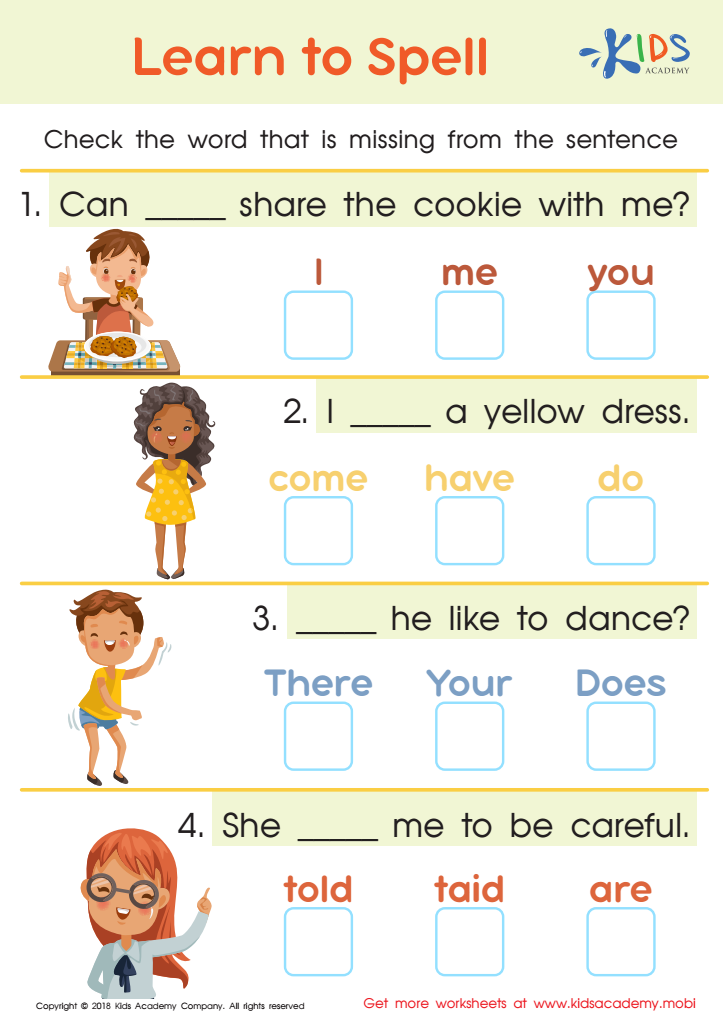
Learn to Spell Worksheet
 Assign to My Students
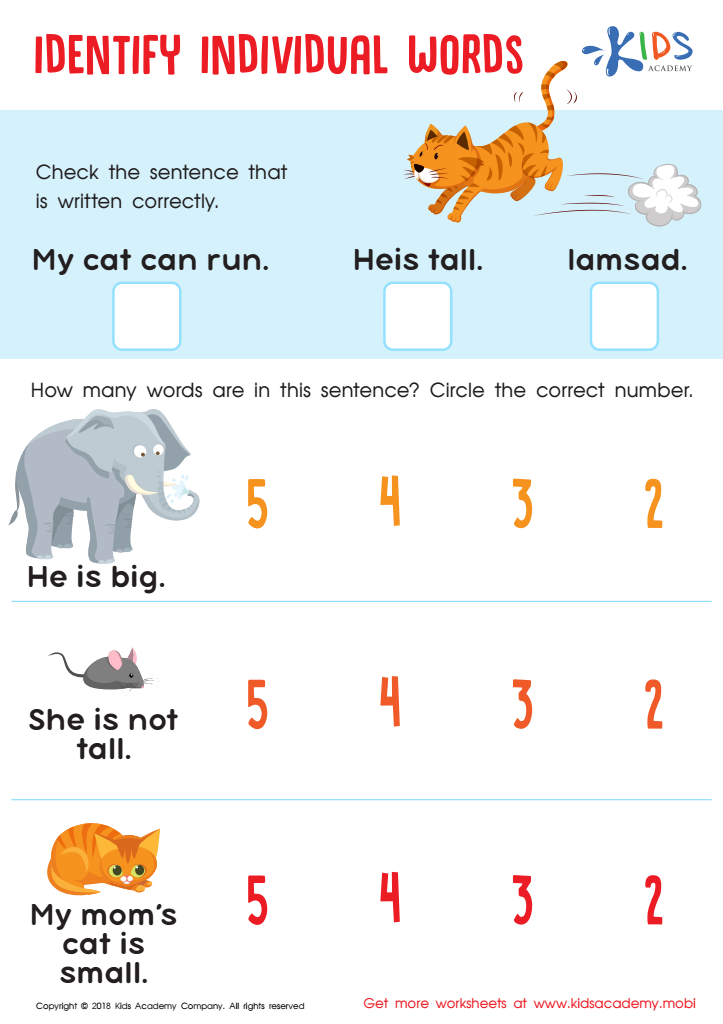
Identify Individual Words Worksheet
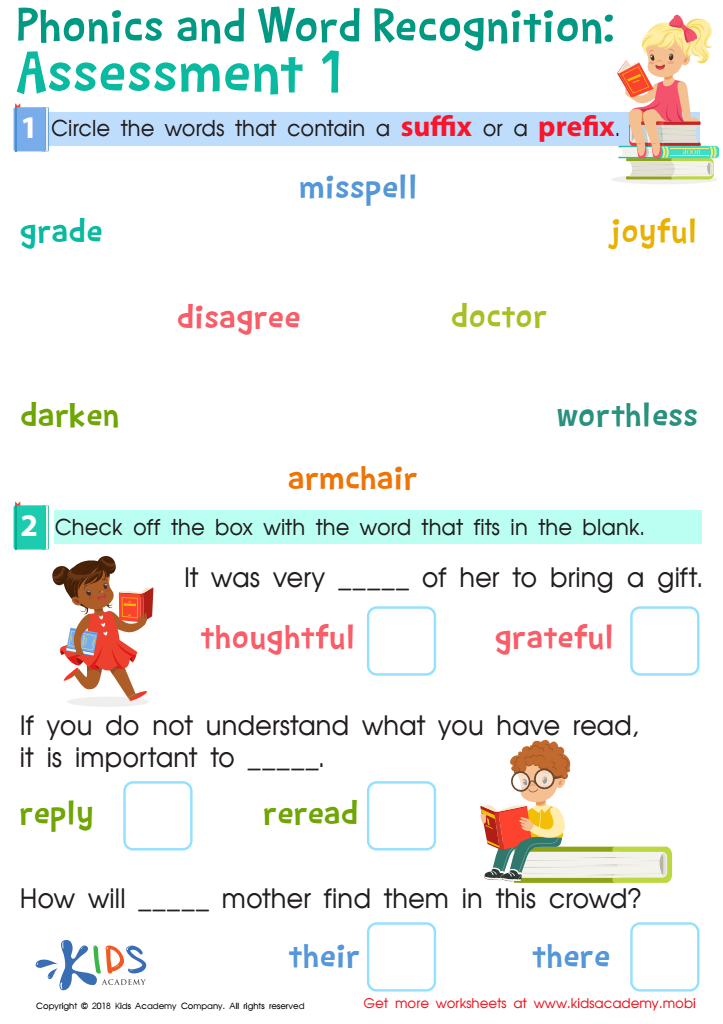
Phonics and Word Recognition: Assessment 1 Worksheet
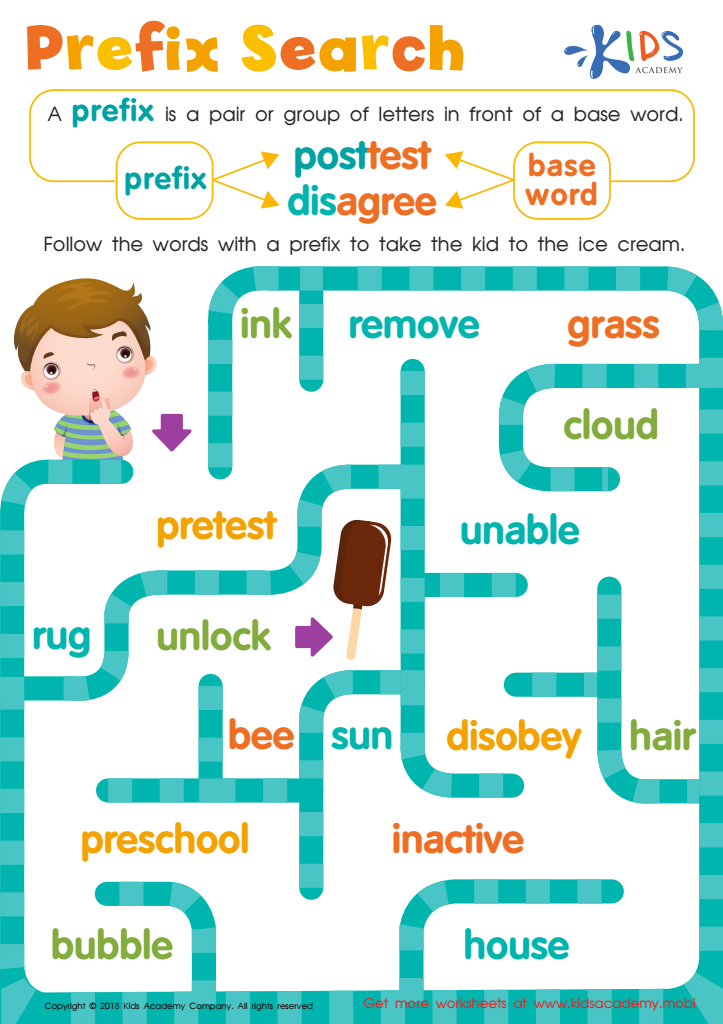
Reading: Prefix Search Worksheet
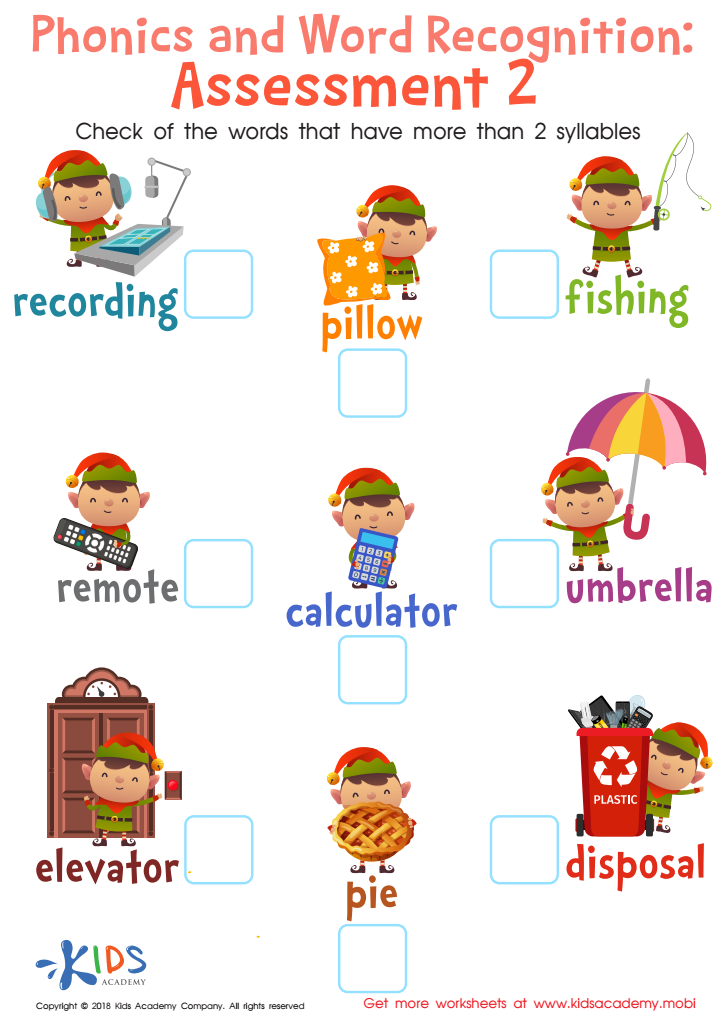
Phonics and Word Recognition: Assessment 2 Worksheet







Word identification is crucial for young children, ages 4-8, as it serves as the foundation for learning to read. At this developmental stage, children transition from recognizing the shapes and sounds of letters to decoding words accurately. Recognizing words by sight and sound directly affects their reading fluency, comprehension, and overall ability to engage with text.
Parents and teachers should care deeply about this skill because poor word identification can lead to challenges in understanding the material, decreased motivation to read, and lower overall academic achievement. Proficient word identification allows children to read effortlessly, freeing cognitive resources to focus on comprehending and enjoying what they read. This not only supports academic success but also fosters a lifelong love of reading and learning.
Early intervention and practice can help prevent future reading difficulties. When parents and teachers prioritize word identification, they actively contribute to a child's academic confidence and success, making reading a rewarding experience rather than a frustrating task. Through effective strategies such as phonics-focused activities, engaging reading materials, and supportive learning environments, we can ensure that children develop the vital skills needed for fluent, confident reading. This lays the groundwork for their educational journey and promotes long-term cognitive and personal growth.