Detail identification Normal Reading Comprehension Worksheets for Ages 4-8
3 filtered results
-
From - To
Our Detail Identification Normal Reading Comprehension Worksheets are designed for children aged 4-8 to enhance their reading skills. These engaging worksheets help young readers grasp the concept of identifying key details within a story, fostering better understanding and retention. Our activities not only make learning fun but also support critical thinking and comprehension, essential for early literacy development. With a variety of age-appropriate passages and interactive exercises, these worksheets encourage children to read closely and think deeply, setting a solid foundation for future reading success. Download today to give your child the tools they need to thrive in reading comprehension!
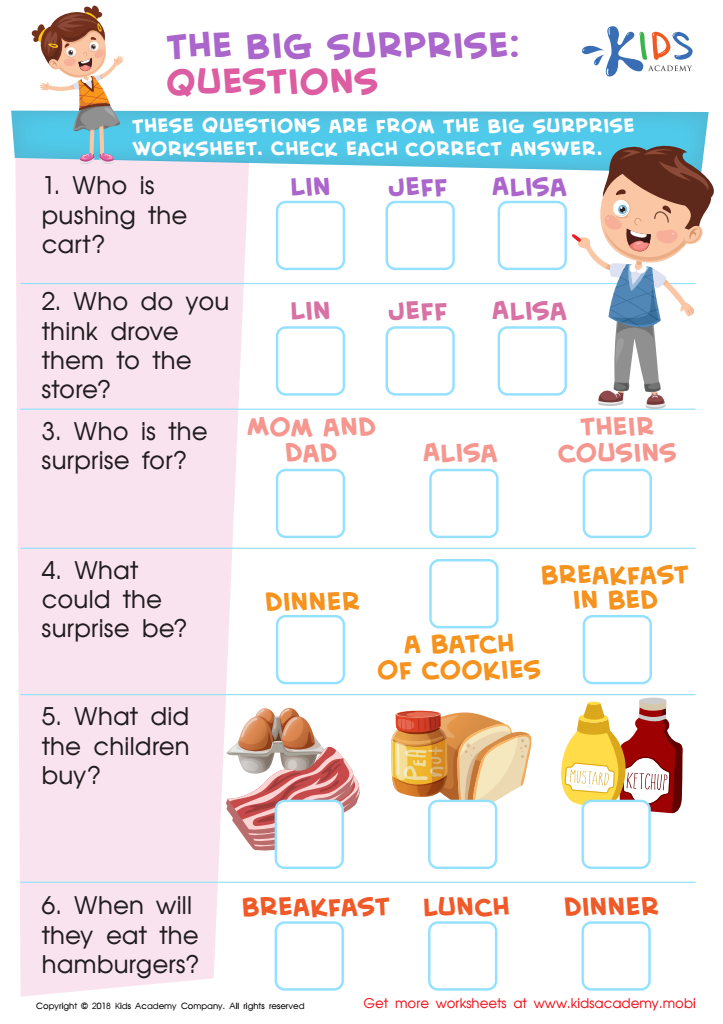
The Big Surprise: Questions Worksheet
 Assign to My Students
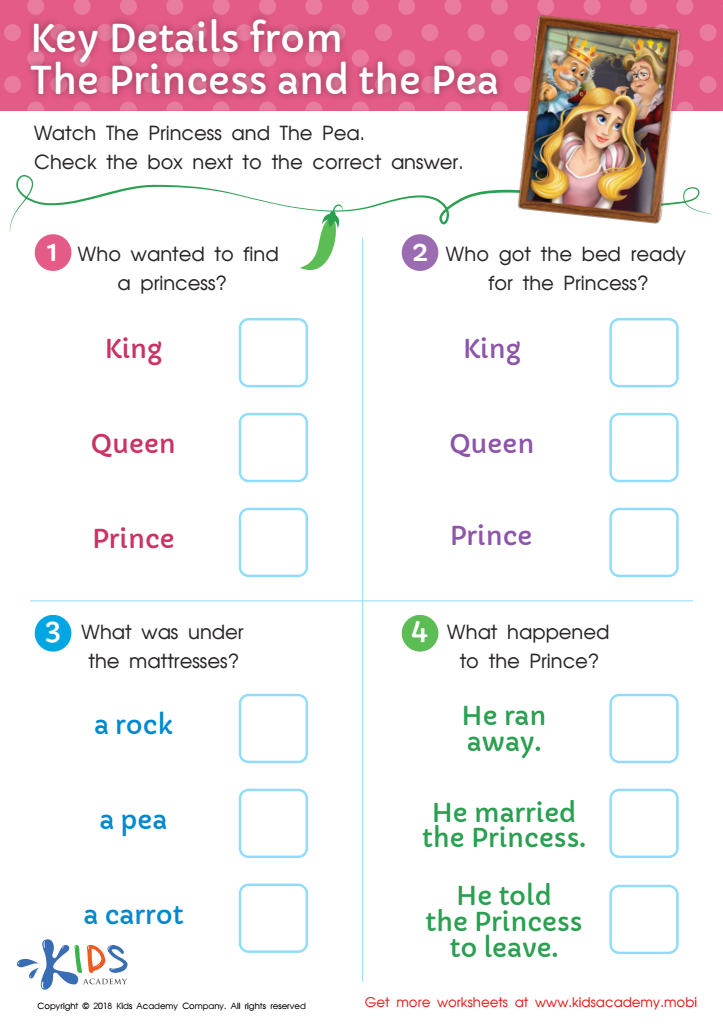
Key Details from the Princess and the Pea Worksheet
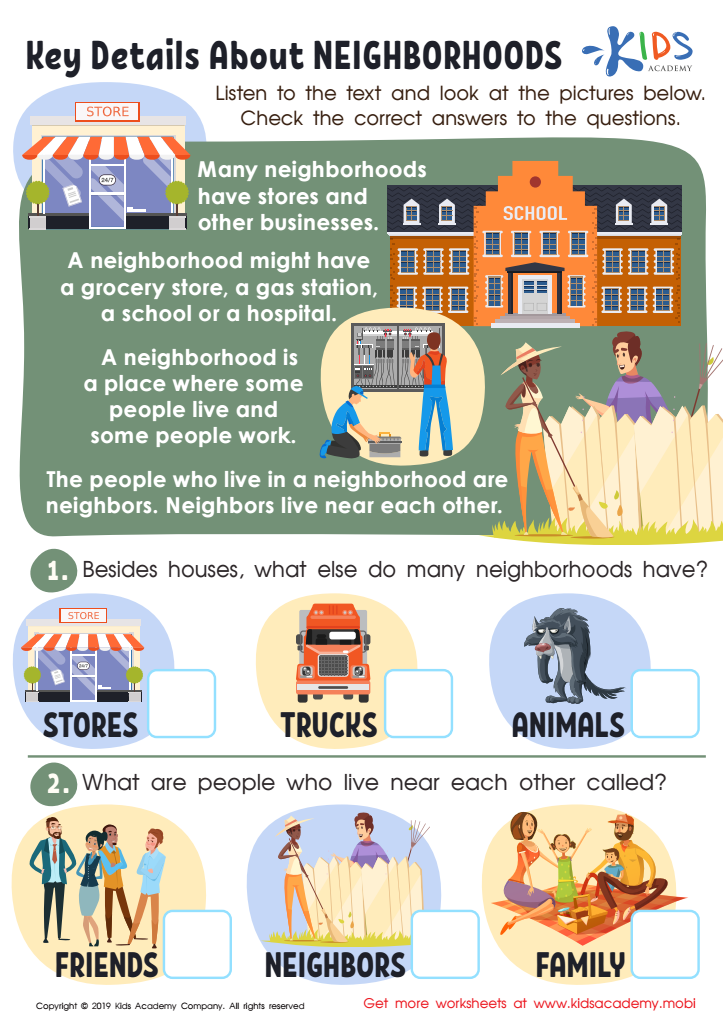
Key Details Neighborhoods Worksheet








Development of detail identification and normal reading comprehension in children aged 4-8 is crucial because these formative years lay the foundation for lifelong learning and critical thinking skills. During this period, children transition from recognizing basic words to understanding narratives, which is a pivotal step in their educational journey.
Detail identification helps children identify key elements such as characters, settings, and major events in a story. These skills enhance their understanding of the material, foster deeper engagement, and encourage active reading, which can lead to a lifelong love of books and learning. Without the ability to pinpoint details, children may struggle to make connections within texts and between texts and their own experiences, hampering comprehension and making learning less enjoyable.
Normal reading comprehension supports cognitive development, language acquisition, vocabulary expansion, and improved communication skills. Children who develop strong reading comprehension skills are better equipped to tackle academic challenges, solve problems creatively, and understand complex concepts.
Furthermore, imbuing these abilities at an early age sets children on a positive academic trajectory, reducing their risk of future reading difficulties and academic disenfranchisement. Parents and teachers should, therefore, actively engage in and support teaching methods that hone these essential skills to foster well-rounded, knowledgeable, and confident young learners.








