
Logical Reasoning Normal Reading Comprehension Worksheets for Ages 4-8
7 filtered results
Difficulty Level
Grade
Age
-
From - To
Subject
Activity
Standards
Enhance your child's reading skills with our "Logical Reasoning Normal Reading Comprehension Worksheets" designed specifically for ages 4-8. These engaging worksheets combine fun stories with critical thinking questions to promote comprehension and logical reasoning. Perfect for kindergarten to second grade, they encourage young learners to draw connections, make inferences, and understand narratives deeply. Guide your child through captivating activities that nurture problem-solving abilities and foster a lifelong love for reading. Visit Kids Academy to discover an extensive collection of premium-quality, expertly crafted worksheets tailored to boost your child's educational journey.
Favorites
With answer key
Interactive
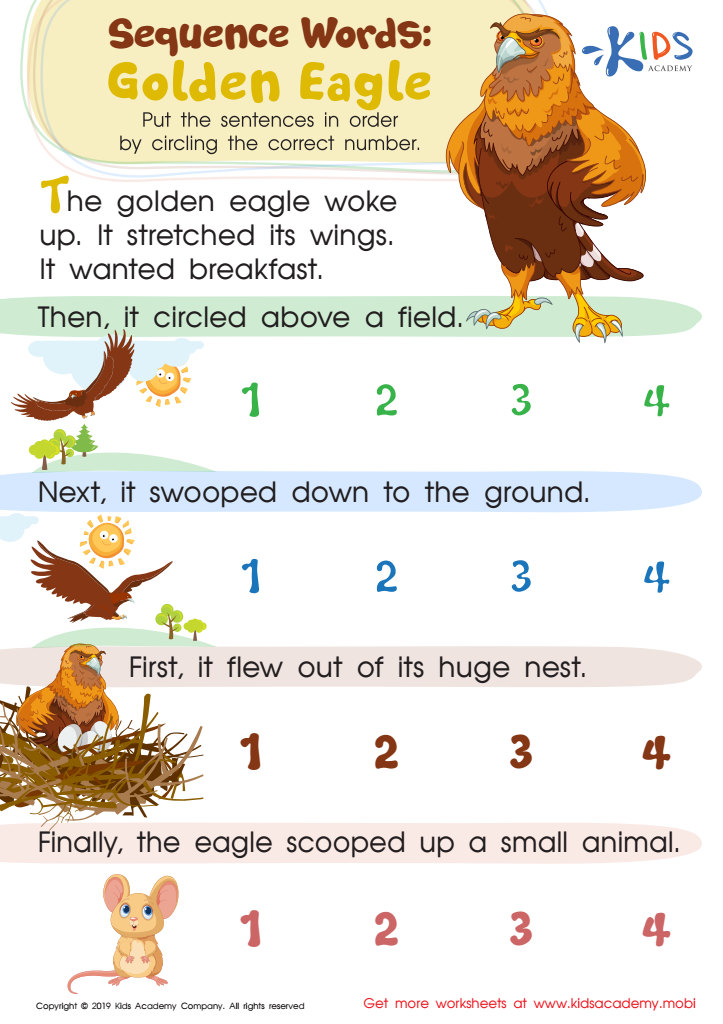
Sequence Word Eagle Worksheet
Help your child brush up on reading and writing with this fun worksheet. Read the story of the golden eagle's day, then have the child circle the numbers in the right order. Point out the sequence words that tell the order of events. This helps learners understand how to make their writing clear and understandable to others.
 Assign to My Students
Sequence Word Eagle Worksheet
Worksheet
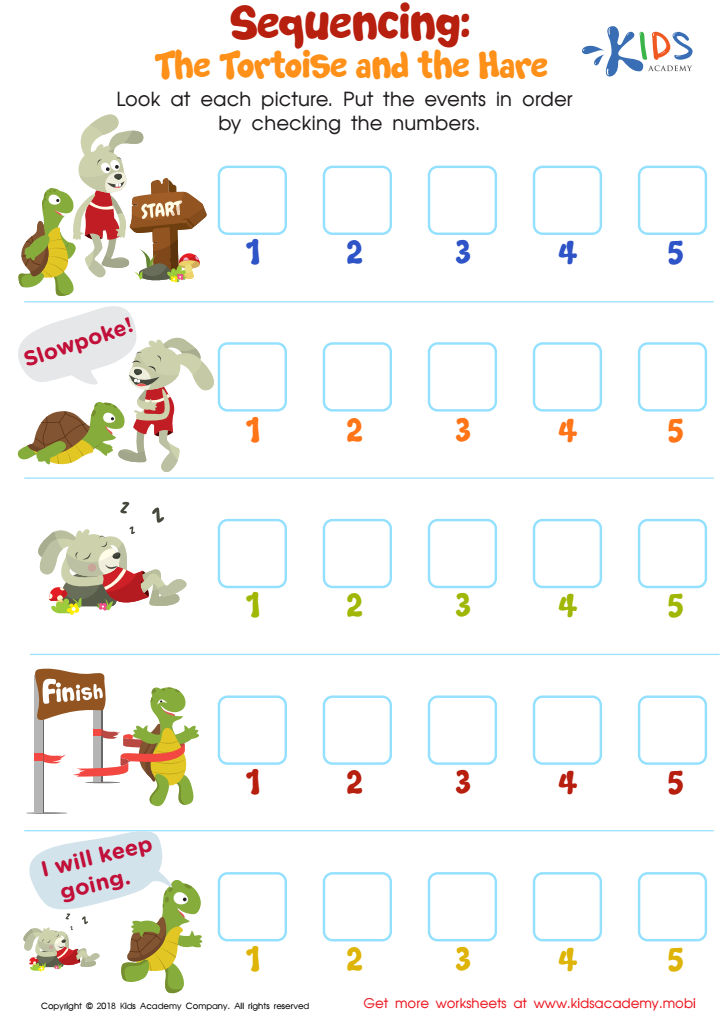
Sequencing: The Tortoise and the Hare Worksheet
Help your child become an independent reader and critical thinker with a sequencing worksheet from Kids Academy! Have them read the classic tale of the tortoise and the hare and use the accompanying worksheet to check their understanding of the story's sequence of events. Have kids identify the correct order of events by selecting the box next to the correct number for each image!
Sequencing: The Tortoise and the Hare Worksheet
Worksheet
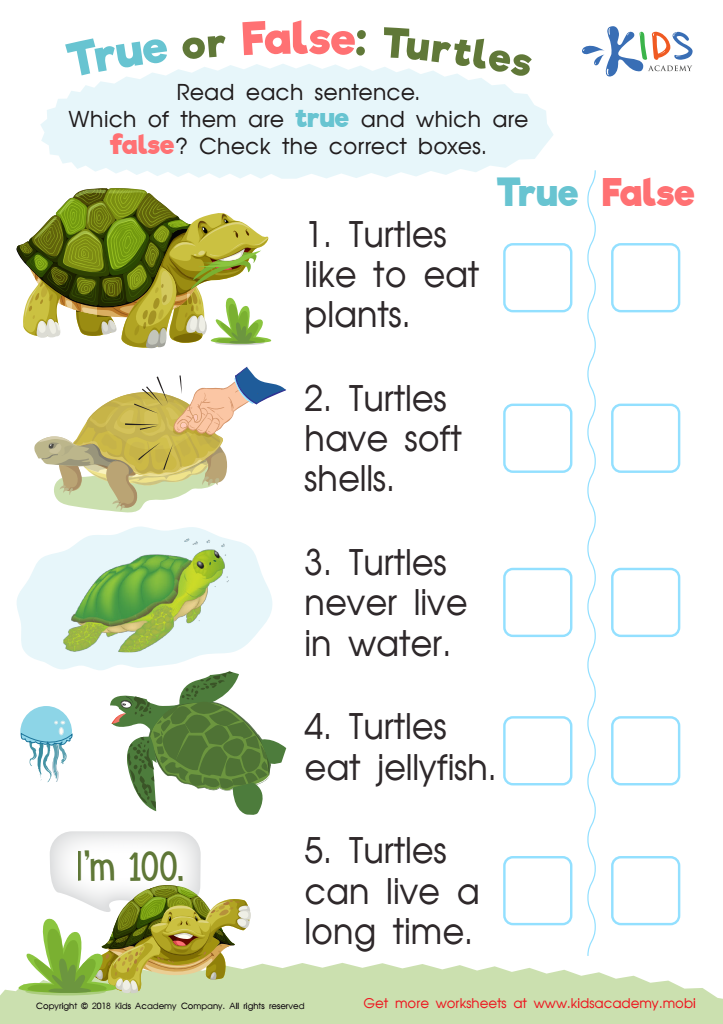
True or False: Turtles Worksheet
Print this free downloadable worksheet to strengthen your child's reading comprehension. Assist them to read each sentence and recall facts about turtles. Check true or false for each statement to verify their knowledge. Perfect for early learners!
True or False: Turtles Worksheet
Worksheet
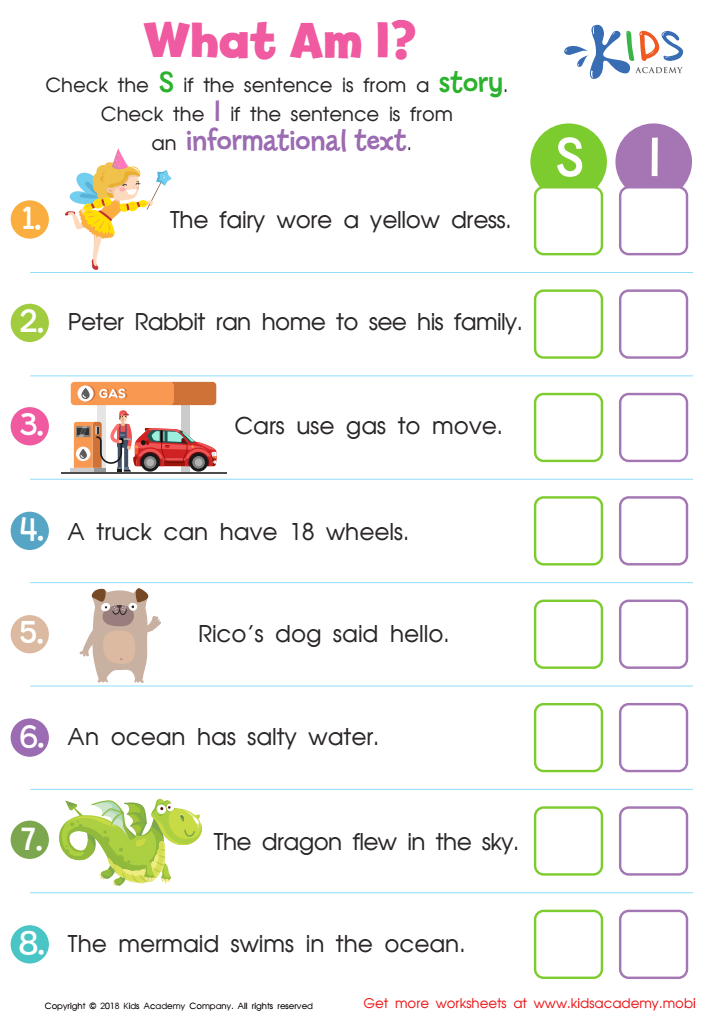
What Am I? Worksheet
This worksheet assesses students' ability to differentiate between stories and texts they read for facts. Students learn to distinguish between reading for pleasure and reading for information. It includes statements from both a story and an informational text, and students must decide what type of text it is.
What Am I? Worksheet
Worksheet
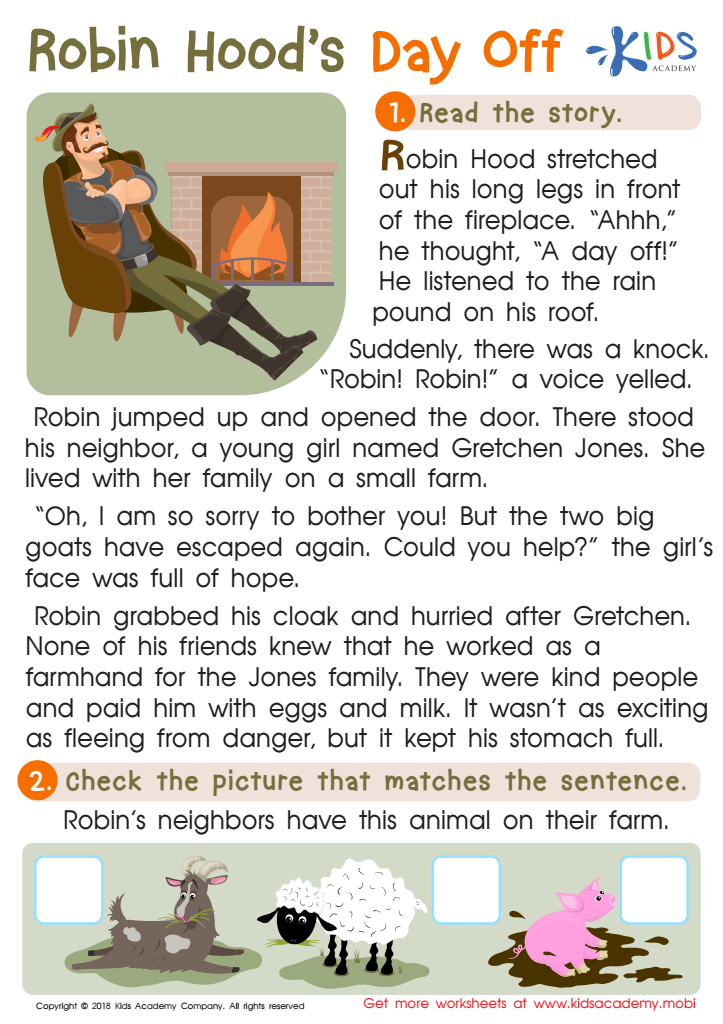
Robin Hood's Day Off Worksheet
Encourage your child to express their personality by writing stories. Show them this worksheet's short story about Robin Hood and read it slowly and carefully. Read it again if needed and ask the question below the story. This will help your child use their knowledge to answer it.
Robin Hood's Day Off Worksheet
Worksheet
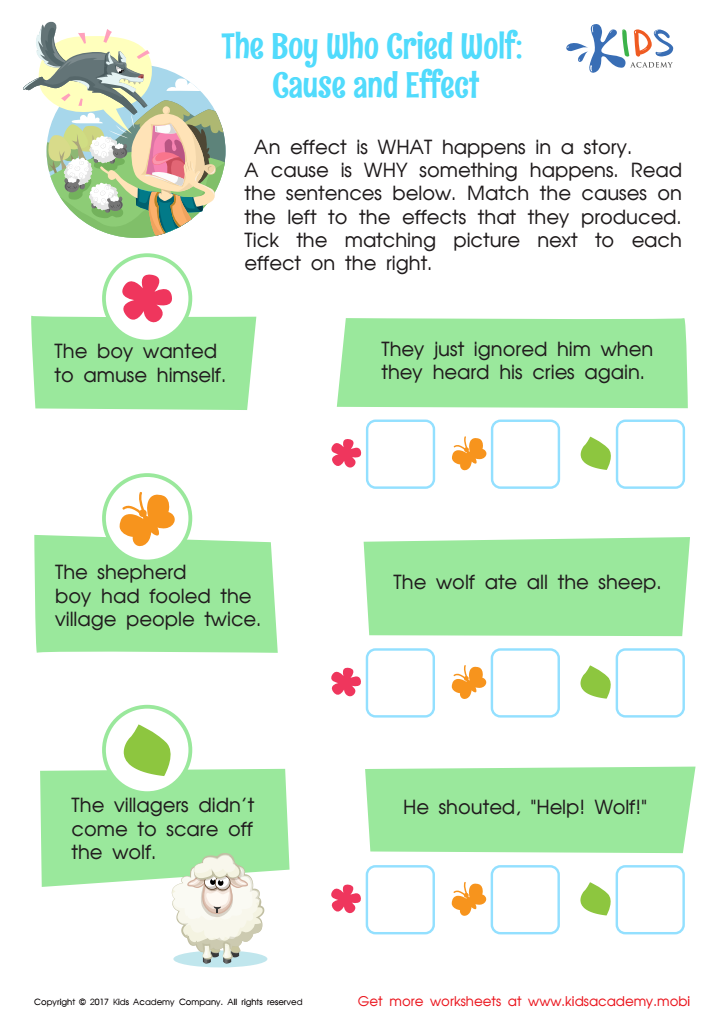
The Boy Who Cried Wolf: Cause and Effect Worksheet
With classic stories and fables, learning reading comprehension is easy - and fun!
The Boy Who Cried Wolf: Cause and Effect Worksheet
Worksheet
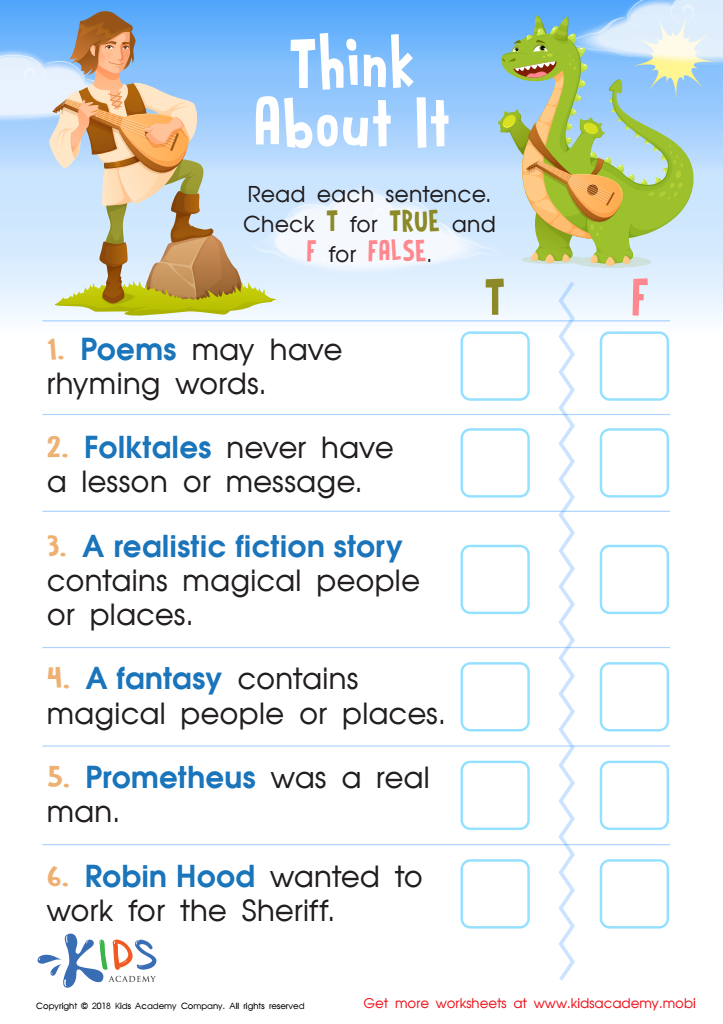
Think About It: Assessment Worksheet
Reading is a fun and important way to learn. Help your students become better readers with this simple yet colorful worksheet. Read each sentence aloud, then have them read it by themselves. Ask them to check T for True and F for False. It's a great way to practice their reading skills!
Think About It: Assessment Worksheet
Worksheet
Join Kids Academy for Free
Who is primarily going to use this learning content?


.jpg)





Logical reasoning and normal reading comprehension are foundational skills that significantly impact a child's academic and life-long success. For ages 4-8, developing adequate logical reasoning abilities helps children think systematically, solve problems efficiently, and make informed decisions. Early exposure to logical reasoning sharpens critical thinking, enabling them to identify relationships between different sets of information, understand cause and effect, and draw logical conclusions. This forms the groundwork for advanced learning in mathematics, science, and beyond.
Reading comprehension is equally crucial. At this developmental stage, children transition from learning to read to reading to learn. Effective reading comprehension skills allow them to understand, interpret, and gather meaning from texts, fostering a love for literature and continuous learning. It builds vocabulary, enhances imagination, and improves empathy by exposing them to various experiences and perspectives.
Moreover, being proficient in logical reasoning and reading comprehension improves a child's confidence, adaptability, and readiness for future academic challenges. By nurturing these core skills early on, parents and teachers prepare children to excel not only in other subjects but also in practical scenarios, ultimately setting them up for success both inside and outside the classroom. Providing a strong foundation in these areas ensures that children can thrive in an increasingly complex and information-rich world.








