Story analysis Normal Reading Comprehension Worksheets for Ages 4-8
4 filtered results
-
From - To
Discover our engaging Story Analysis Normal Reading Comprehension Worksheets designed for children ages 4-8. These worksheets help young learners enhance their comprehension skills through exciting stories, fostering creativity and critical thinking. Each activity guides students to analyze plot elements, characters, and settings, ensuring a deeper understanding of the texts they read. With vibrant graphics and age-appropriate content, our worksheets are perfect for both homeschool and classroom environments. Encourage your child's love for reading and storytelling while building essential language skills. Explore our collection today and watch your child thrive as they dive into the world of stories with confidence and curiosity!
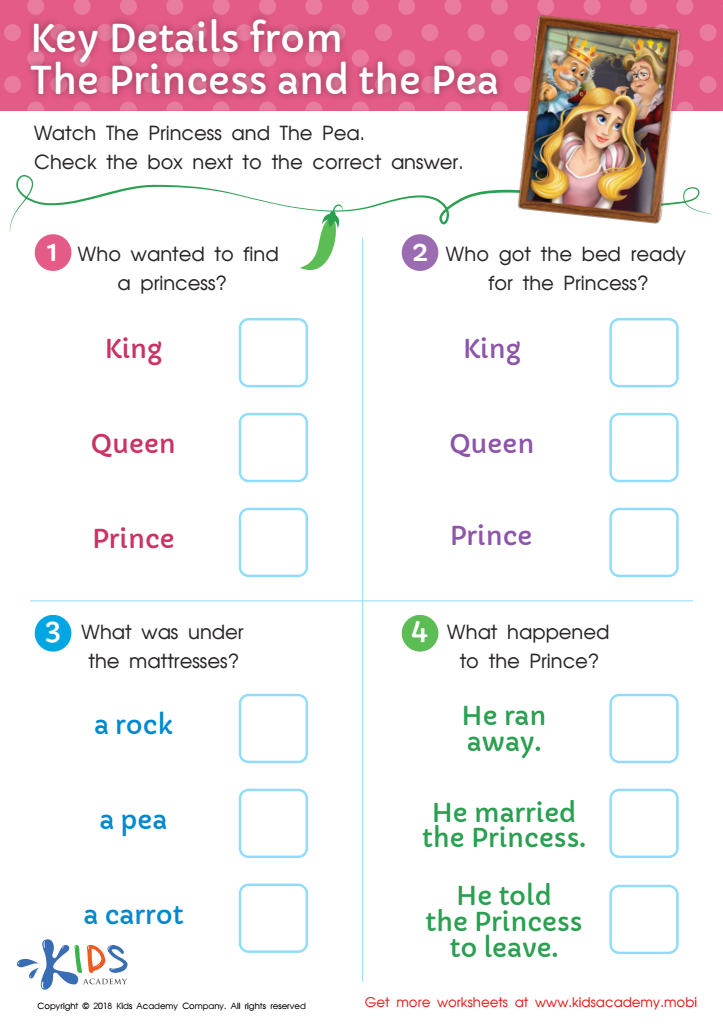
Key Details from the Princess and the Pea Worksheet
 Assign to My Students
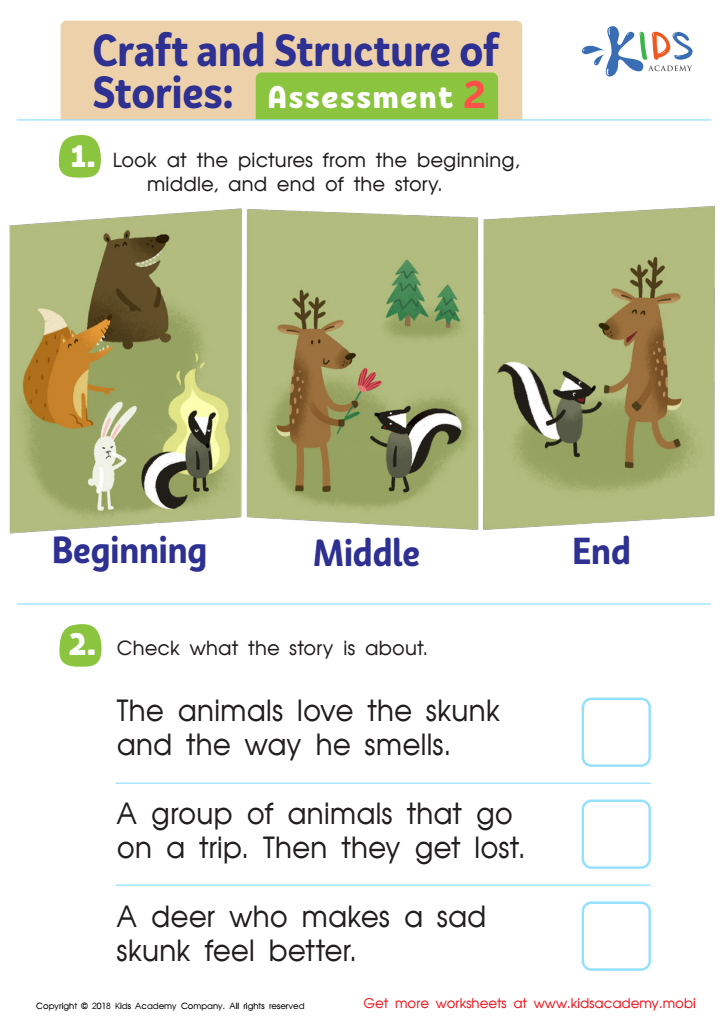
Craft and Structure of Stories: Assessment 2 Worksheet
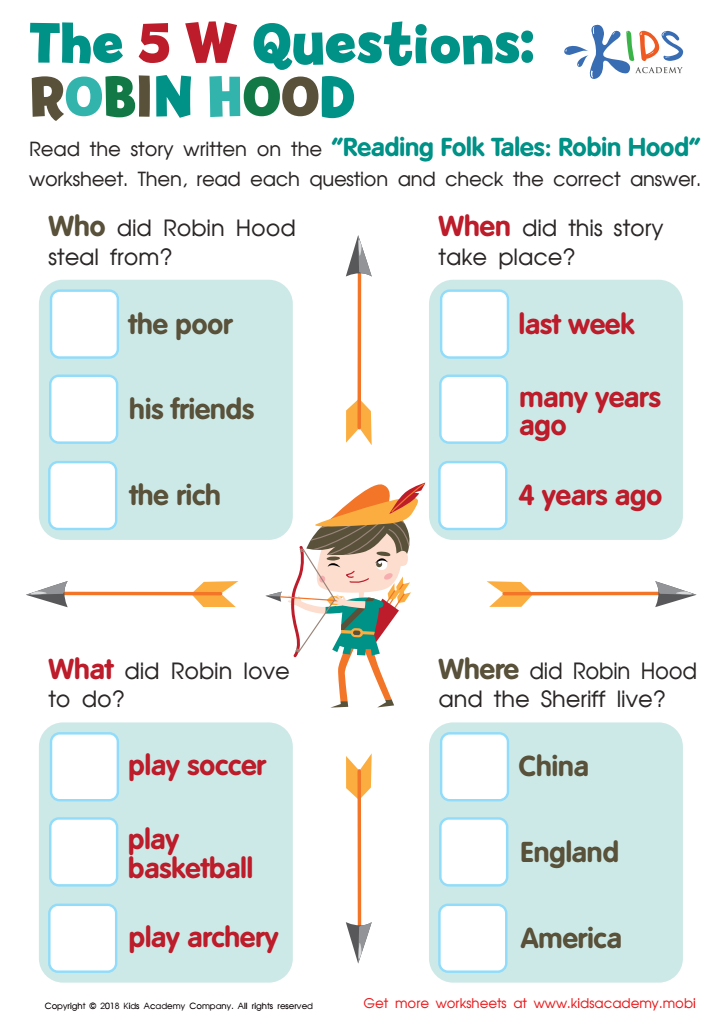
The 5 W Questions: Robin Hood Worksheet
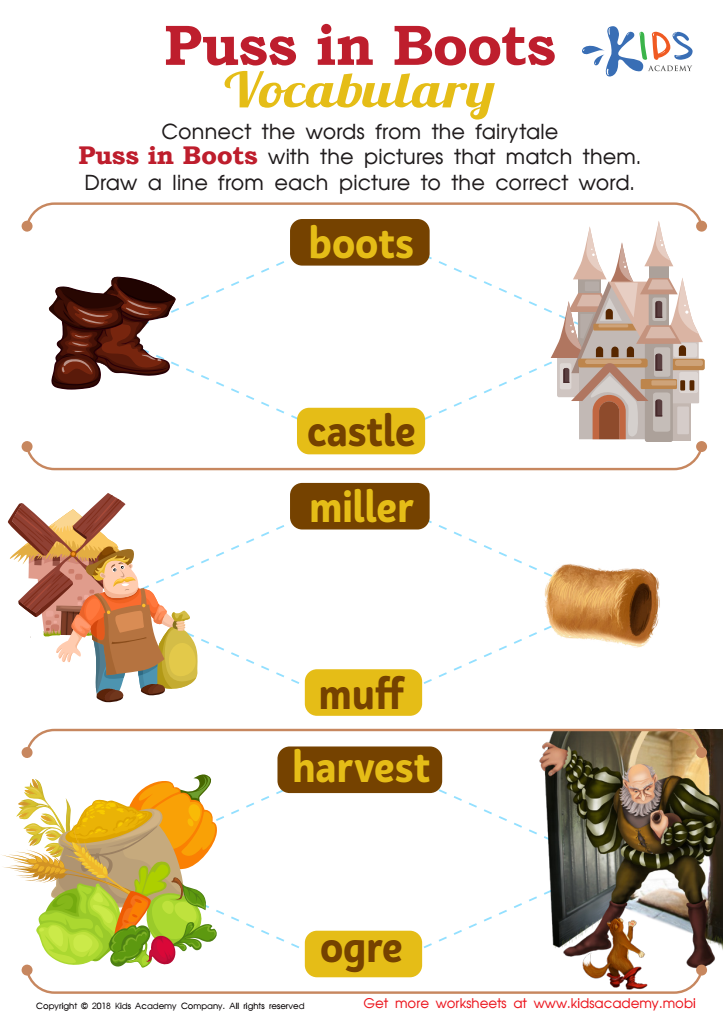
Puss in Boots Vocabulary Worksheet








Story analysis and normal reading comprehension are vital for children aged 4-8 as they cultivate foundational literacy skills essential for lifelong learning. At this age, children are developing critical thinking abilities, and story analysis encourages them to make connections between the text and their own experiences. This also helps enhance their vocabulary, as they learn to identify and understand key themes, characters, and events within stories.
Engaging in story analysis allows children to practice predicting outcomes, inferring meanings, and making evaluations—all fundamental aspects of comprehension. Teachers and parents play a crucial role in this process by selecting age-appropriate, rich texts that stimulate curiosity and prompt discussions. This not only increases comprehension but also fosters a love for reading and storytelling.
Moreover, effective comprehension skills contribute to academic success and boost confidence in later years, setting the foundation for more complex texts and subjects. As reading becomes an integral part of their education, fostering a strong comprehension early on aids in developing independent, critical thinkers who are prepared for future challenges. Therefore, understanding the importance of story analysis in developing reading comprehension is essential for guiding young learners in their educational journey.








