Visual interpretation Normal Reading Fiction Worksheets for Ages 4-8
5 filtered results
-
From - To
Discover engaging Visual Interpretation Normal Reading Fiction Worksheets designed specifically for children aged 4-8. These worksheets not only enhance reading skills but also stimulate imagination and comprehension. Tailored for young learners, our interactive activities encourage kids to visualize stories, understand character emotions, and connect with narratives through illustrations and playful questions. Each resource is crafted to foster critical thinking and creativity, making reading a fun and lively experience. Perfect for classroom use or at-home learning, these worksheets will keep children entertained while building essential literacy skills. Visit our site to explore the full range of worksheets and enrich your teaching toolkit today!
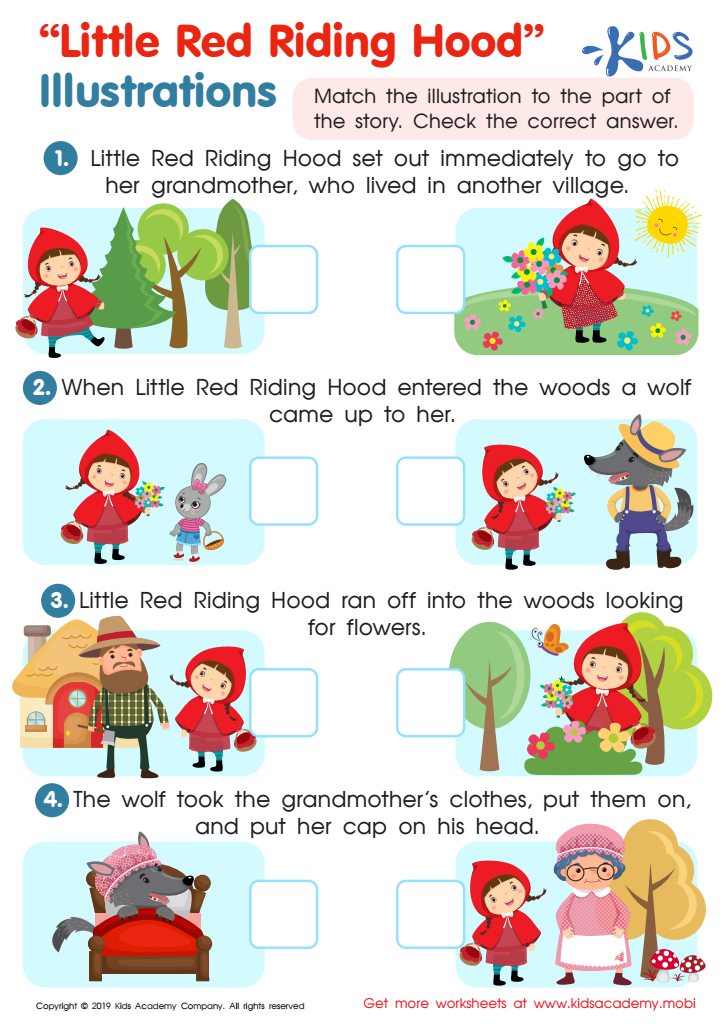
Little Red Riding Hood: Illustrations Worksheet
 Assign to My Students
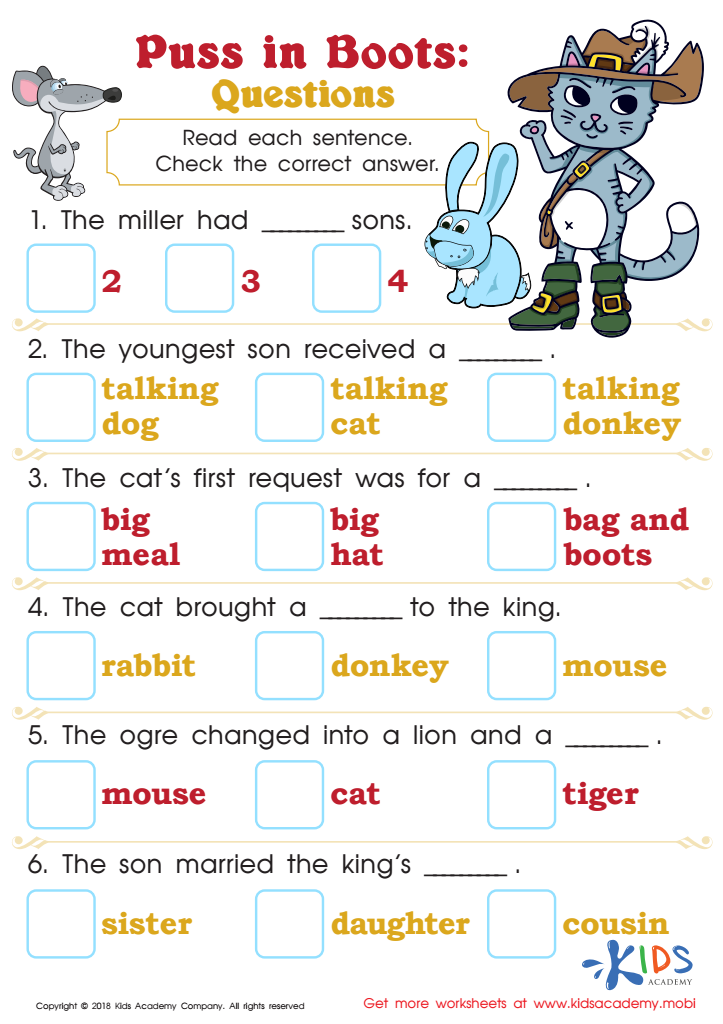
Puss in Boots: Questions Worksheet
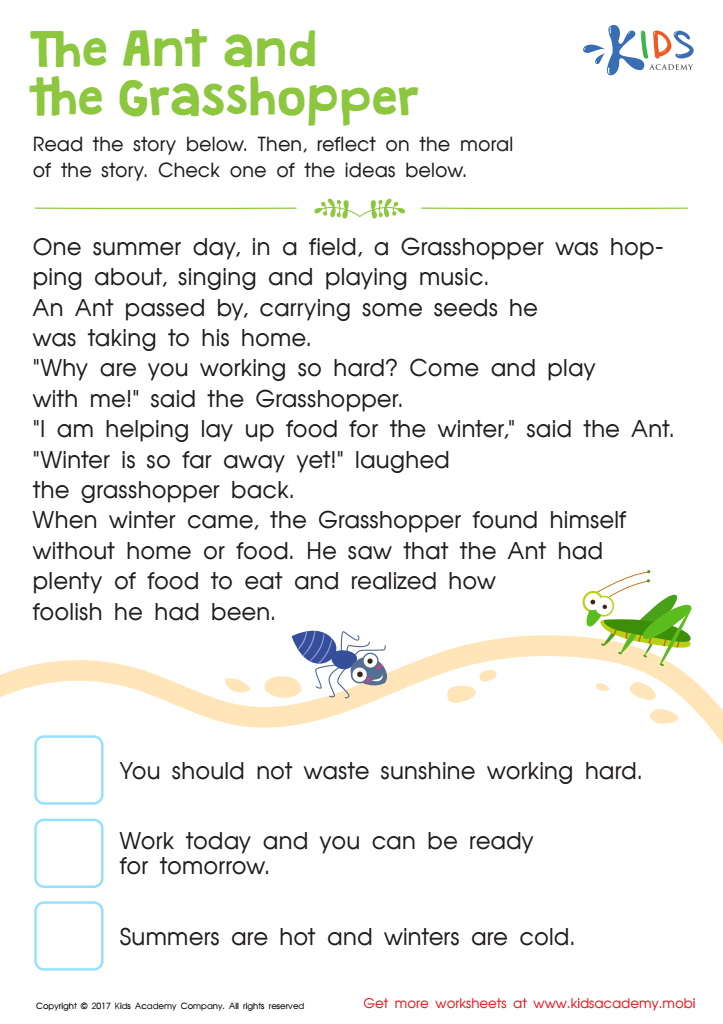
The Ant and The Grasshopper Printable
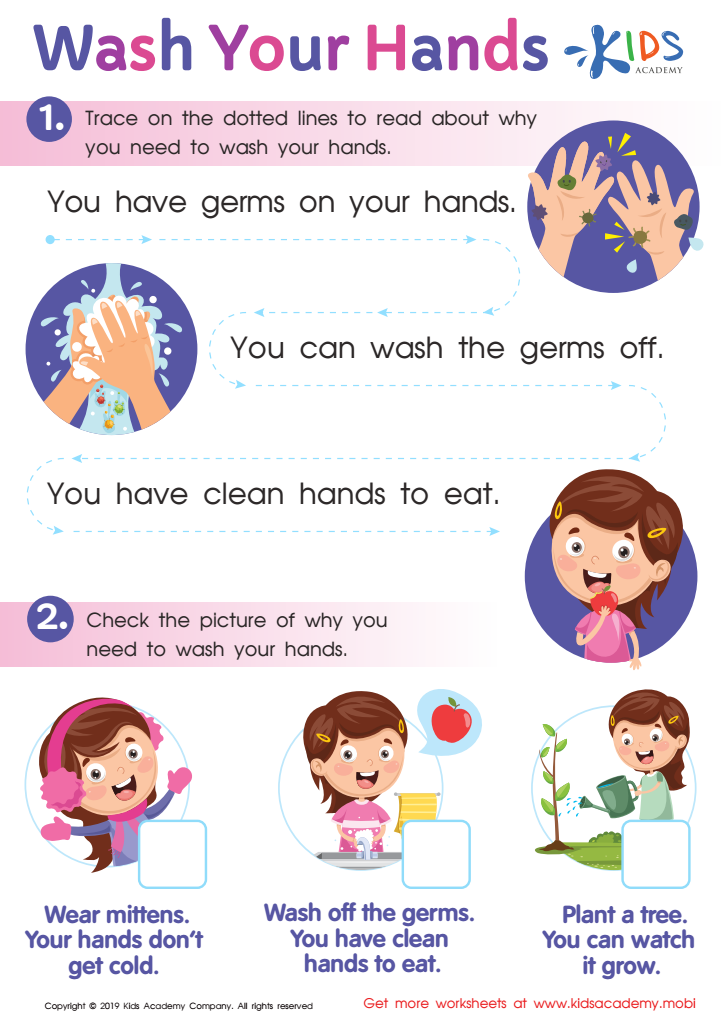
Wash Your Hands Worksheet
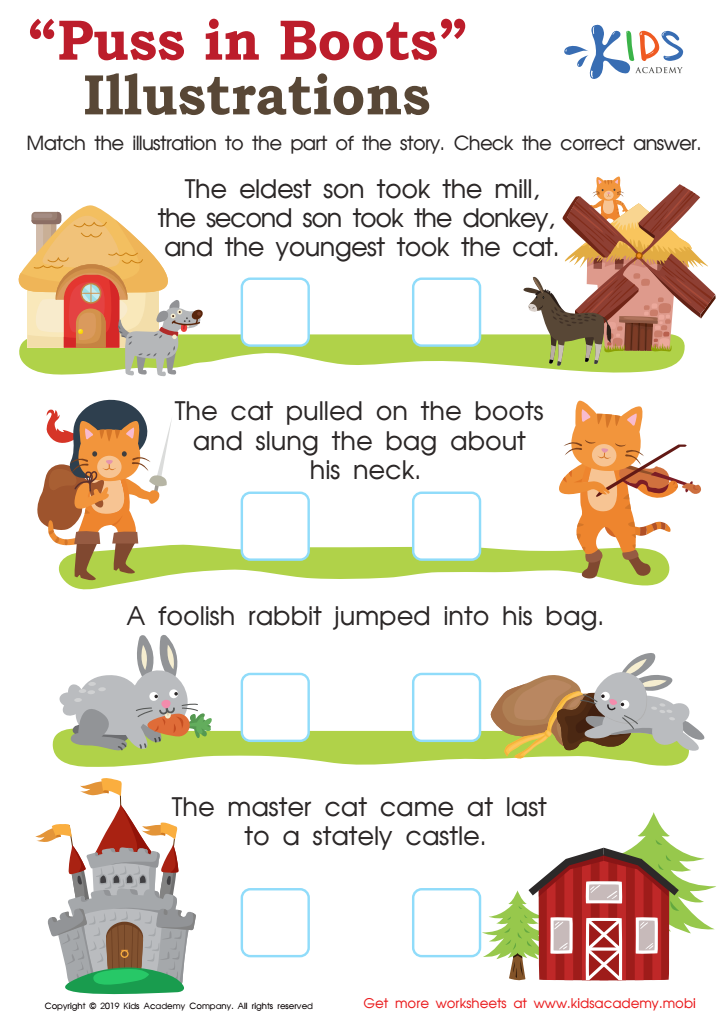
Puss in Boots Illustrations Worksheet






.jpg)
.jpg)
Visual interpretation in reading—especially in fiction for ages 4-8—is crucial for fostering early literacy skills. Children at this age are often captivated by illustrations, which serve as gateways to understanding narratives and characters. Parents and teachers should prioritize visual interpretation because it enhances comprehension, allowing children to connect text with images, thereby deepening their understanding of stories.
Furthermore, visual literacy promotes critical thinking and analytical skills. As children interpret pictures, they learn to make inferences, predict outcomes, and draw conclusions, skills that are essential in both academic settings and everyday life. Young readers also develop the ability to express their thoughts about imagery through discussions or creative projects, which enriches their communication skills.
Additionally, engaging with visually rich texts can ignite a passion for reading and storytelling, encouraging children to explore their creativity. This can build a strong foundation for cognitive development and a love for literature that endures into later years. Ultimately, understanding and valuing visual interpretation equips both parents and educators with the tools to motivate and support children in becoming confident readers and critical thinkers.







