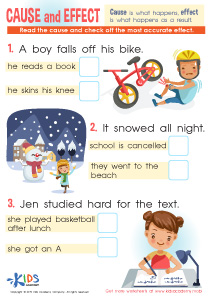
Logical Reasoning Normal Reading Non-Fiction Worksheets for Ages 4-8
3 filtered results
-
From - To
Discover our engaging "Logical Reasoning Normal Reading Non-Fiction Worksheets" designed for children aged 4-8! These worksheets help young learners develop critical thinking and problem-solving skills while exploring fascinating non-fiction topics. Each worksheet combines simple reading passages with logical reasoning activities that promote comprehension and analytical abilities. Perfect for classroom or home use, these resources are tailored to enhance reading skills while encouraging kids to think creatively and independently. With vibrant illustrations and age-appropriate content, our worksheets make learning enjoyable and fulfilling. Empower your child with the skills they need for academic success, and watch their confidence soar!
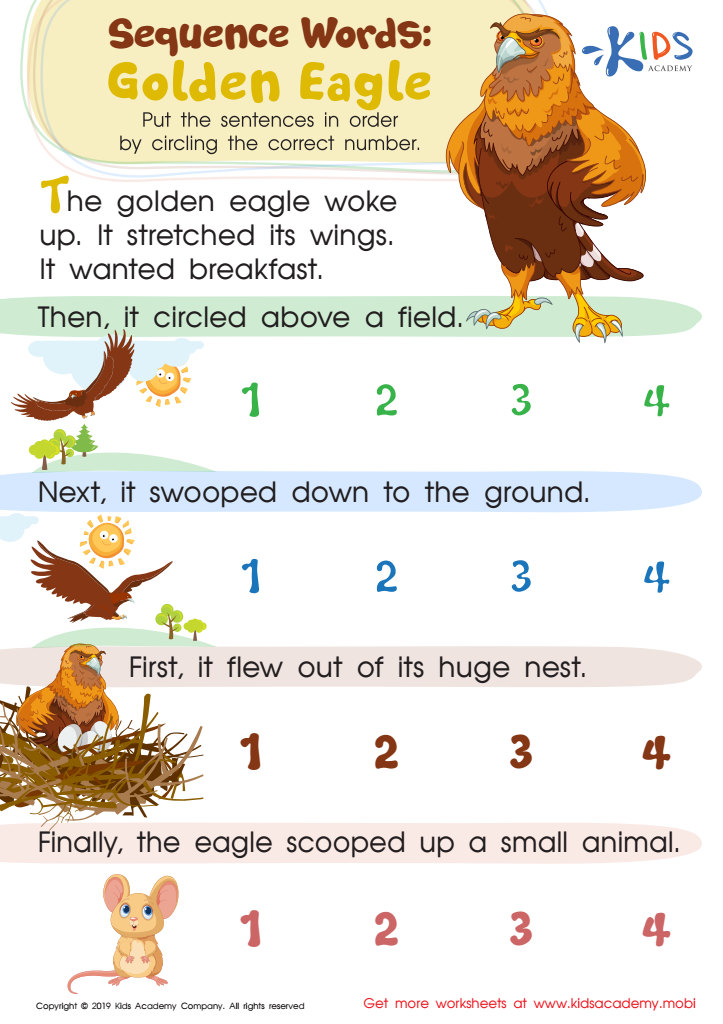
Sequence Word Eagle Worksheet
 Assign to My Students
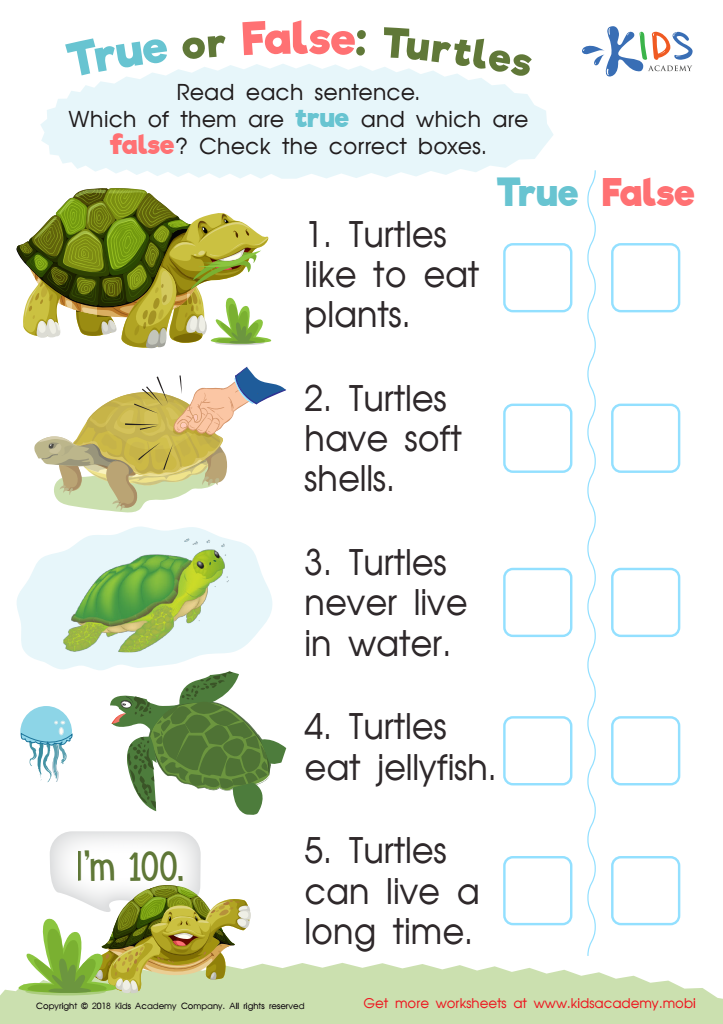
True or False: Turtles Worksheet
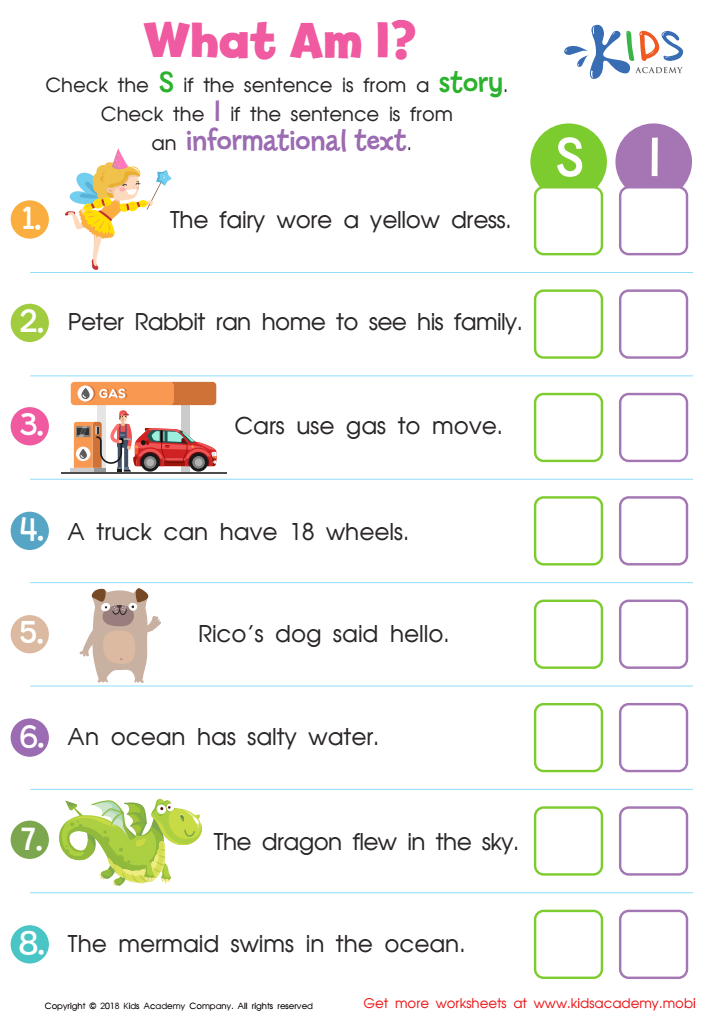
What Am I? Worksheet








Logical reasoning serves as the foundation for critical thinking and problem-solving skills, which are crucial for children's intellectual development. For children aged 4-8, fostering these abilities through normal reading non-fiction is particularly significant. This age group is naturally curious, and engaging with non-fiction texts helps satisfy their desire to learn about the world around them.
Parents and teachers should care about incorporating logical reasoning in non-fiction reading because it encourages children to understand concepts such as cause and effect, classification, and making comparisons. These skills are not only vital for academic success but also for everyday decision-making.
Furthermore, non-fiction books expose children to factual information, helping to nurture a habit of inquiry. They learn how to gather evidence, analyze information, and form conclusions based on what they read. This process promotes comprehension skills that are necessary for later academic challenges.
Ultimately, encouraging logical reasoning through non-fiction not only enhances literacy skills but also equips children with the cognitive tools they need in their educational journey and everyday life. Thus, parents and teachers play a key role in fostering these essential abilities early on.