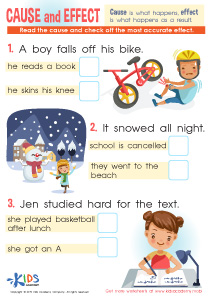
Reading Skills Normal Reading Non-Fiction Worksheets for Ages 4-8
3 filtered results
Difficulty Level
Grade
Age
-
From - To
Subject
Activity
Standards
Enhance your child's reading abilities with our engaging Reading Skills Non-Fiction Worksheets, designed specifically for children aged 4-8. These printable resources make learning fun while introducing young readers to important non-fiction concepts. With a variety of activities, including comprehension questions, vocabulary exercises, and simple passages related to the world around them, these worksheets aim to foster critical thinking and promote a love for reading. Each activity is tailored to reinforce skill development in an enjoyable way, making them perfect for both classroom and home use. Explore our collection today—empower your child to become a confident reader!
Favorites
With answer key
Interactive
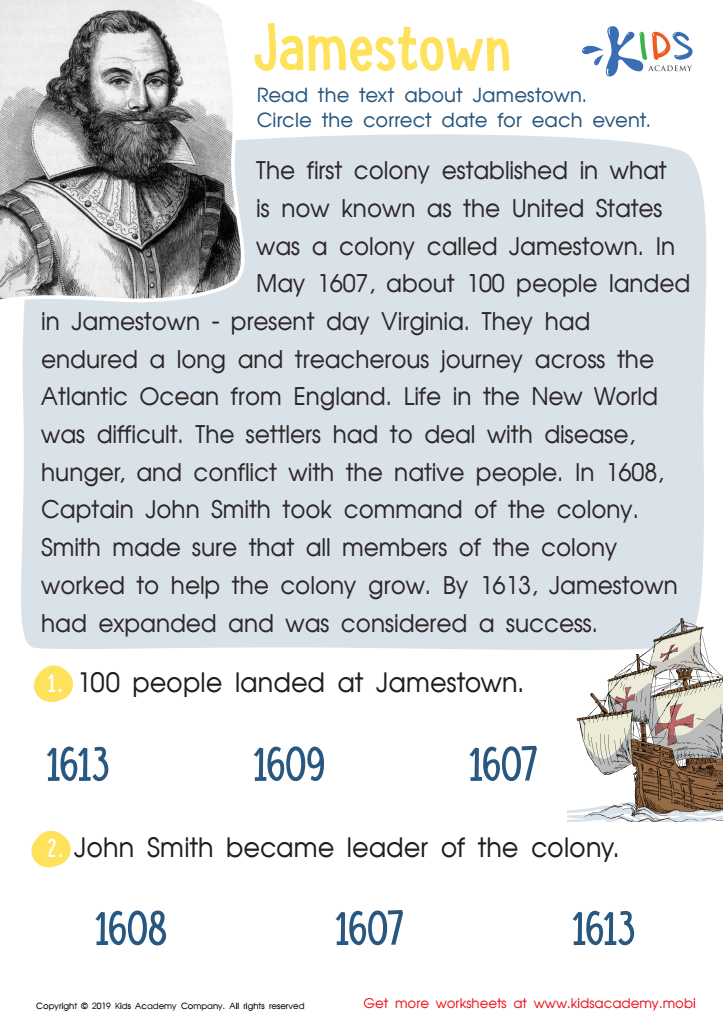
Jamestown Worksheet
Help your kids build vocabulary by reading simple texts and stories to them. This exercise helps them practice reading and grammar, and increases their knowledge of a topic. In this worksheet, kids learn about Jamestown: read text aloud and help them circle the correct date for each event.
 Assign to My Students
Jamestown Worksheet
Worksheet
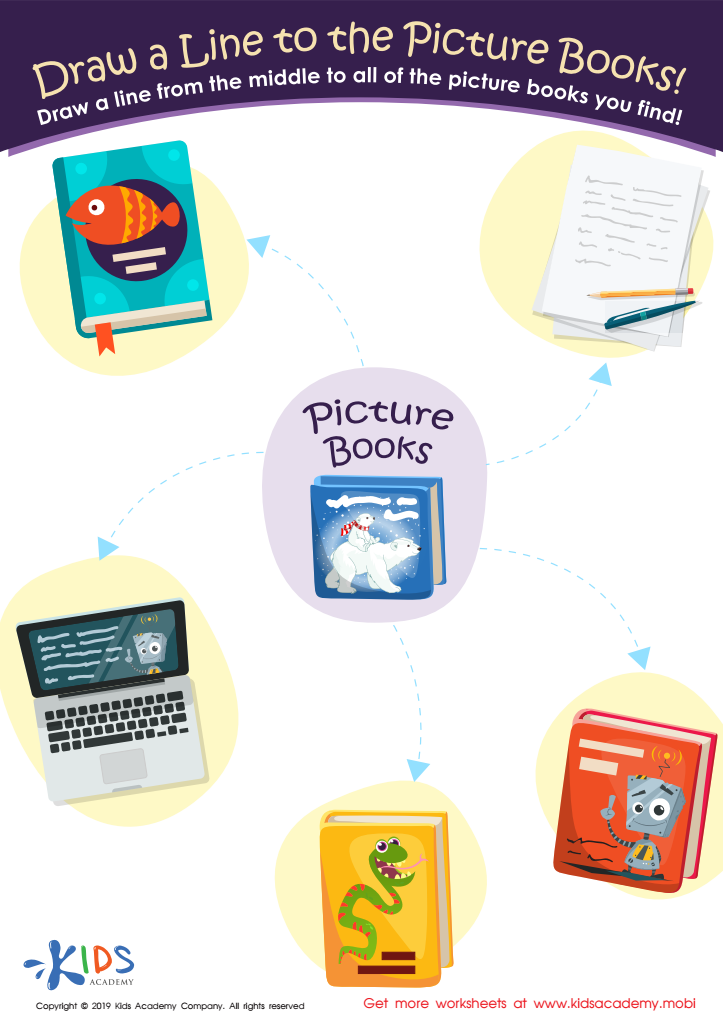
Draw a Line to the Picture Books Worksheet
Encourage your students to read and explore with this fun exercise! They'll draw a line from the word 'picture books' to the five objects. Picture books are exciting, with stories and colorful images. Make story time even more enjoyable with this worksheet!
Draw a Line to the Picture Books Worksheet
Worksheet
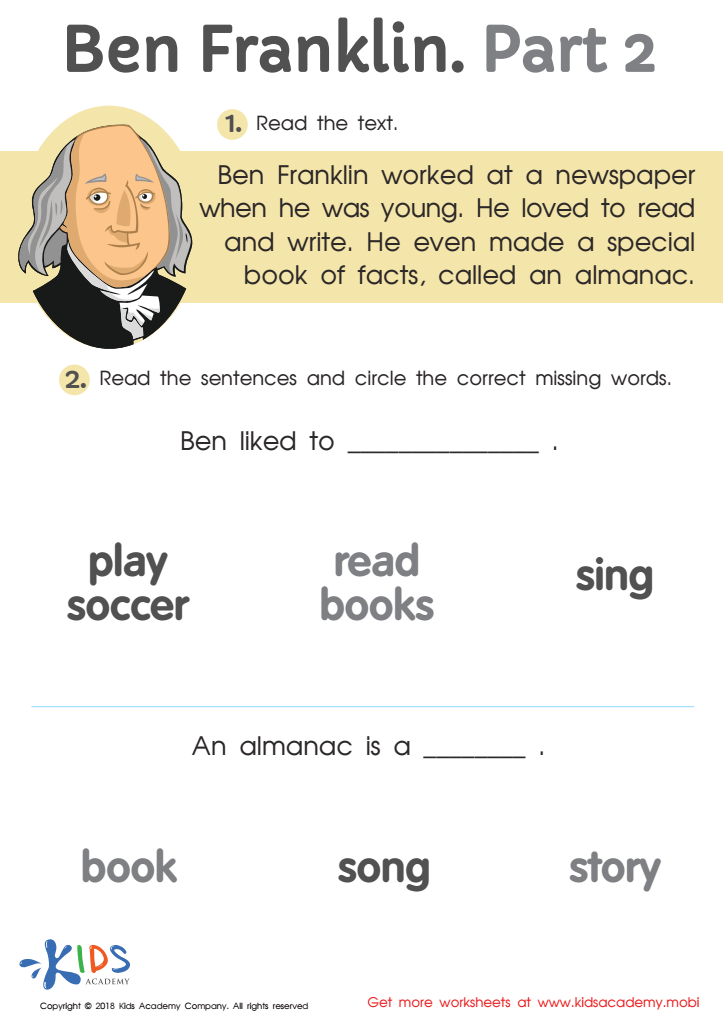
Ben Franklin Part 2 Worksheet
History is filled with great figures, like Benjamin Franklin. Let your kids in on the legacy by introducing them to the founder of the US fire department, diplomat, and inventor. Then, use a worksheet to have them fill in the blanks with the correct word to teach them more. Read the text, then read the sentences and have them circle the missing word.
Ben Franklin Part 2 Worksheet
Worksheet
Join Kids Academy for Free
Who is primarily going to use this learning content?








Parents and teachers should prioritize developing reading skills, particularly in non-fiction, for children aged 4-8 because it's crucial for their cognitive growth and future academic success. During these formative years, children are naturally curious about the world around them, and non-fiction texts cater to that curiosity by providing factual information about various topics, encouraging exploration and enhancing their understanding of reality.
Reading non-fiction helps children develop critical thinking skills as they learn to distinguish between facts and opinions, analyze information, and draw conclusions. These abilities lay the foundation for effective communication and informed decision-making essential in today’s information-driven society.
Moreover, engaging with non-fiction materials improves vocabulary and comprehension skills. As children encounter new terminologies and ideas, they expand their language abilities, which is vital for successful literacy development. This genre also offers parents and teachers a unique opportunity to integrate reading with other subjects, stirring interest in science, history, and social studies.
By fostering strong reading skills in non-fiction, parents and teachers empower young learners to become independent thinkers, stronger readers, and lifelong learners ready to navigate an increasingly complex world. Prioritizing these skills ultimately builds a solid foundation for future learning experiences.