
Animal Classification Normal Science Worksheets for Ages 4-8
7 filtered results
Difficulty Level
Grade
Age
-
From - To
Subject
Activity
Standards
Discover the fascinating world of animal classification with these engaging science worksheets, designed specifically for kids aged 4-8. Perfect for both classroom and home learning, these printable worksheets introduce young learners to key concepts such as mammals, birds, reptiles, and more. Through fun matching activities, colorful images, and simple explanations, children build foundational science skills while developing their understanding of different animal groups. Start their journey into biology with these age-appropriate resources from Kids Academy, and watch as your little explorers become curious scientists with a love for the animal kingdom!
Favorites
With answer key
Interactive
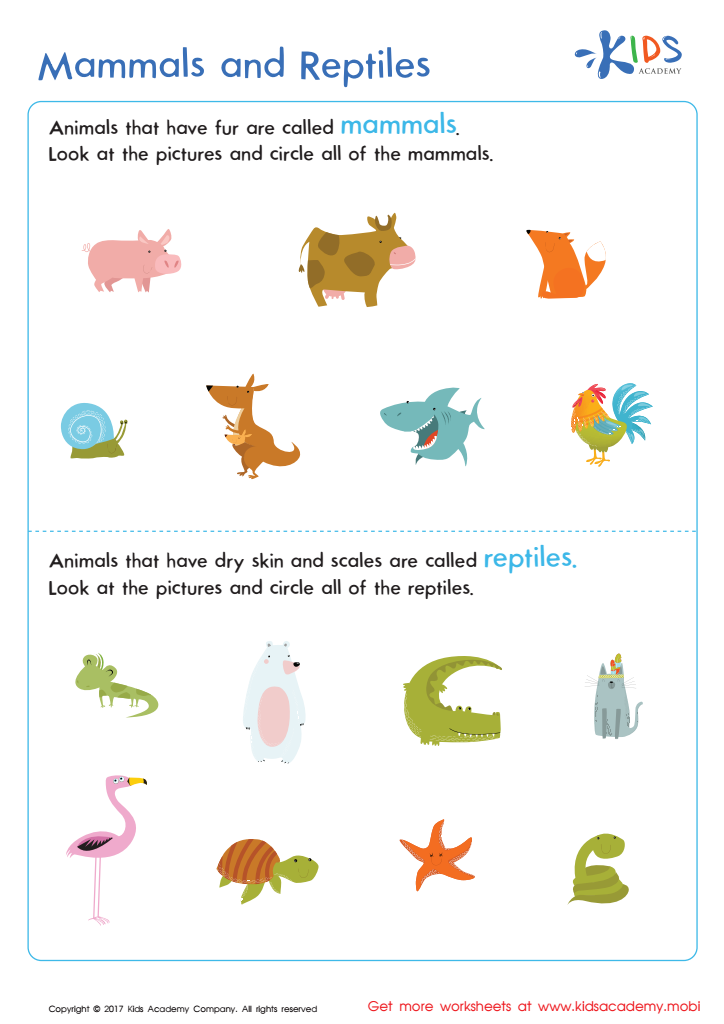
Mammals and Reptiles Worksheet
Challenge your child to identify mammals and reptiles with this worksheet. It's a great way to help them recognize the differences between these two types of animals.
 Assign to My Students
Mammals and Reptiles Worksheet
Worksheet
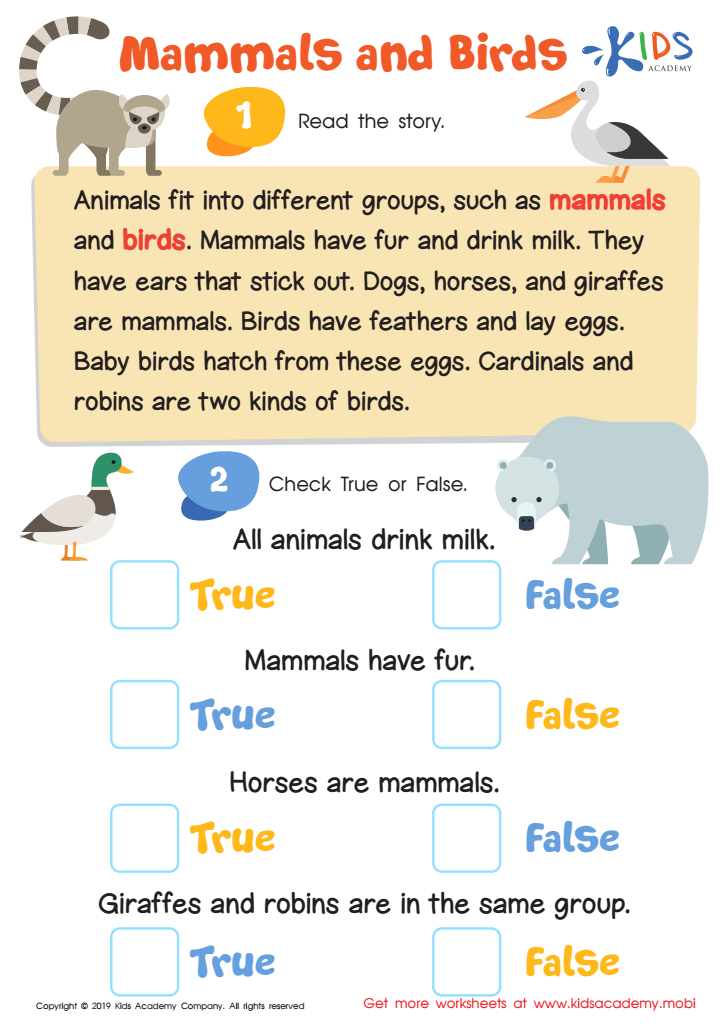
Mammals and Birds Worksheet
This worksheet challenges kids to read an informational text and review science facts about mammals and birds. Have them read the passage then mark statements true or false. Remind them to go back to the text if they get stuck! Get started now and help your child enhance multiple skills in one go!
Mammals and Birds Worksheet
Worksheet
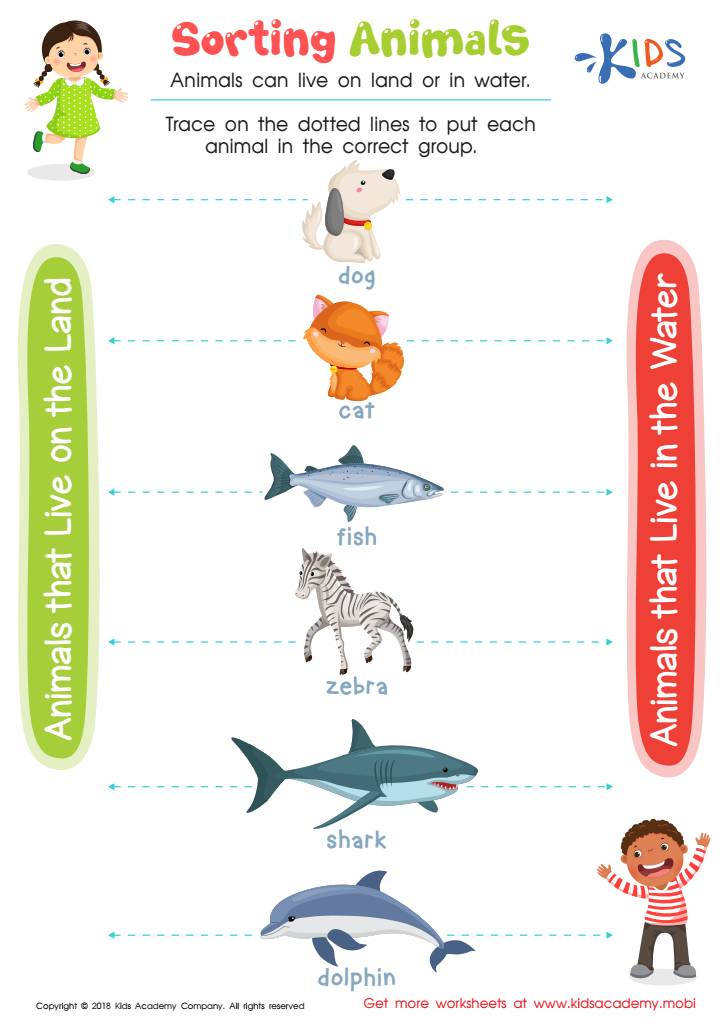
Sorting Animals Worksheet
Your kids will love this free, interactive worksheet! With image clues, they can read and trace the animal names, and then sort them into groups of land or water animals. It's an enjoyable way to boost their critical thinking, fine motor and prior knowledge skills.
Sorting Animals Worksheet
Worksheet
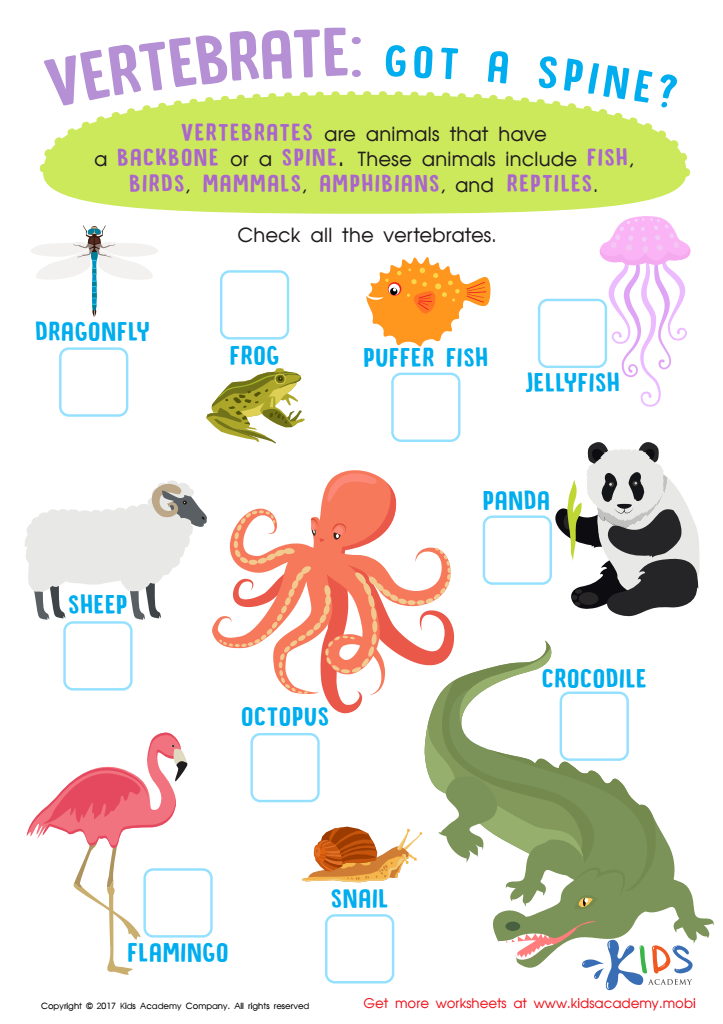
Vertebrates Animals Worksheet for 3rd Grade
This 3rd grade worksheet introduces your child to the wonders of vertebrate animals. They will have fun sorting them from those without a spine, while learning more about the animal kingdom!
Vertebrates Animals Worksheet for 3rd Grade
Worksheet
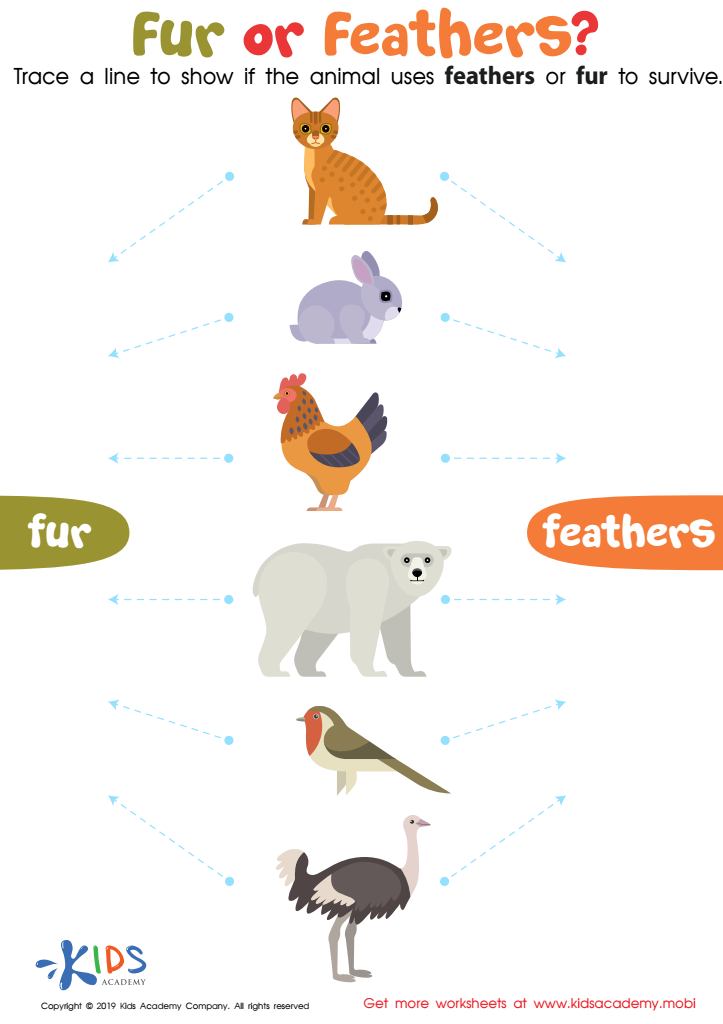
Fur or Feathers? Worksheet
Examine animals you see daily. How do they differ from humans? With a pet in your home, ask your child to touch it and identify what covers the animal's body - fur or feathers? Birds have feathers, while mammals have fur. Guide your kids to identify animals in this worksheet and determine if fur or feathers keep them alive.
Fur or Feathers? Worksheet
Worksheet
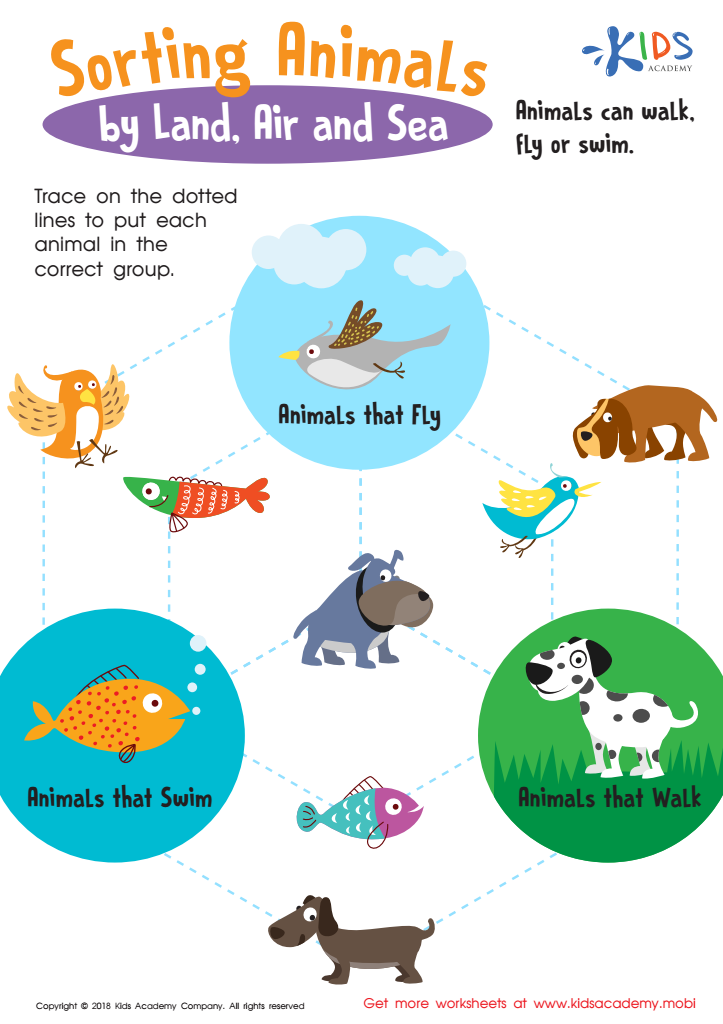
Sorting Animals by Land, Air and Sea Worksheet
Kids will use critical thinking and fine motor skills with this worksheet! They'll analyze animal traits and draw lines to sort them into groups of those that fly, swim, or walk. It's a fun way to hone skills and have a great time!
Sorting Animals by Land, Air and Sea Worksheet
Worksheet
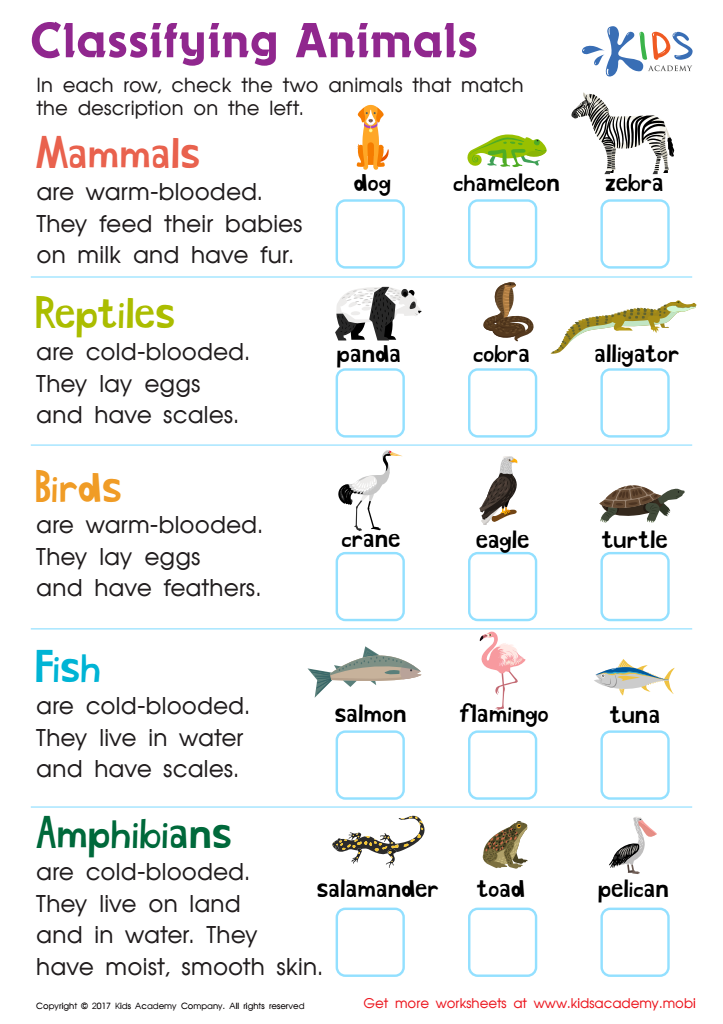
Classifying Animals Worksheet
Print the 2nd grade animal classification worksheet and help kids study the differences between mammals, reptiles, birds, fish and amphibians. Let them pick two examples from the options given.
Classifying Animals Worksheet
Worksheet
Learning Skills
Join Kids Academy for Free
Who is primarily going to use this learning content?







Introducing animal classification to children aged 4-8 is fundamental for fostering a lifelong love of nature and laying the groundwork for critical thinking and scientific inquiry. At a young age, children are naturally curious and enthusiastic learners. Introducing them to the basic forms of animal classification helps them make sense of the diversity they observe in the world around them. It encourages curiosity and engages their imaginations, stimulating them to ask questions about why animals look and behave the way they do.
Moreover, learning about categorizing animals into groups like mammals, birds, fish, and insects enriches a child’s understanding of biodiversity, helping them appreciate the importance of preserving the environment. This foundational knowledge is crucial as it might shape their attitudes towards conservation and responsibility towards other living beings.
From an educational perspective, animal classification activities promote important cognitive skills such as observation, comparison, and reasoning. Sorting and grouping exercises assist with developing organizational and memory skills, laying a strong basis for future learning in other disciplines, including mathematics and reading comprehension.
Finally, understanding the relationships among different animal groups can also cultivate empathy, as children start recognizing that all living creatures are part of a complex, interconnected ecosystem. Hence, for parents and teachers, delving into animal classification goes beyond simple learning; it nurtures a well-rounded, thoughtful, and environmentally-conscious child.







