Understanding directions Normal Science Worksheets for Ages 4-8
4 filtered results
-
From - To
Discover the magic of learning with our "Understanding Directions Normal Science Worksheets for Ages 4-8" from Kids Academy! Expertly designed to engage young minds, these worksheets help children grasp directional and positional concepts in fun, interactive ways. Kids will enhance their spatial awareness, following simple instructions through colorful, age-appropriate activities that make science learning enjoyable. Perfect for home or classroom use, our worksheets foster critical thinking and problem-solving skills, laying a strong educational foundation. Equip your little learners with the tools to understand directions and navigate their world confidently with Kids Academy's trusted resources.
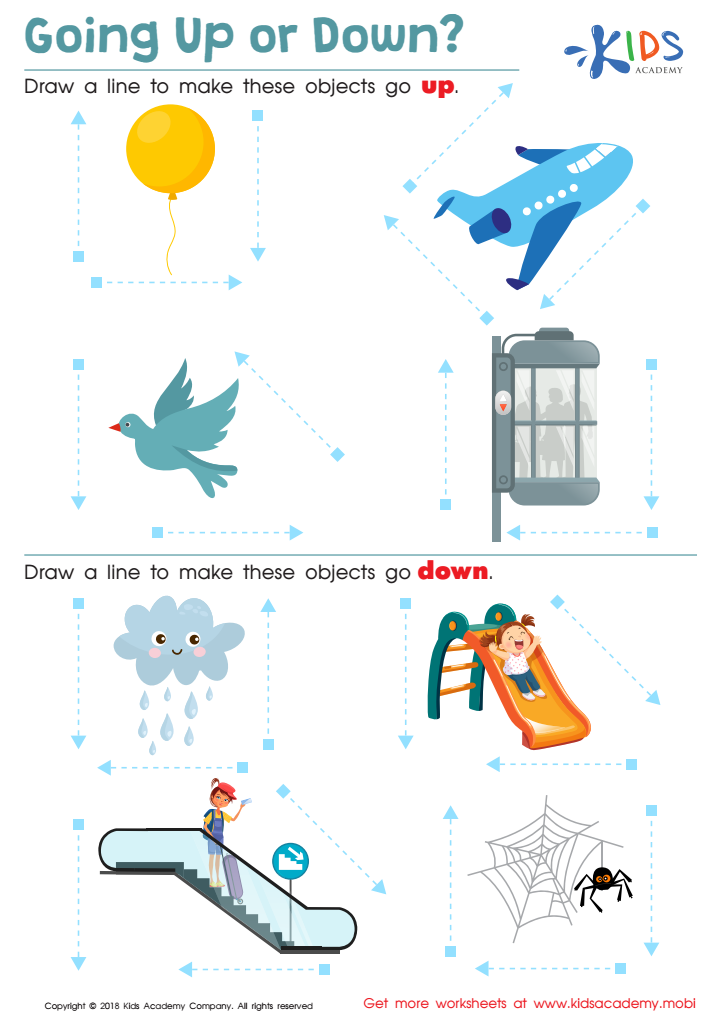
Going up or Down? Worksheet
 Assign to My Students
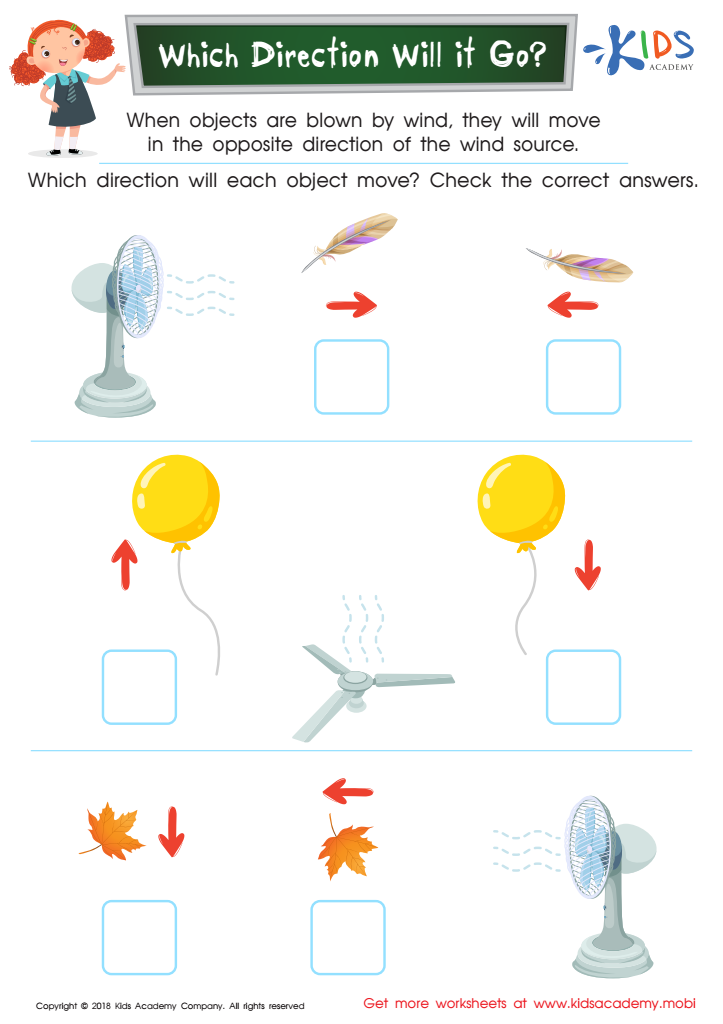
Which Direction Will it Go? Worksheet
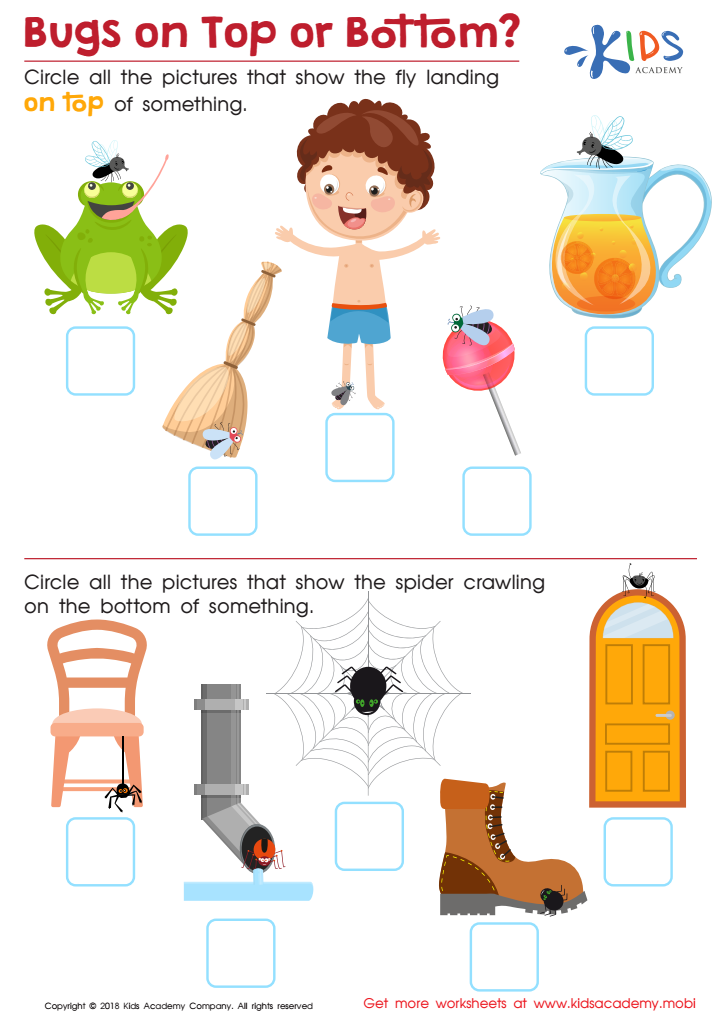
Bugs on Top or Bottom? Worksheet
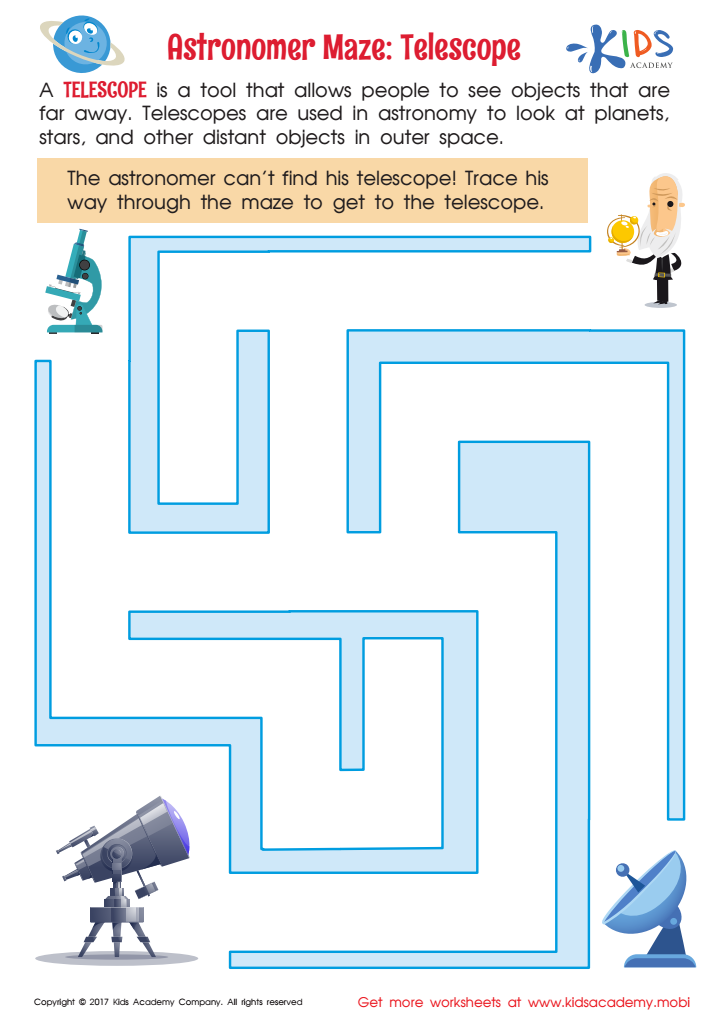
Astronomer Maze: Telescope Worksheet




.jpg)



Understanding directions in early science education is crucial because it lays the foundation for essential skills that children will use throughout their education and daily lives. For ages 4-8, science activities often include simple experiments, which require following instructions accurately to observe correct outcomes. This not only enhances their cognitive abilities, such as attention to detail and sequential thinking, but also boosts their confidence in understanding and manipulating their environment.
When parents and teachers emphasize following directions, children learn to listen attentively, comprehend verbal and written instructions, and execute tasks step-by-step. These skills are transferable to all subjects and activities, fostering a more organized and disciplined approach to learning. Additionally, grasping basic scientific principles through following simple directions nurtures curiosity and a scientific mindset. It encourages children to ask questions, predict results, and understand cause-and-effect relationships, which are fundamental to scientific thinking.
Moreover, fostering these abilities at an early age helps in developing strong communication skills, both in acknowledging receiving instructions and in expressing their own thought process clearly. Thus, parents and teachers should prioritize understanding directions in early grade science to support holistic cognitive development and prepare children for future academic and everyday challenges.







