Understanding habitats Normal Science Worksheets for Ages 4-8
4 filtered results
-
From - To
Introduce your young learners to the fascinating world of habitats with our "Understanding Habitats" science worksheets designed for ages 4-8! These engaging and educational printables from Kids Academy help children explore various habitats while developing essential learning skills. Each worksheet features vibrant illustrations and fun activities that teach kids about different environments and the animals that live in them. With topics like forests, oceans, and deserts, our worksheets are perfect for classroom use or at-home learning. Promote curiosity and scientific thinking in your little ones through these interactive resources. Dive into the wonders of nature today with "Understanding Habitats"!
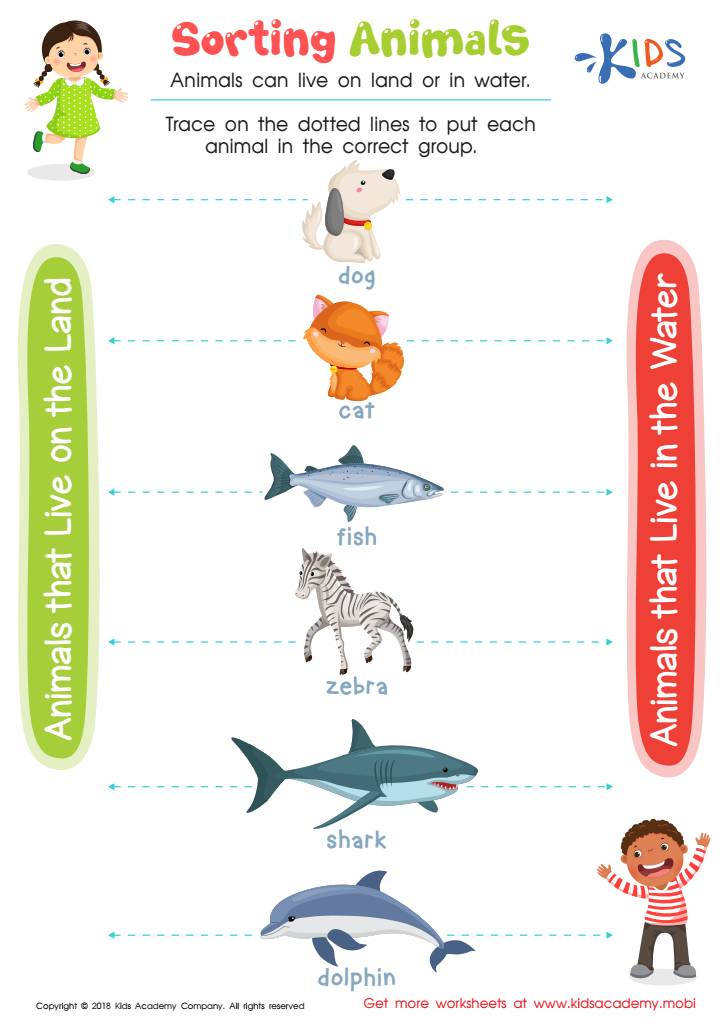
Sorting Animals Worksheet
 Assign to My Students
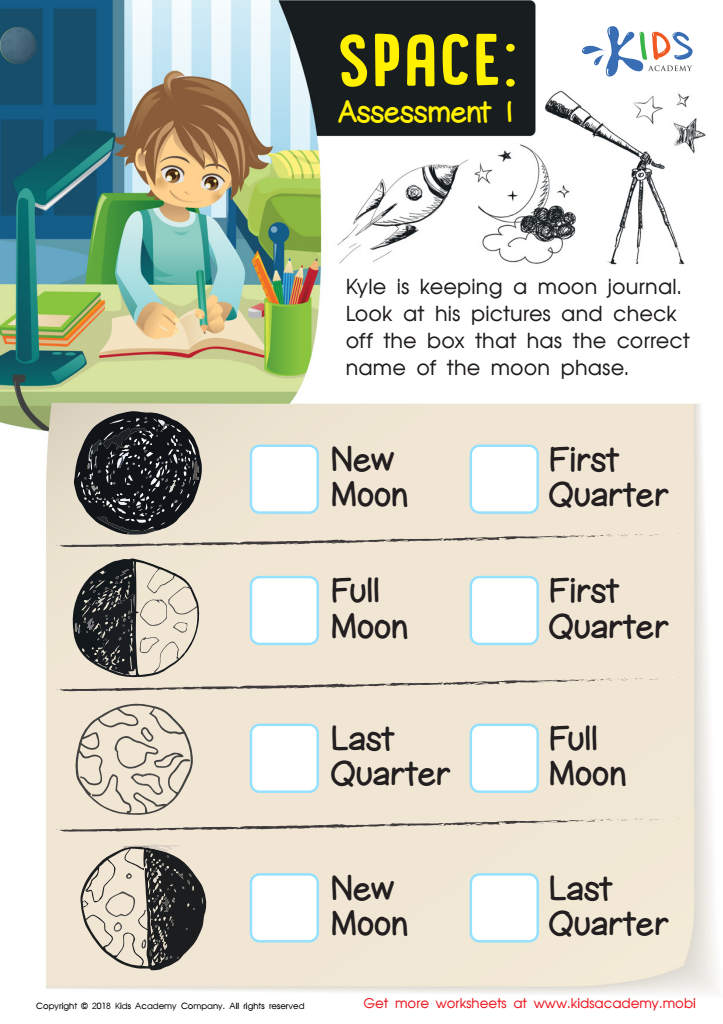
Space: Assessment 1 Worksheet
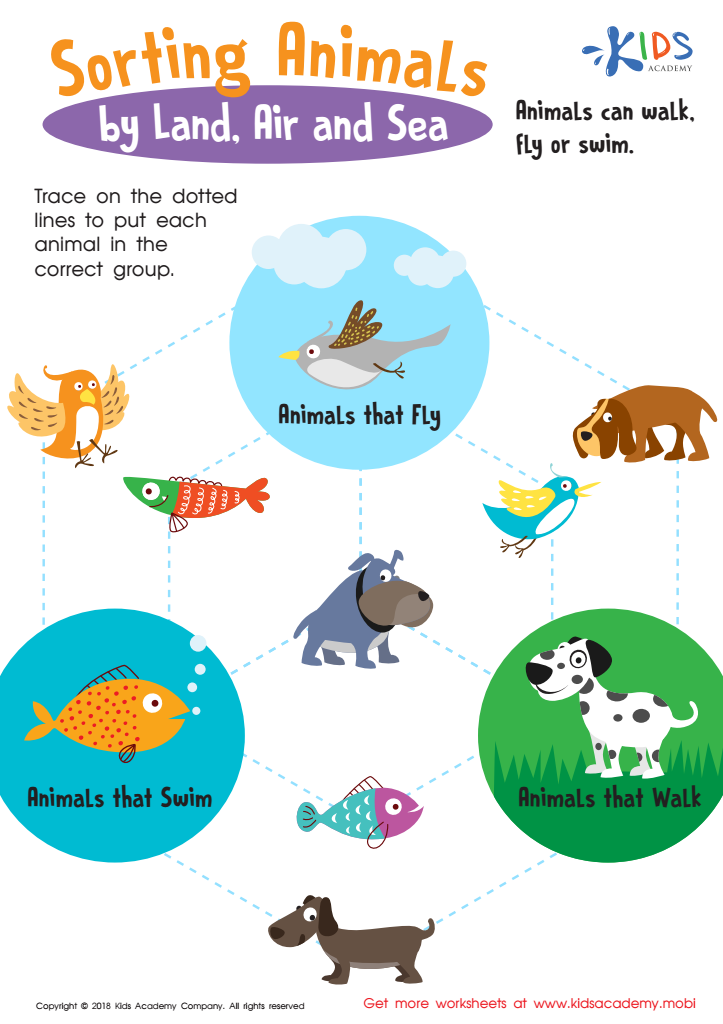
Sorting Animals by Land, Air and Sea Worksheet
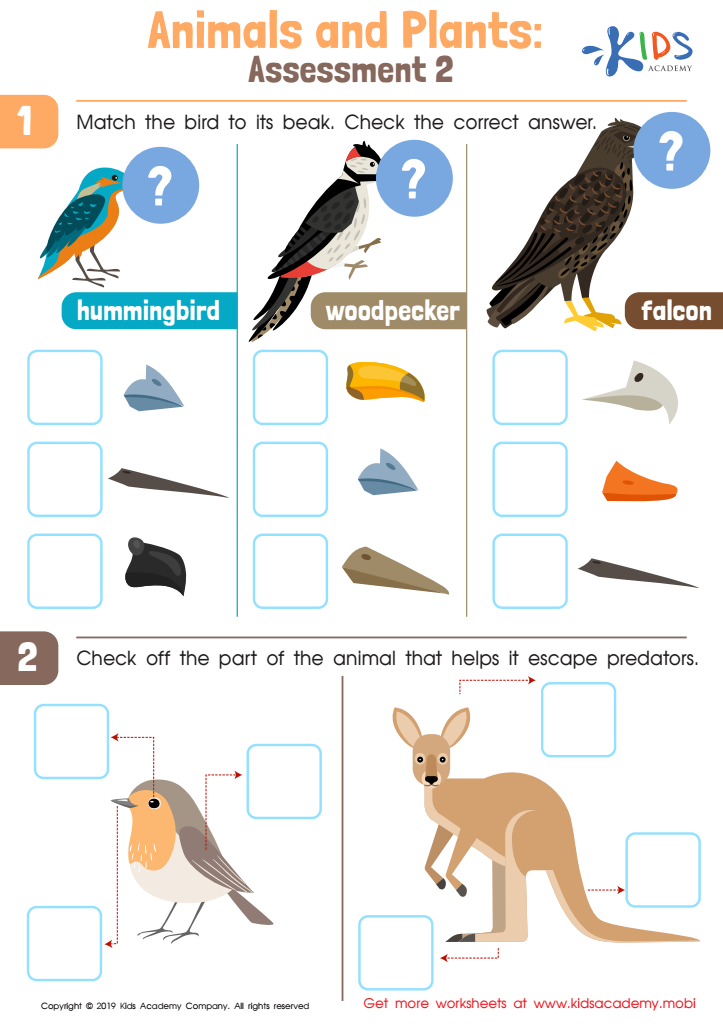
Animals and Plants: Assessment 2 Worksheet





.jpg)


Understanding habitats is fundamental for children ages 4-8, as it lays the groundwork for their appreciation and knowledge of the natural world. Early exposure to the concept of habitats stimulates their curiosity about plants, animals, and the environment, fostering a lifelong love for nature. This understanding helps children recognize that every living thing has a home and specific needs for survival, promoting empathy and responsible behavior towards the environment.
For parents and teachers, teaching about habitats offers numerous educational benefits. It enhances observational skills, as children learn to notice details about different living environments and the creatures that inhabit them. Additionally, it encourages vocabulary development by introducing terms related to various habitats such as forests, oceans, deserts, and wetlands.
Engaging with nature through lessons on habitats also supports the development of critical thinking and problem-solving skills. Children learn to draw connections between living organisms and their environments, grasping basic ecological principles. This foundational knowledge can spark interest in science and provide a platform for future scientific inquiry.
Finally, understanding habitats can be a collaborative, hands-on learning experience, involving activities like nature walks, habitat dioramas, and interactive storytelling. These activities not only reinforce the concepts but also nurture creativity, collaboration, and excitement in the learning process, making science both accessible and enjoyable for young minds.







