Problem-Solving Skills Normal Physical Science Worksheets for Ages 4-8
3 filtered results
-
From - To
Enhance your child’s learning experience with our engaging Problem-Solving Skills Normal Physical Science Worksheets, designed specifically for ages 4-8. These interactive worksheets encourage young learners to think critically and develop essential problem-solving abilities through fun, age-appropriate scientific concepts. From exploring basic physics principles to understanding everyday phenomena, each worksheet fosters curiosity and creativity. Perfect for home or classroom use, these resources help children build a strong foundation in physical science while improving their analytical skills. With diverse activities tailored to keep budding scientists intrigued, our worksheets make learning a joyful journey. Start nurturing a lifelong love for science today!
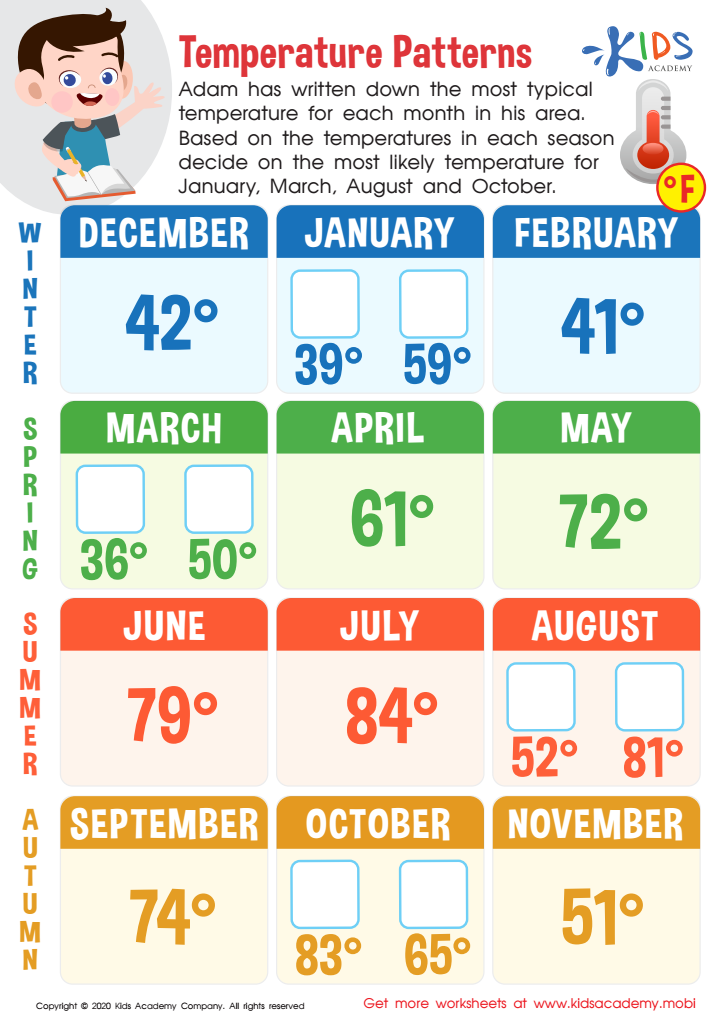
Temperature Patterns Worksheet
 Assign to My Students
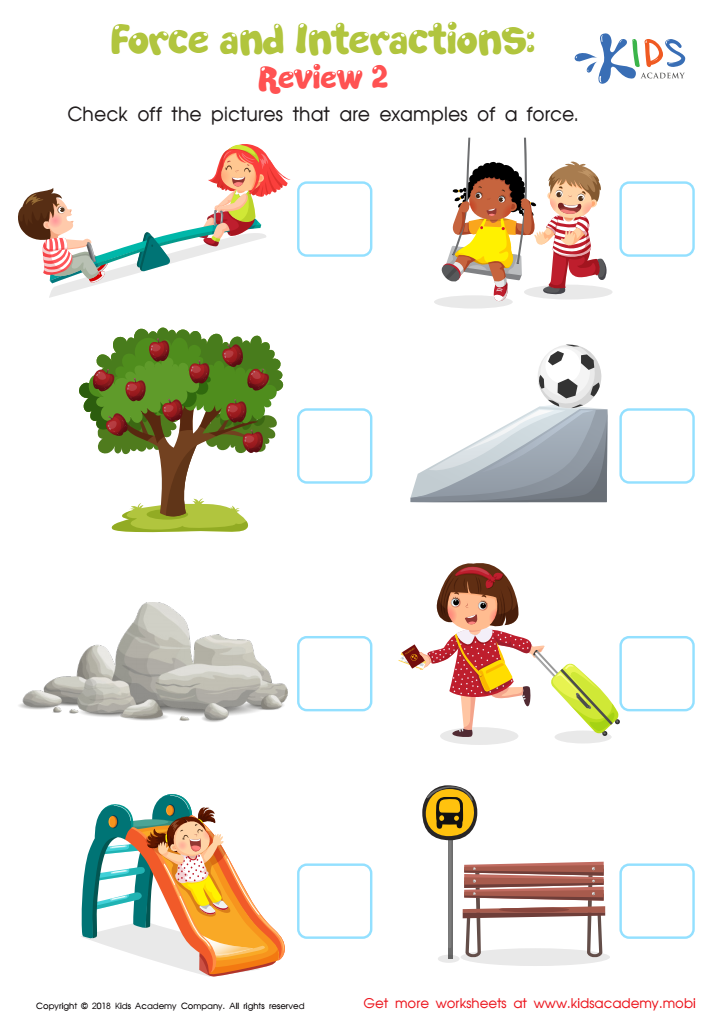
Force and Interactions: Review 2 Worksheet
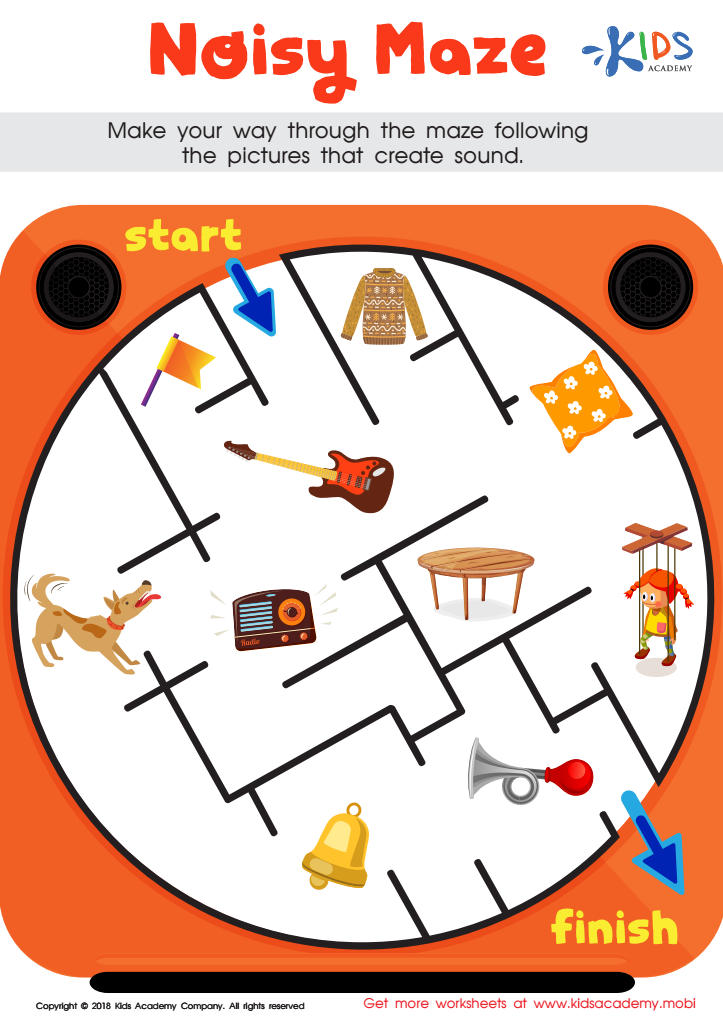
Noisy Maze Worksheet





Parents and teachers should prioritize problem-solving skills in early physical science for children aged 4-8 because these skills form the foundation for critical thinking and lifelong learning. At this age, children are naturally curious, exploring their environment and asking questions about how things work. Encouraging problem-solving through hands-on activities like simple experiments helps them learn to hypothesize, test, and draw conclusions.
Engaging children in inquiry-based learning fosters resilience and adaptability, teaching them to approach challenges with a problem-solving mindset. For instance, when kids question why a toy sinks or floats and are given opportunities to explore these concepts, they develop reasoning skills that extend beyond science. This cognitive flexibility equips them to tackle various real-life situations.
Furthermore, problem-solving in physical science cultivates collaboration and communication skills as children often work in groups. They learn to share ideas, ask questions, and respect different perspectives. These experiences build confidence and self-efficacy, instilling a sense of accomplishment in their abilities.
In essence, nurturing problem-solving skills within the context of physical science leads to holistic development, preparing children for academic success and effective citizenship in an increasingly complex world. Parents and teachers play a crucial role in facilitating these enriching experiences early on.







