Community awareness Normal Community Worksheets for Ages 4-8
3 filtered results
Difficulty Level
Grade
Age
-
From - To
Subject
Activity
Standards
Explore our "Community Awareness Normal Worksheets" designed for children ages 4-8, perfect for fostering young minds' understanding of their surroundings. These engaging activities encourage kids to learn about the various roles and features of their community, from local helpers like firefighters and teachers to essential public spaces such as parks and libraries. With colorful visuals and interactive tasks, your child will develop important social skills while building knowledge about their environment. Enhance their understanding of community values and responsibilities while making learning fun! Download our worksheets today and help your child become an informed, active member of their community.
Favorites
With answer key
Interactive
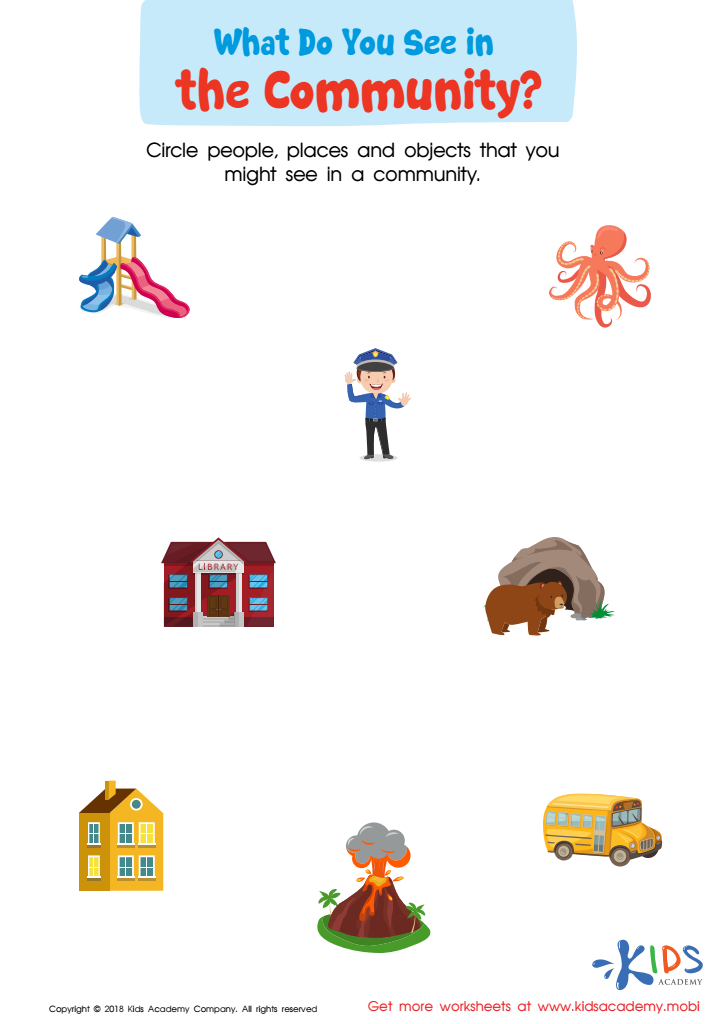
What Do You See in the Community Worksheet
This free social studies PDF can help your children learn about their local community. They'll identify its members, places and objects using engaging and recognizable pictures. As they trace circles around them, they'll also practice fine motor skills. It's a great way to introduce social science concepts and help them understand the importance of community.
 Assign to My Students
What Do You See in the Community Worksheet
Worksheet
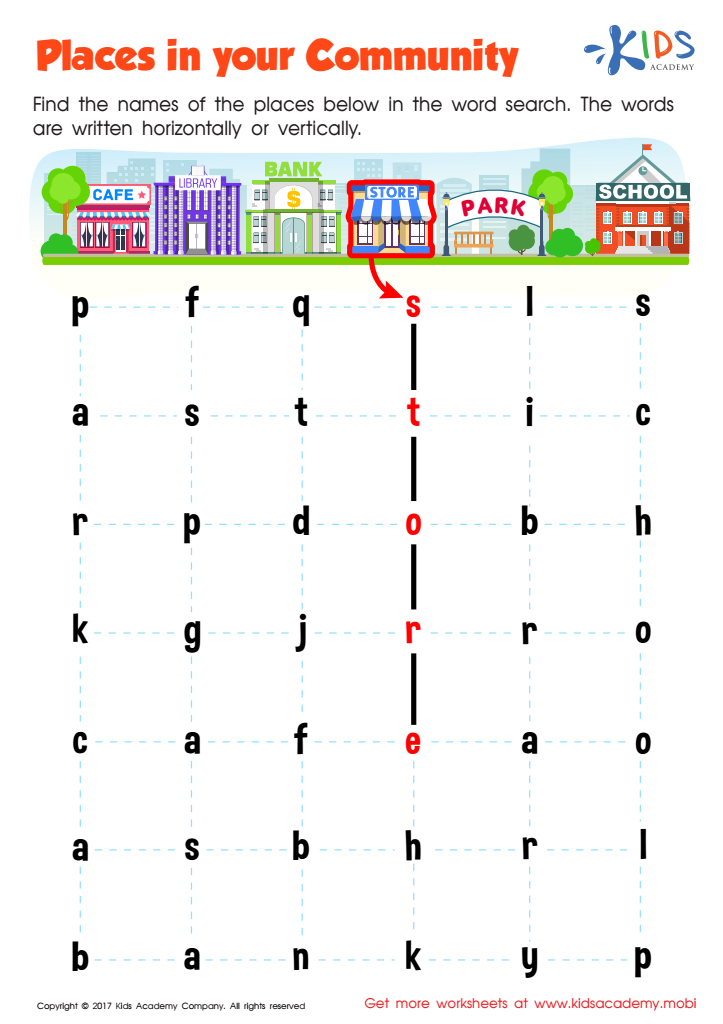
Places in Your Community Worksheet
Find and circle words related to common places in your community, like library, fire station, and more. Practicing vocabulary and spelling, your child will gain a better understanding of their community.
Places in Your Community Worksheet
Worksheet
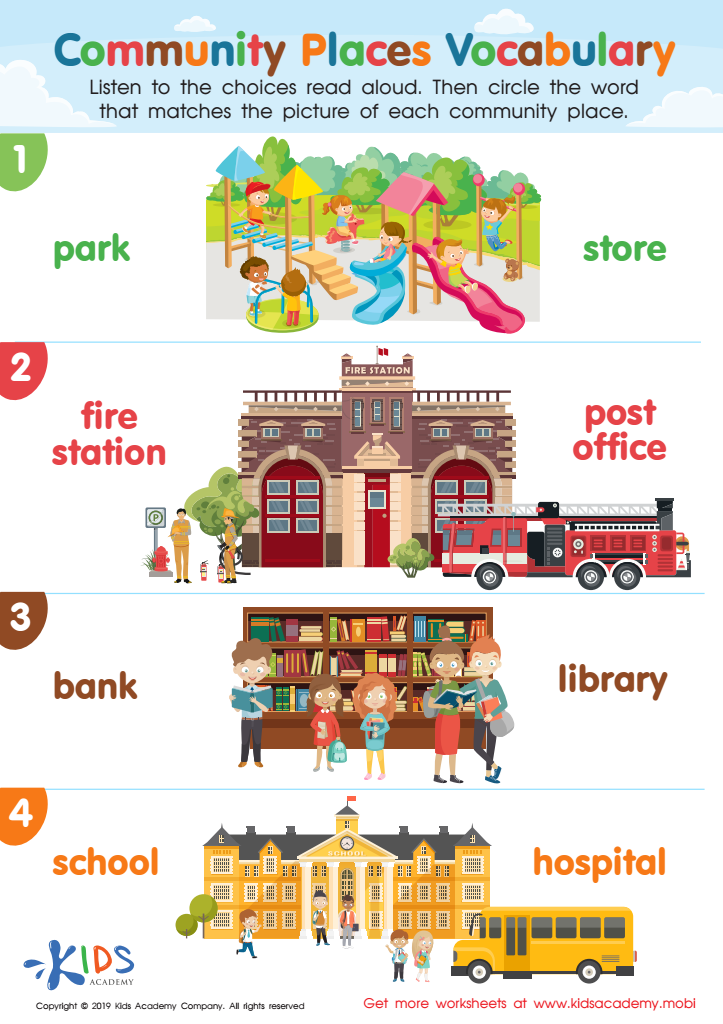
Community Places Vocabulary Worksheet
Help your kids identify community places with this fun worksheet. Ask them to listen to the choices read aloud and circle the word that matches the picture. This activity encourages dialogue about different people, places, and things in their community and the places they love to visit.
Community Places Vocabulary Worksheet
Worksheet
Join Kids Academy for Free
Who is primarily going to use this learning content?








Community awareness is vital for children aged 4-8 as it helps them understand the world around them and their role within it. When parents and teachers prioritize community awareness, they promote essential social skills, empathy, and a sense of belonging in young learners. Children who are knowledgeable about their community develop respect for diversity, learning about different cultures, customs, and perspectives.
By engaging with their local environment, children become more curious and connected. Activities like visiting parks, libraries, or local businesses can foster teamwork and cooperative learning, encouraging kids to work together and solve problems. Community involvement also presents opportunities to teach responsibility, showcasing the importance of caring for their surroundings and participating in events or volunteer work.
Additionally, parents and teachers play a crucial role in modeling behaviors that reflect community awareness. When adults demonstrate civic engagement, children are more likely to mirror those values and grow into active, conscious citizens. Ultimately, fostering community awareness in early education provides a foundational understanding of fairness, inclusion, and respect, which are foundational for character development and future interpersonal relationships. By nurturing this awareness, we empower children to become compassionate and engaged members of society.