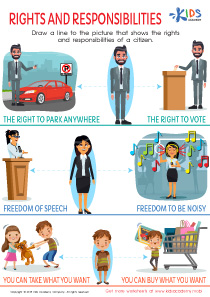
Vocabulary Building Normal Community Worksheets for Ages 4-8
4 filtered results
-
From - To
Discover our engaging Vocabulary Building Worksheets, designed specifically for children ages 4-8. These thoughtfully crafted resources help young learners enhance their vocabulary while exploring the fascinating world of their community. Each worksheet encourages children to connect words with their meanings through interactive activities, enhancing comprehension and aiding language development. Perfect for at-home learning or classroom use, these worksheets foster a fun environment where kids can learn and express themselves confidently. Whether identifying community helpers or discussing neighborhood features, our worksheets provide essential skills that set the foundation for effective communication. Start your child's vocabulary journey today!
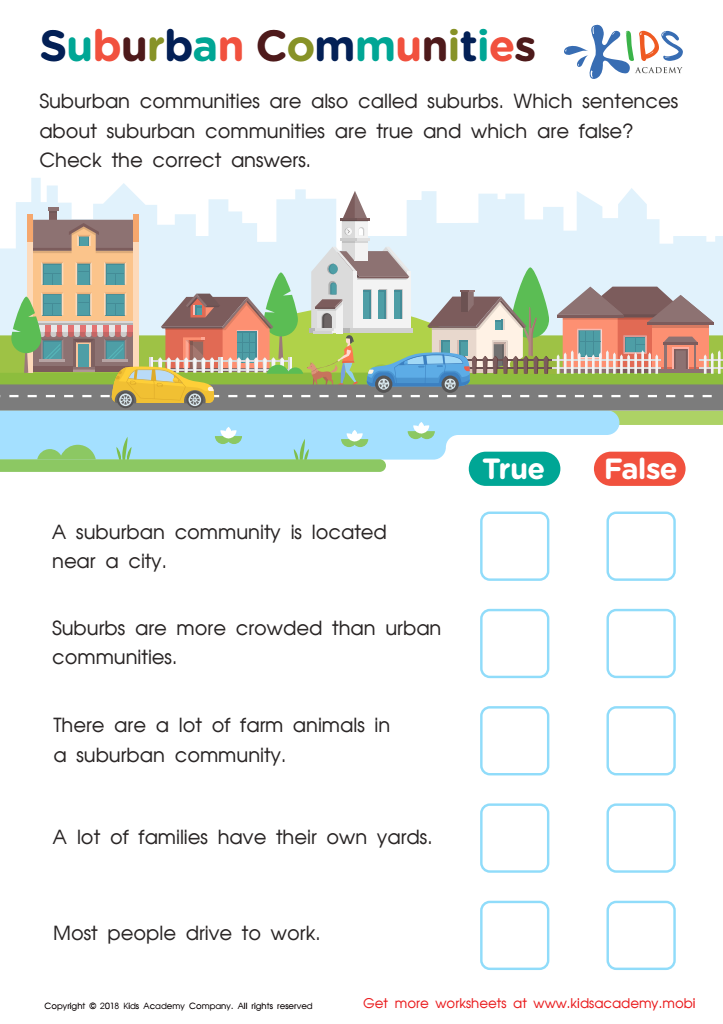
Suburban Communities Worksheet
 Assign to My Students
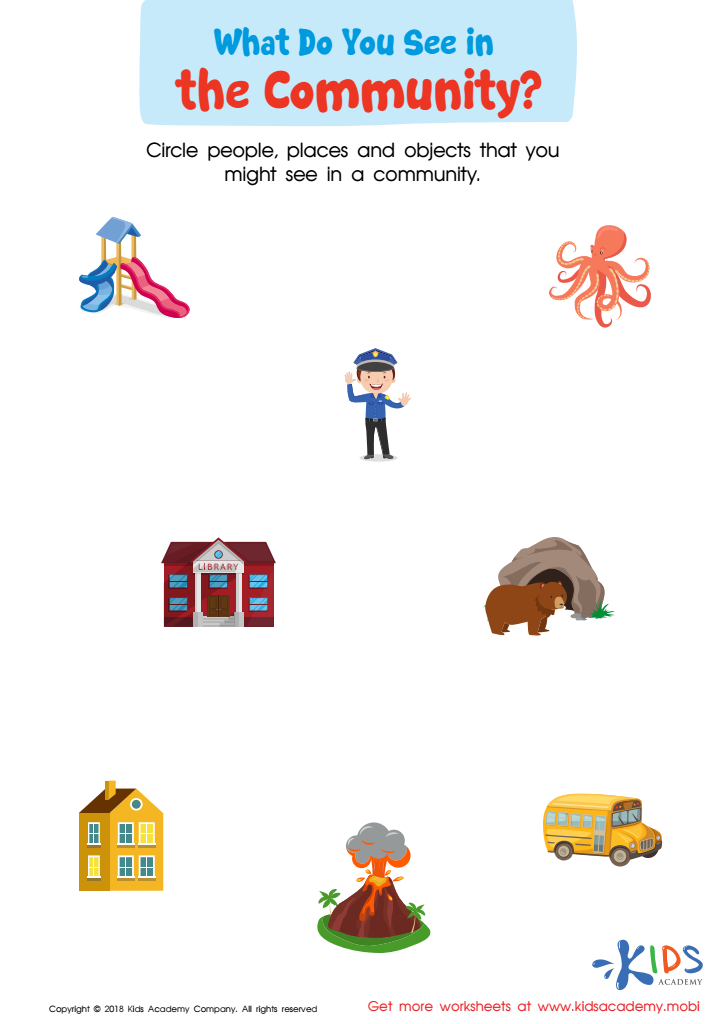
What Do You See in the Community Worksheet

What Do you See at the Library? Worksheet
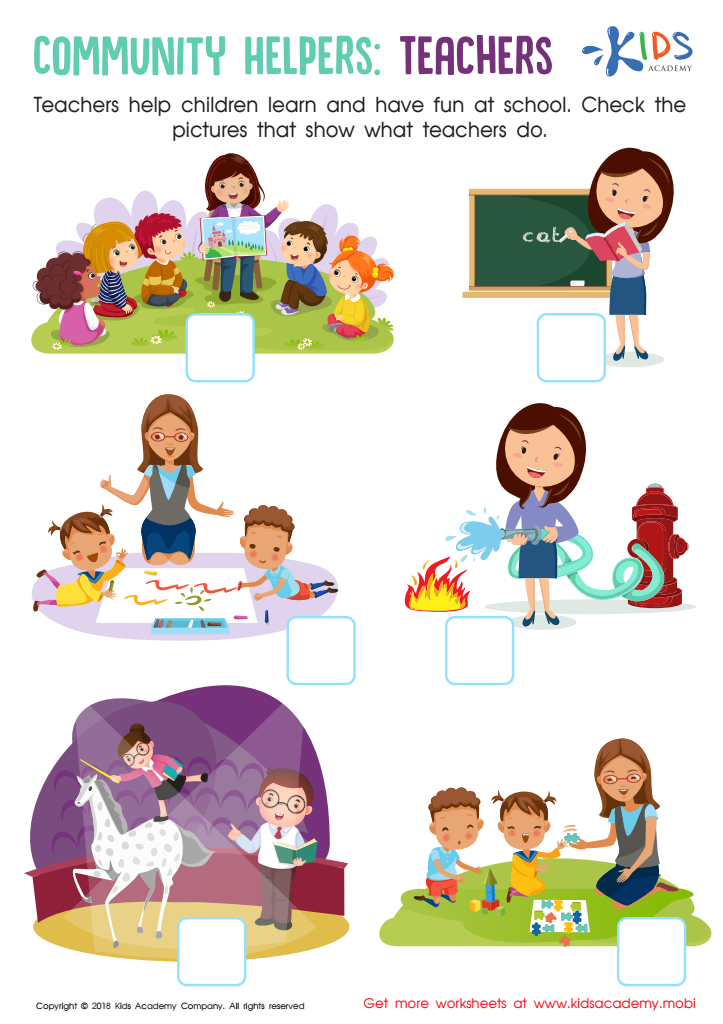
Teachers Community Helpers Worksheet








Vocabulary building in early childhood, particularly in the ages of 4-8, plays a crucial role in a child’s overall development. During this formative period, children are like sponges, eagerly absorbing language from their surroundings. A rich vocabulary enhances their ability to express thoughts, needs, and feelings, fostering better communication skills. When parents and teachers prioritize vocabulary building, they not only boost reading comprehension but also lay the groundwork for academic success.
Engaging children in activities that promote vocabulary growth—such as storytelling, interactive play, and discussions—helps cultivate curiosity and a love for learning. A robust vocabulary also enhances cognitive development, allowing children to engage in more complex thinking and reasoning. Furthermore, being part of a vocabulary-rich community fosters social skills, as children learn to interact with peers and express themselves confidently.
Moreover, a strong vocabulary helps children navigate diverse topics and engage in conversations about their interests, sparking enthusiasm for exploration and discovery. Parents and teachers who invest time and resources in vocabulary development are equipping children for lifelong learning and success in various aspects of their lives, underscoring the importance of a vocabulary-centric approach in their early years.