
Logical Reasoning Normal Social Studies Worksheets for Ages 4-8
4 filtered results
Difficulty Level
Grade
Age
-
From - To
Subject
Activity
Standards
Explore our engaging Logical Reasoning Normal Social Studies Worksheets designed specifically for ages 4-8! These worksheets aim to enhance young learners' critical thinking and problem-solving skills through interactive activities centered around everyday social scenarios. By connecting logical reasoning with social studies content, children develop an understanding of their community, relationships, and cultural awareness. Ideal for both classroom and home learning, our worksheets are easy to use and visually appealing, providing a fun way for kids to learn. Support your child's cognitive development and foster curiosity about the world with our thoughtfully crafted resources! Download now to get started!
Favorites
With answer key
Interactive
 Assign to My Students
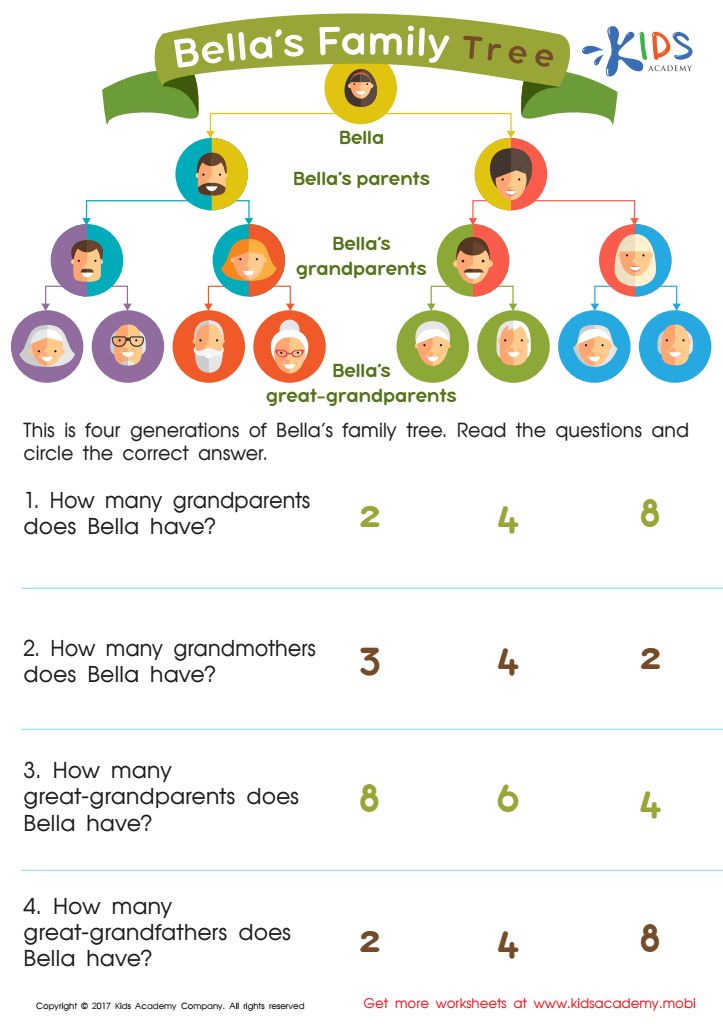
Bella's Family Tree Worksheet
Grade 2 kids learn 4 generations of a family with Kids Academy's new family tree worksheet. They explore Bella's tree, reading and answering questions about her grandparents and great-grandparents. It's an easy way to understand family relationships.
Bella's Family Tree Worksheet
Worksheet
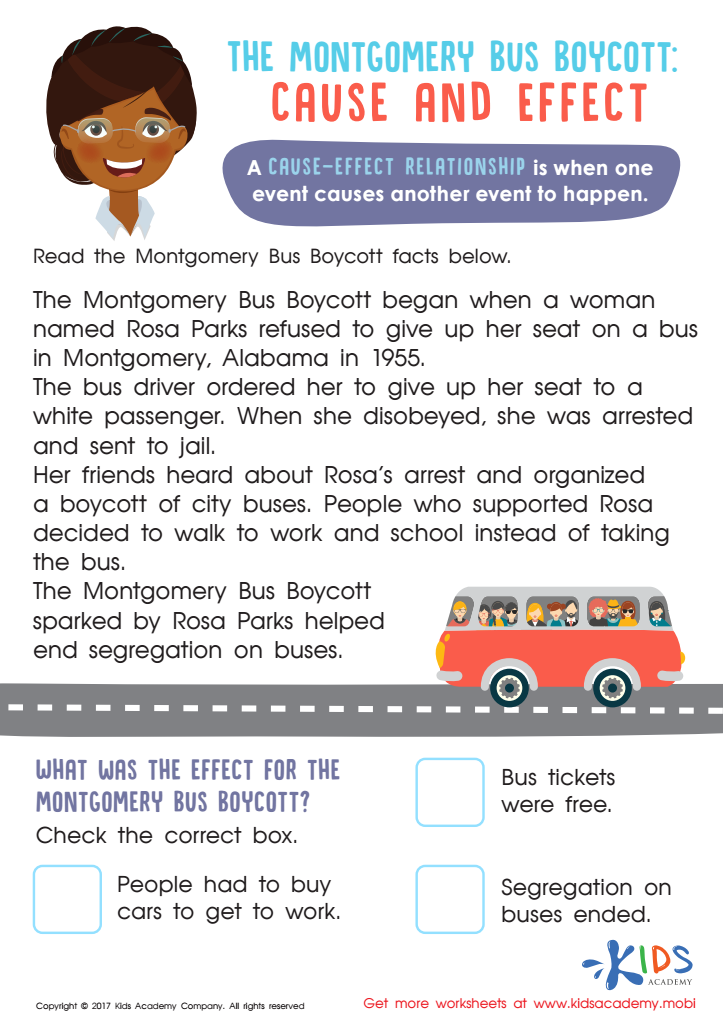
The Montgomery Bus Boycott Cause and Effect Worksheet
Kids Academy's cause-effect worksheet PDF introduces 2nd graders to cause-effect relationships through the Montgomery bus boycott. Kids read the story based on real facts and check the answers to demonstrate their understanding.
The Montgomery Bus Boycott Cause and Effect Worksheet
Worksheet
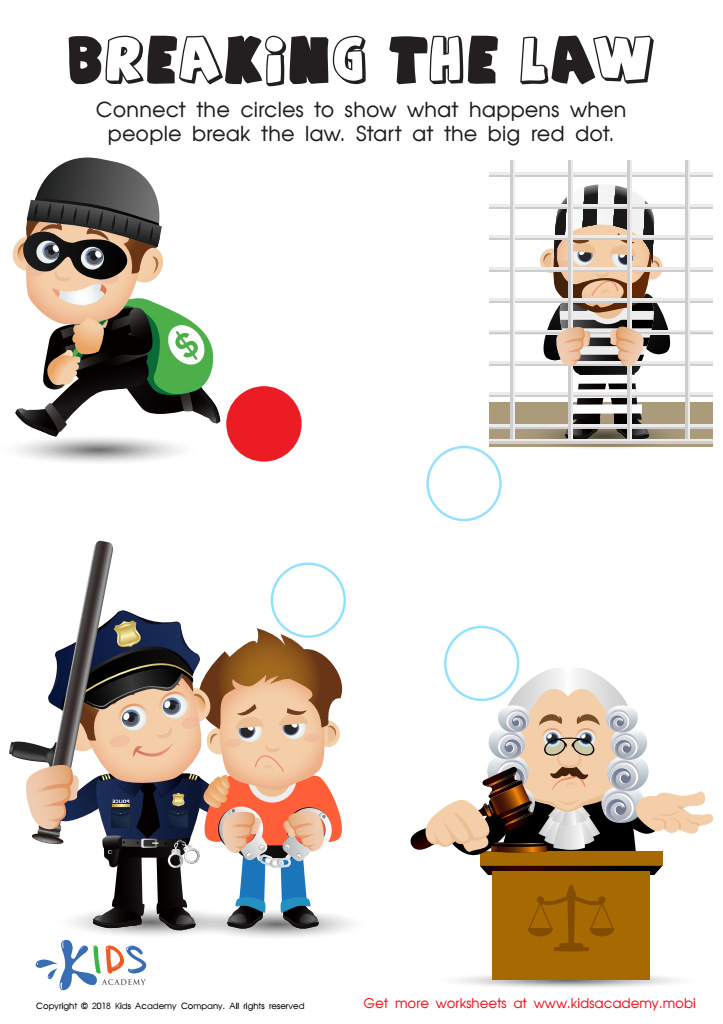
Breaking the Law Worksheet
Explain to your child why people go to jail. Show them this worksheet; it illustrates the stages a criminal goes through from breaking the law to receiving their punishment. Guide them in connecting the circles from the big red dot. Finish with a discussion on why it's important to follow the law.
Breaking the Law Worksheet
Worksheet
Join Kids Academy for Free
Who is primarily going to use this learning content?







Logical reasoning is a vital cognitive skill that enables children to analyze information, make connections, and draw conclusions. For ages 4-8, social studies provide an excellent context for developing this ability. During these formative years, children are naturally curious about the world around them, and engaging them in social studies topics enhances their understanding of diverse cultures, histories, and societal structures.
Parents and teachers should care about integrating logical reasoning into social studies because it fosters critical thinking. Children learn to ask questions, evaluate evidence, and understand cause-and-effect relationships within stories, historical events, or community issues. This educational approach empowers them to not only process information but also to articulate their thoughts coherently.
Additionally, developing logical reasoning within social studies encourages empathy and perspective-taking by allowing children to consider multiple viewpoints. As young learners explore different societies or global issues, they are better prepared to appreciate diversity and engage with others in a meaningful way.
Moreover, the skills gained from logical reasoning in social studies extend beyond academic settings; they play a crucial role in daily decision-making, problem-solving, and interpersonal interactions as children grow. Thus, fostering these skills is essential for nurturing well-rounded, inquisitive, and considerate future citizens.








