Weather Vocabulary Normal Weather Worksheets for Ages 4-8
3 filtered results
-
From - To
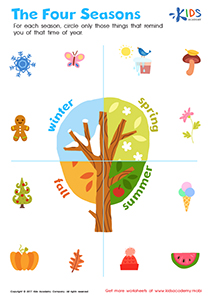
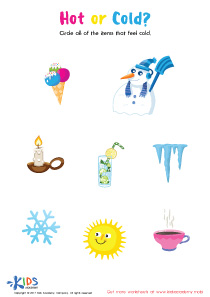
Explore our engaging "Weather Vocabulary Normal Weather Worksheets" designed specifically for children ages 4-8. These fun and interactive worksheets help young learners understand essential weather terms, enhancing their vocabulary skills in a delightful way. Each worksheet features bright illustrations and age-appropriate activities that encourage exploration of normal weather conditions. Your child will enjoy identifying different weather types, enhancing language skills, and developing a deeper awareness of their surroundings. Perfect for classroom or home use, our resources provide an enjoyable way for kids to learn about the world around them while fostering a love for learning. Get your kids excited about weather today!
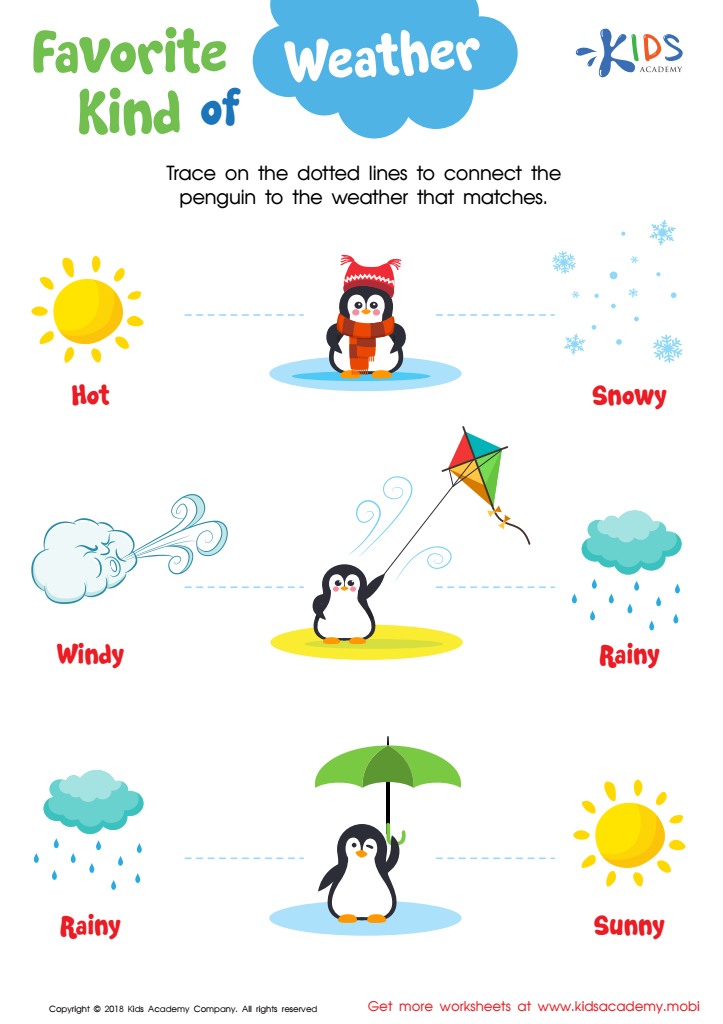
Favorite Kind of Weather Worksheet
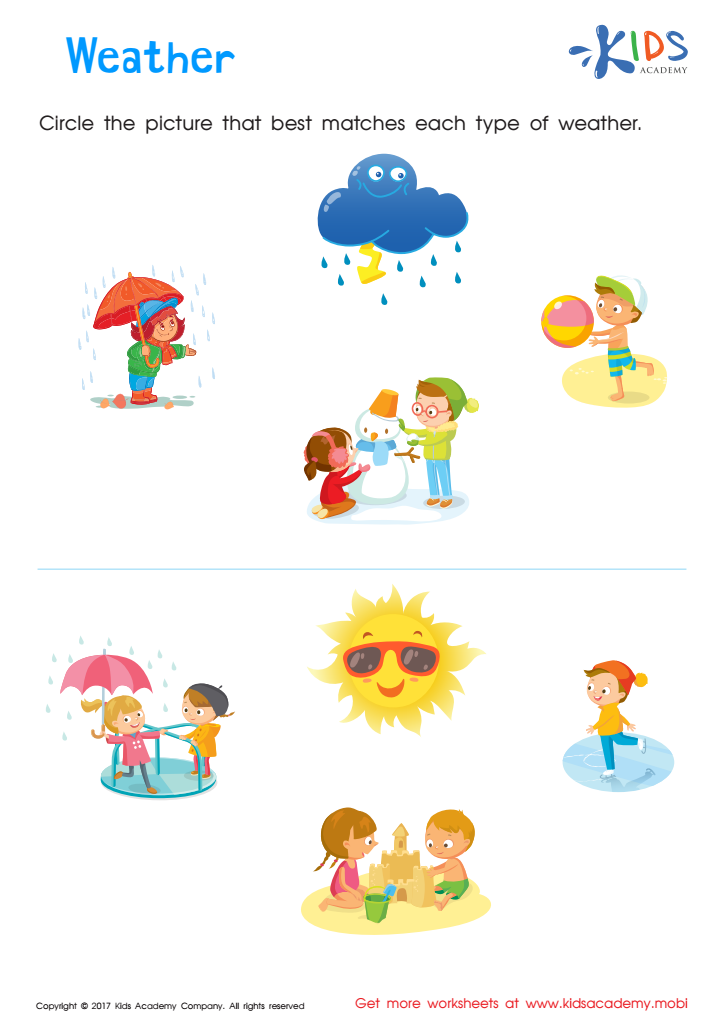
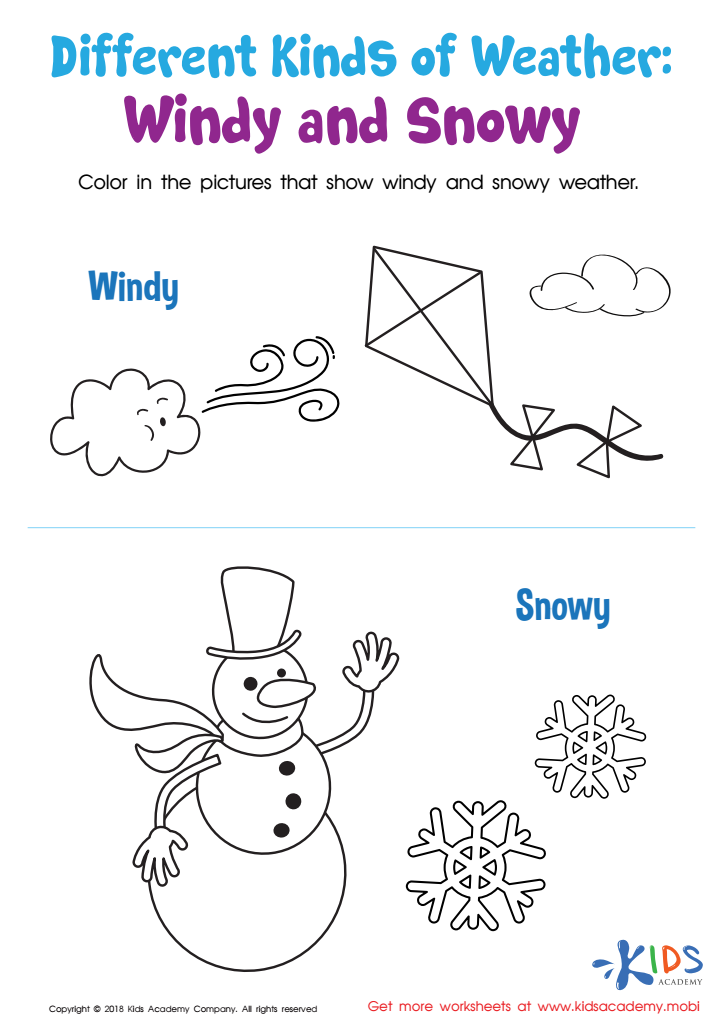
Different Kinds of Weather: Windy and Snowy Worksheet
 Assign to My Students







Teaching weather vocabulary to young children ages 4-8 is crucial for their understanding of the world. Firstly, it helps develop their language skills. Engaging with words like "sunny," "rainy," "cloudy," and "windy" enriches their vocabulary and promotes better verbal expression. Notably, this age is developmentally significant for language acquisition, and mastering weather-related terms fosters confidence in their communication abilities.
Secondly, understanding normal weather patterns encourages curiosity about nature and science. Children learn to observe and describe their environment, which nurtures critical thinking and observation skills. Recognizing weather changes also aids in daily decision-making; for instance, choosing appropriate clothing or planning outdoor activities.
Furthermore, learning weather vocabulary enhances children's social interaction. They can share their observations with peers and adults, promoting collaborative discussions about the environment. This interaction nurtures their listening and conversational skills, both essential for lifelong learning.
Lastly, familiarity with basic weather terms is fundamental for safety. Children who understand weather conditions are better equipped to recognize when to seek shelter or dress appropriately. Therefore, teaching weather vocabulary not only enriches language skills but also fosters confidence, critical thinking, social interaction, and safety awareness, vital components of a well-rounded education.