Phonics Skills Normal Tracing Words Worksheets for Ages 4-8
3 filtered results
-
From - To
Discover our engaging Phonics Skills Normal Tracing Words Worksheets designed for children aged 4-8! These worksheets provide an effective way for young learners to develop essential phonics skills, fostering their reading and writing abilities. Each worksheet features simple words with corresponding images, enabling kids to trace and practice writing. As they connect letters and sounds, children enhance their phonemic awareness, which is crucial for literacy development. Perfect for at-home learning or classroom use, these resources will make phonics practice fun and interactive. Download now and support your child's journey to reading fluency with our thoughtfully created tracing worksheets!
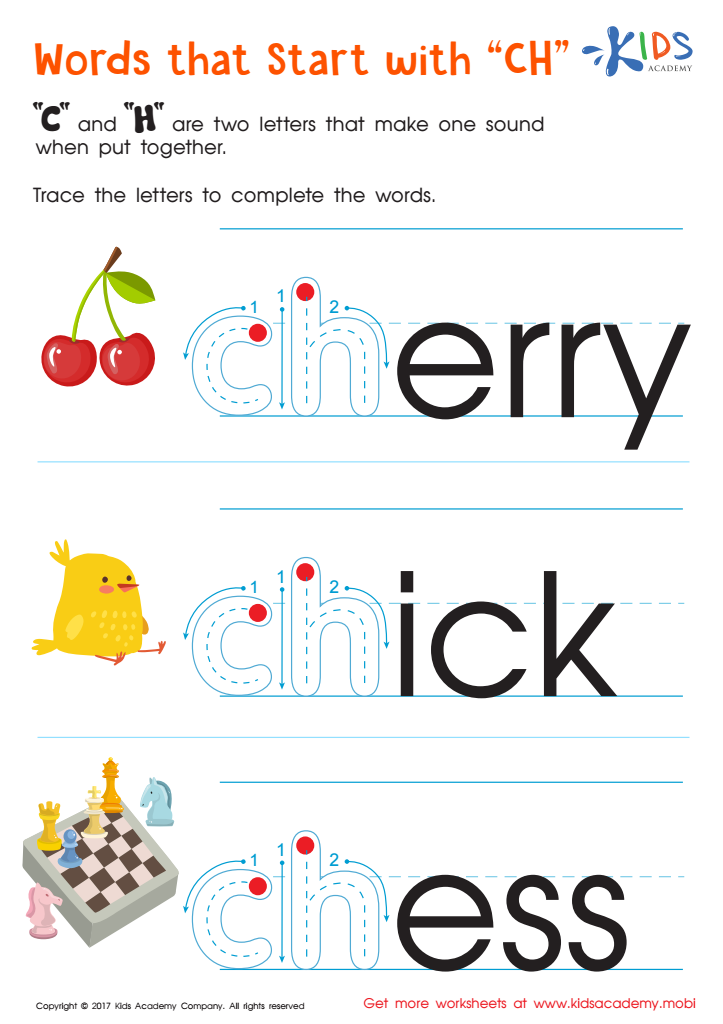
Words That Start with "ch" Spelling Worksheet
 Assign to My Students
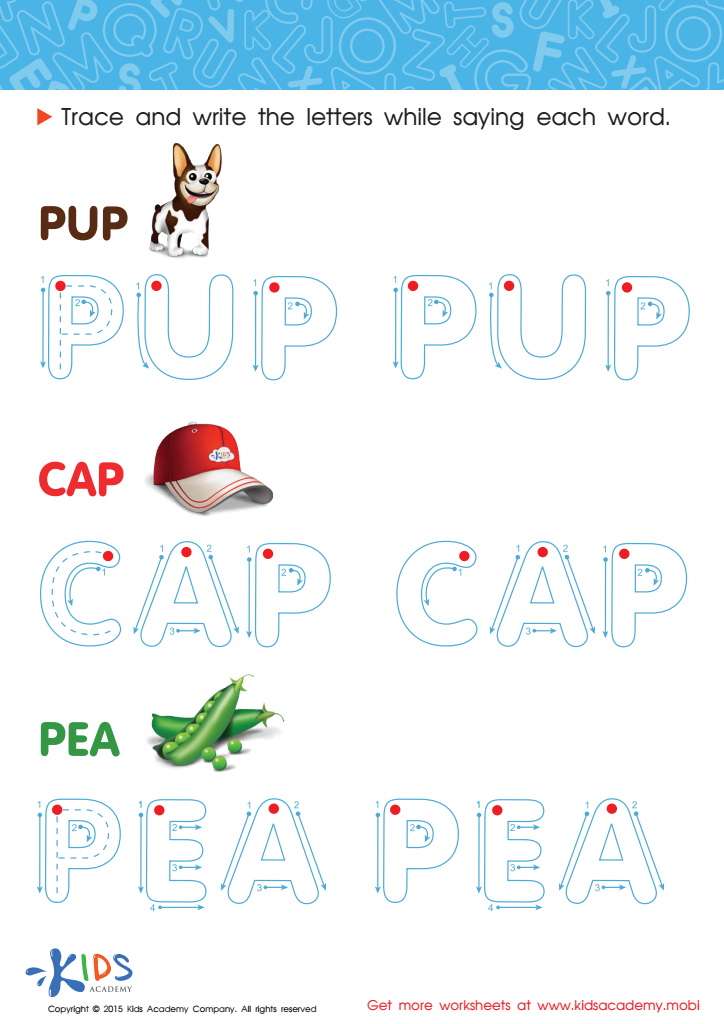
A Pup, a Cap and a Pea Spelling Worksheet
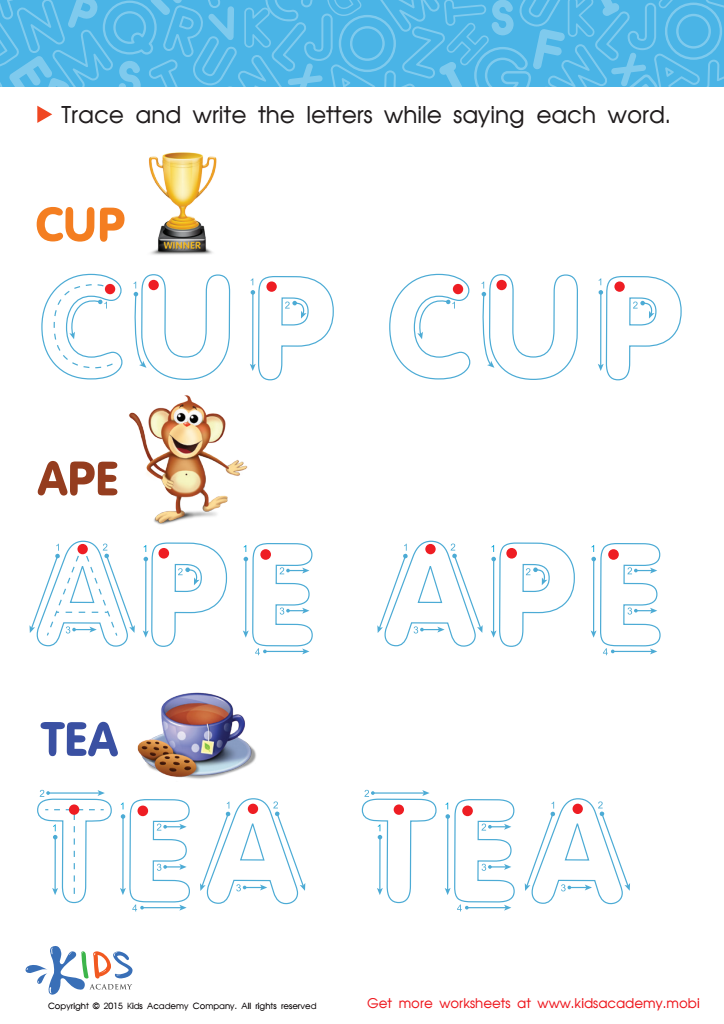
A Cup, an Ape and Tea Spelling Worksheet








Phonics skills and tracing words are fundamental components of early literacy development, especially for children aged 4-8. Understanding phonics helps young learners connect sounds and letters, forming the basis for reading and writing. This foundational skill allows children to decode words, improving their ability to read independently and comprehend text. As such, parents and teachers should prioritize phonics instruction, as it directly impacts children's confidence and proficiency in literacy.
Normal tracing words, typically comprised of simple, high-frequency words, bolster this skill by providing children with practice in letter formation and word recognition. Tracing helps young learners develop fine motor skills essential for writing, while simultaneously reinforcing phonetic patterns and sight words.
When children trace letters and words, they engage in a multisensory learning experience, making connections between sound, letter shape, and meaning. This practice can foster a love for reading and writing, encouraging children to express themselves and explore their imagination.
Furthermore, early mastery of phonics and word tracing primes children for ongoing academic success. As literacy is a crucial skill in all areas of education, continuous development in these areas will ensure that children are well-prepared for future learning challenges. Therefore, investing in phonics skills at this stage is invaluable.