Phonics recognition Normal Consonants Worksheets for Ages 4-9
3 filtered results
-
From - To
Discover our engaging Phonics Recognition Normal Consonants Worksheets, designed specifically for children aged 4-9. These worksheets help young learners identify and practice consonant sounds in a fun and interactive way. Packed with colorful illustrations and activities, they encourage early phonics development, essential for reading and writing proficiency. From simple tracing exercises to sound recognition games, our resources cater to various learning styles and keep children motivated. Perfect for classrooms or home study, these worksheets offer a valuable tool for building foundational skills in phonics and literacy. Equip your child with the essential skills needed for academic success and foster a love for learning!
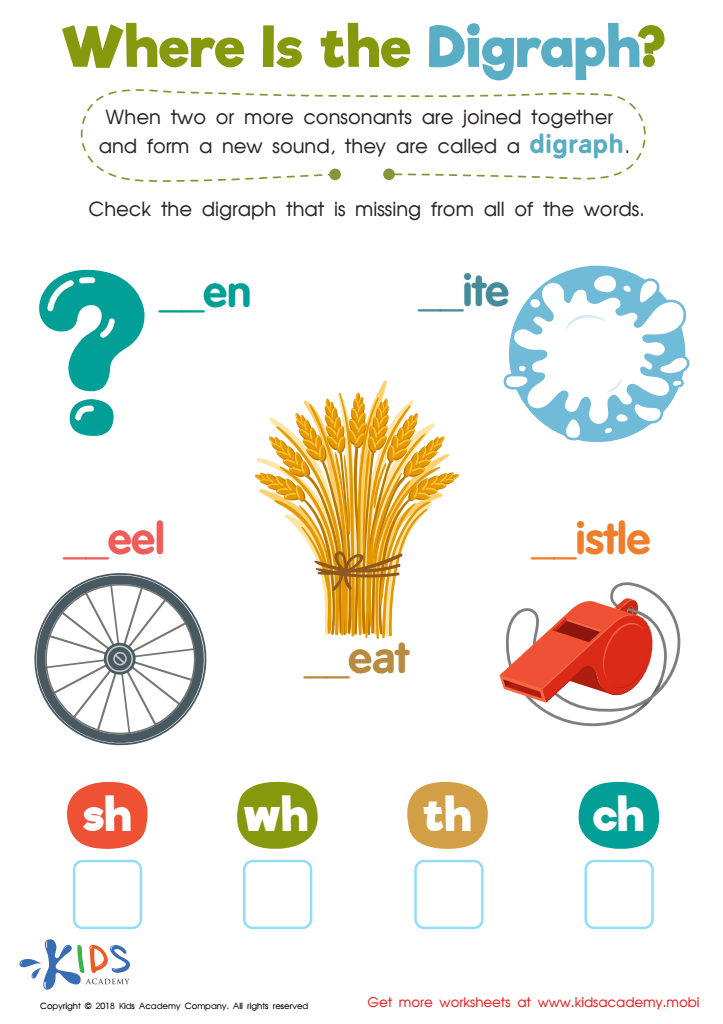
Where Is the Digraph? Worksheet
 Assign to My Students
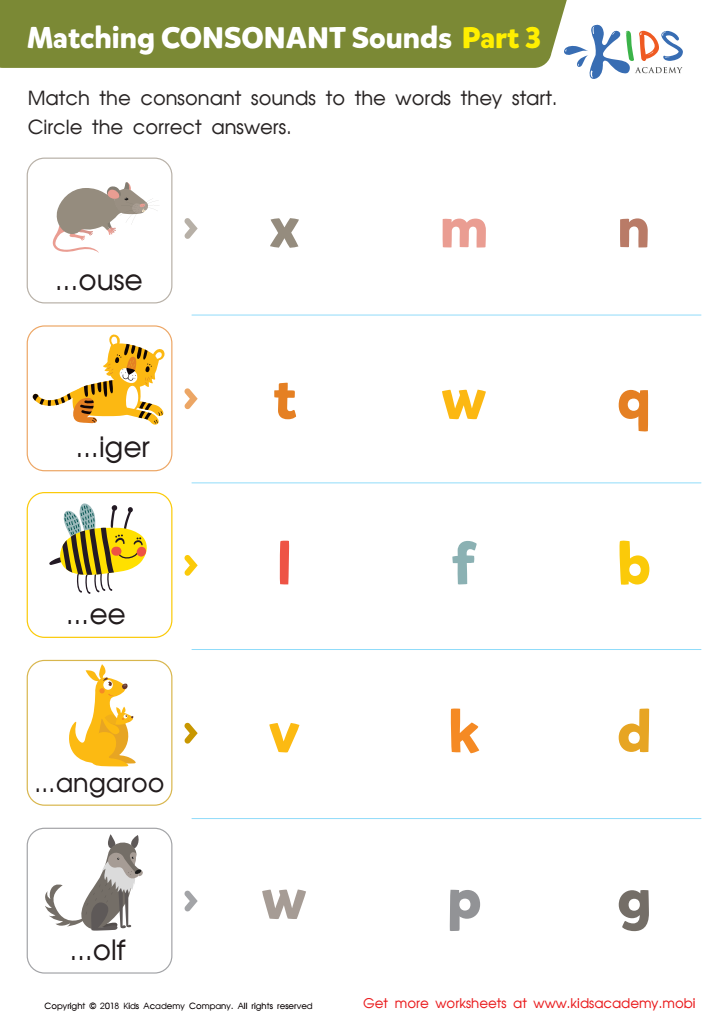
Matching Consonant Sounds: Part 3 Worksheet
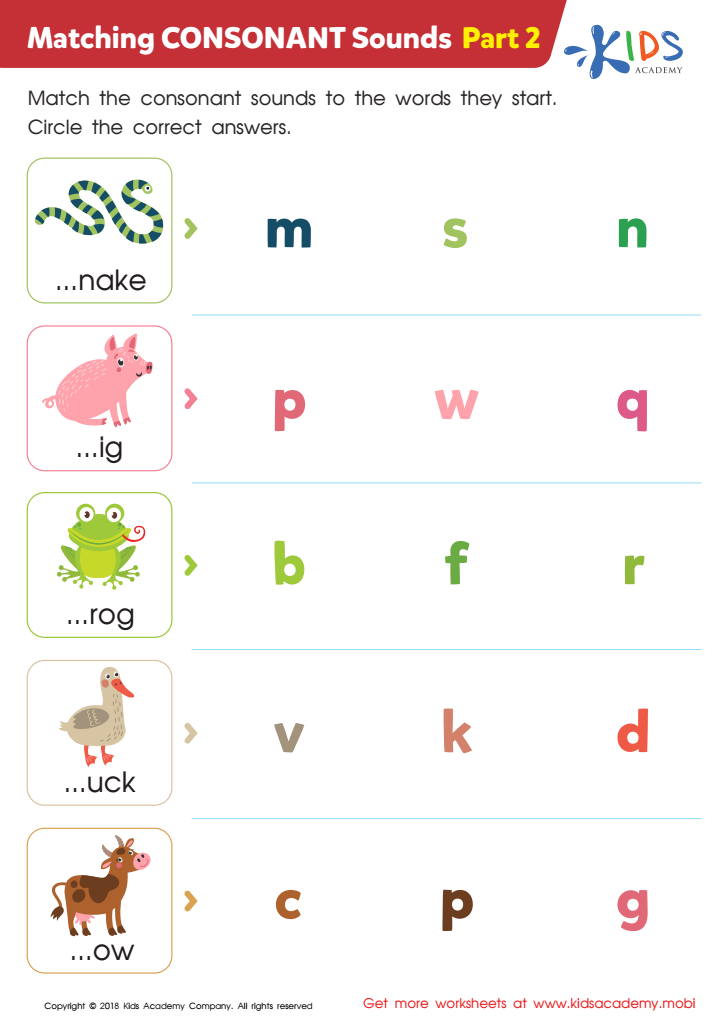
Matching Consonant Sounds: Part 2 Worksheet



Phonics recognition, particularly normal consonants, plays a crucial role in developing reading skills for children ages 4-9. During this formative stage, children are becoming familiar with the sounds that letters make. Understanding these consonants is essential for decoding words, which is a foundational skill in literacy. When children can recognize consonants and associate them with their sounds, they can begin to blend them with vowels, enabling them to read simple words and phrases.
For parents and teachers, nurturing phonics recognition is vital for building a strong reading foundation. It fosters confidence in children, encouraging them to engage with texts and develop a love for reading. This early skill not only enhances vocabulary and comprehension but also improves communication abilities, which are critical for academic success and social interactions.
Moreover, recognizing consonants lays the groundwork for more advanced literacy skills later on, such as spelling and writing. When children struggle with phonics, they may face challenges that affect their overall learning experience. Therefore, ensuring that children have a solid understanding of normal consonants is essential in equipping them with the tools they need for future academic achievement and lifelong learning.






