Phonics development Normal Alphabet Worksheets for Ages 4-9
3 filtered results
-
From - To
Phonics development is essential for young learners! Our "Normal Alphabet Worksheets for Ages 4-9" offer engaging, educational activities designed to cultivate phonics skills early on. These expertly crafted printables assist children in recognizing letters, sounds, and their relationships, forming a strong foundation for reading proficiency. Ideal for both classroom and home use, these worksheets will captivate kids as they learn to blend sounds and develop literacy fundamentals. With age-appropriate challenges and vibrant illustrations, Kids Academy makes learning the alphabet a fun, interactive, and effective experience for children aged 4-9. Enhance your child's phonics journey today!
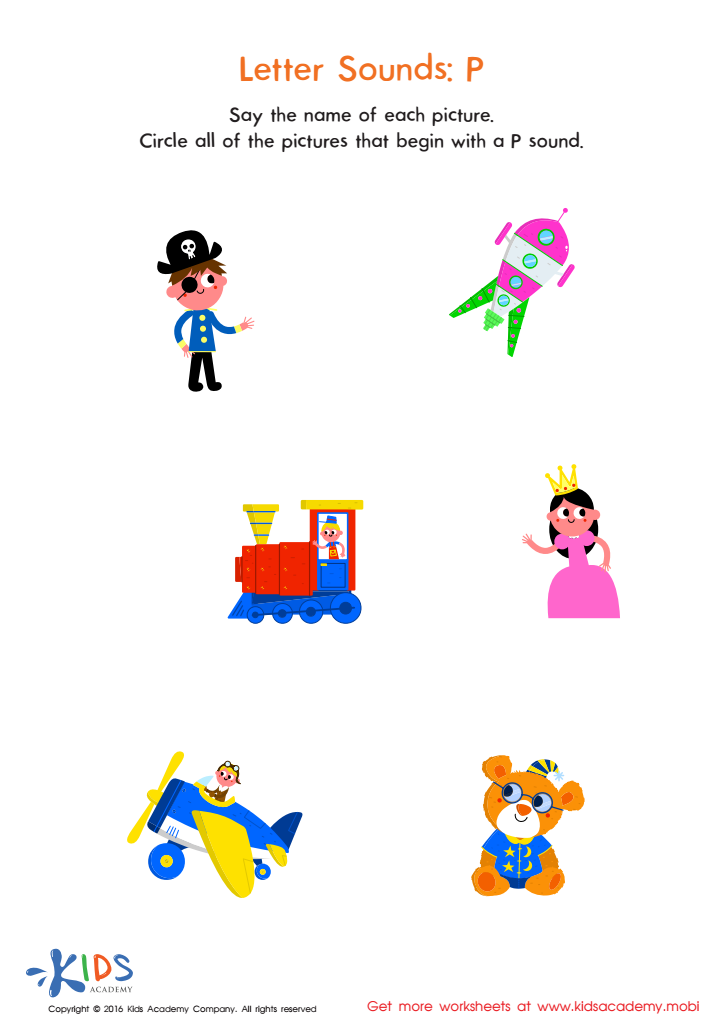
Letter P Sound Worksheet
 Assign to My Students
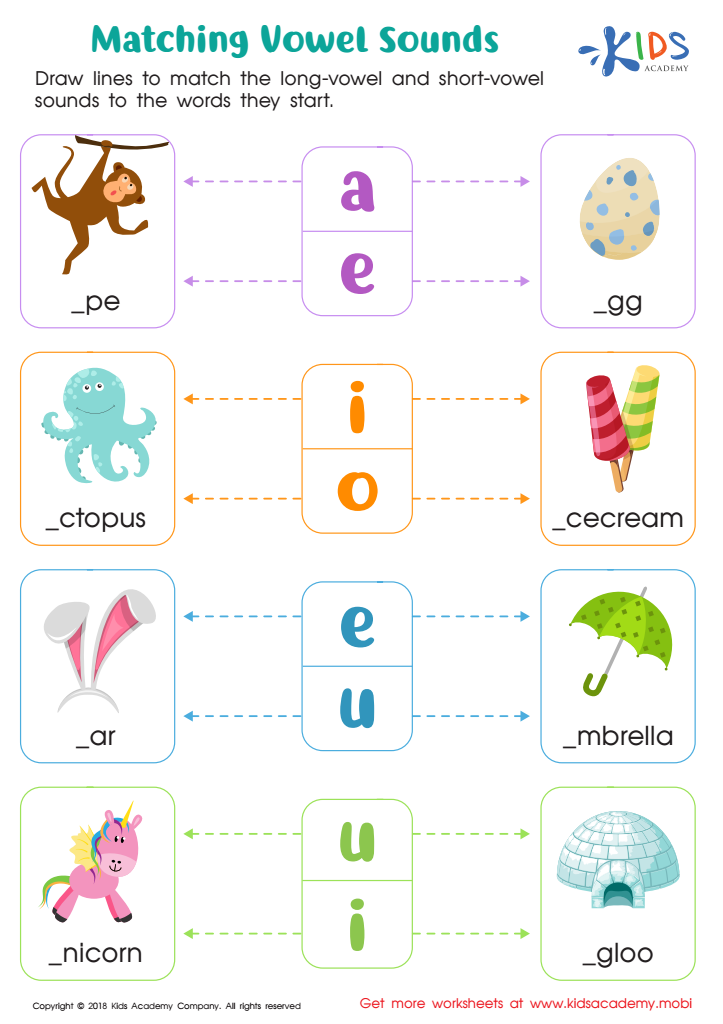
Matching Vowel Sounds Worksheet
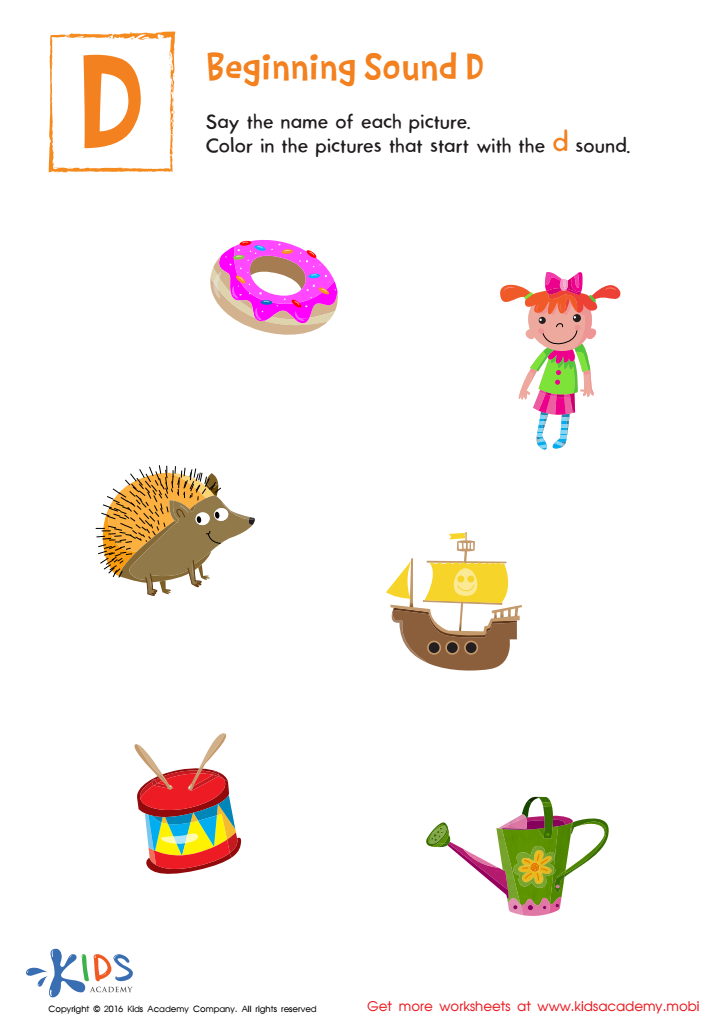
Beginning Sound D Worksheet







Phonics development using the normal alphabet for children ages 4-9 is crucial for laying a strong foundation in literacy and reading skills. Understanding the relationship between letters and sounds helps children decode new words, enhancing their reading fluency and comprehension. Early knowledge of phonics empowers kids to independently tackle unknown words, boosting their confidence and fostering a love for reading.
For parents and teachers, investing in phonics education is an investment in a child's overall academic success. Proficiency in reading is linked to better performance in other subjects as well, such as science, social studies, and mathematics, because so much elementary learning is reading-based. Moreover, early phonics instruction aids in identifying potential reading difficulties, allowing for timely intervention and support, which can make a significant difference in a child's educational trajectory.
Incorporating phonics education within the normal alphabet framework makes learning more accessible and systematic. Using familiar letters and sounds creates a consistent learning environment, making it easier for young learners to pick up new words and concepts. For parents, supporting phonics at home with activities like reading aloud, and playing word games can reinforce what is taught at school, leading to measurable improvements in their child's reading abilities.
In summary, focusing on phonics development helps children decode and understand words, enhances academic achievement, and fosters a lifetime love of reading, which is invaluable for both personal and academic growth.







