Phonics improvement Normal Alphabet Worksheets for Ages 4-9
3 filtered results
-
From - To
Boost your child's reading skills with our "Phonics Improvement Normal Alphabet Worksheets" designed for ages 4-9. Engaging and educational, these worksheets combine fun illustrations with effective phonics exercises to help young learners master letter sounds and phonemic awareness. Our thoughtfully crafted activities enhance alphabet recognition, sound blending, and decoding skills, laying a solid foundation for fluent reading. Perfect for both classroom use and at-home practice, our printables support varied learning styles and pace. With Kids Academy’s phonics worksheets, watching your child excel in reading has never been easier or more enjoyable! Download now to jumpstart your child's phonics journey.
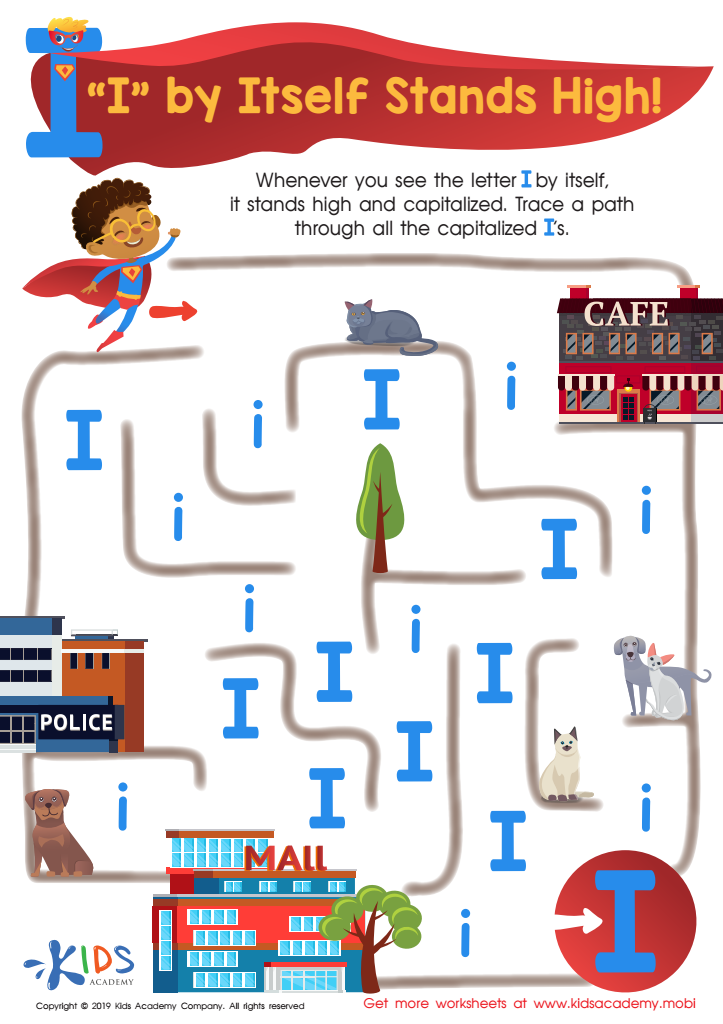
I Stands High Worksheet
 Assign to My Students
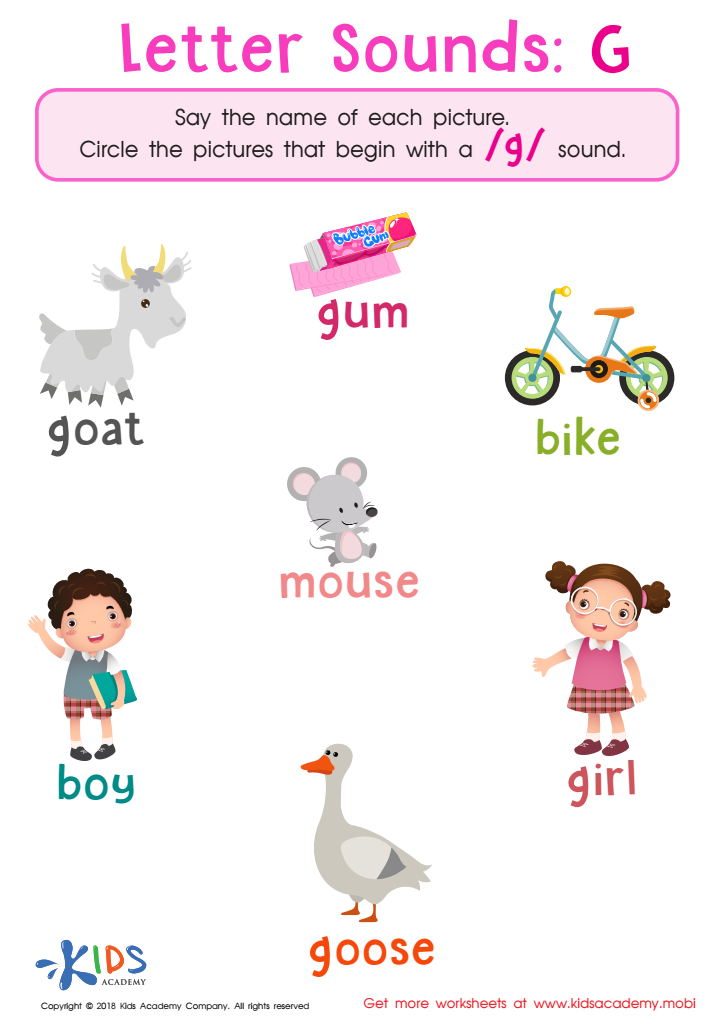
Letter G Sounds Worksheet








Phonics improvement in children aged 4-9 is crucial because it's foundational to their reading and writing skills. Phonics teaches children how to connect sounds with letters (graphemes) and blend these sounds to form words. When parents and teachers focus on enhancing phonics skills, they are essentially equipping children with tools for successful literacy.
A strong phonics foundation facilitates easier decoding of new words, leading to better reading fluency. With improved fluency, a child's ability to comprehend text also improves, which is essential for academic success across all subjects, as reading is a vehicle for learning.
Moreover, an emphasis on phonics sparks confidence in young learners. When children immediately recognize and pronounce words accurately, they feel more competent and motivated to read independently. This nurtures a lifelong love of reading, which can broaden their horizons, enhance their imagination, and improve critical thinking skills.
Finally, early mastery of phonics assists in reducing the risk of reading difficulties and future educational challenges. Therefore, both parents and teachers should prioritize phonics improvement within the Normal Alphabet as it sets the groundwork for literacy, academic achievement, and a confident, lifelong learner.







