Rhyming skills development Normal Alphabet Worksheets for Ages 4-9
4 filtered results
-
From - To
Enhance your child's language abilities with our tailored Rhyming Skills Development Normal Alphabet Worksheets for ages 4-9! Designed to make learning fun, these worksheets engage children in playful activities that foster phonemic awareness and reinforce the alphabet. Through interactive exercises, kids will explore rhymes, sound recognition, and word associations, building a strong foundation for future literacy. Perfect for home or classroom use, our worksheets are easily printable and require no special preparation. Help your child develop critical thinking and creativity while cultivating essential reading skills. Start their rhyming journey today and watch them thrive in literacy!
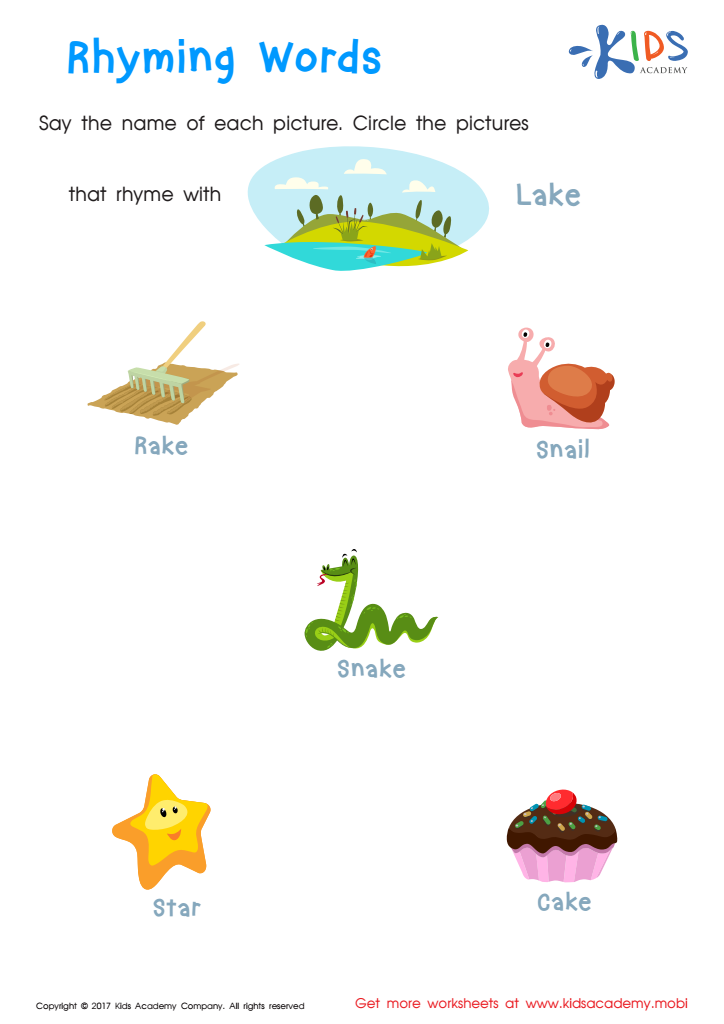
Rhyming Words Rhyming Worksheet
 Assign to My Students
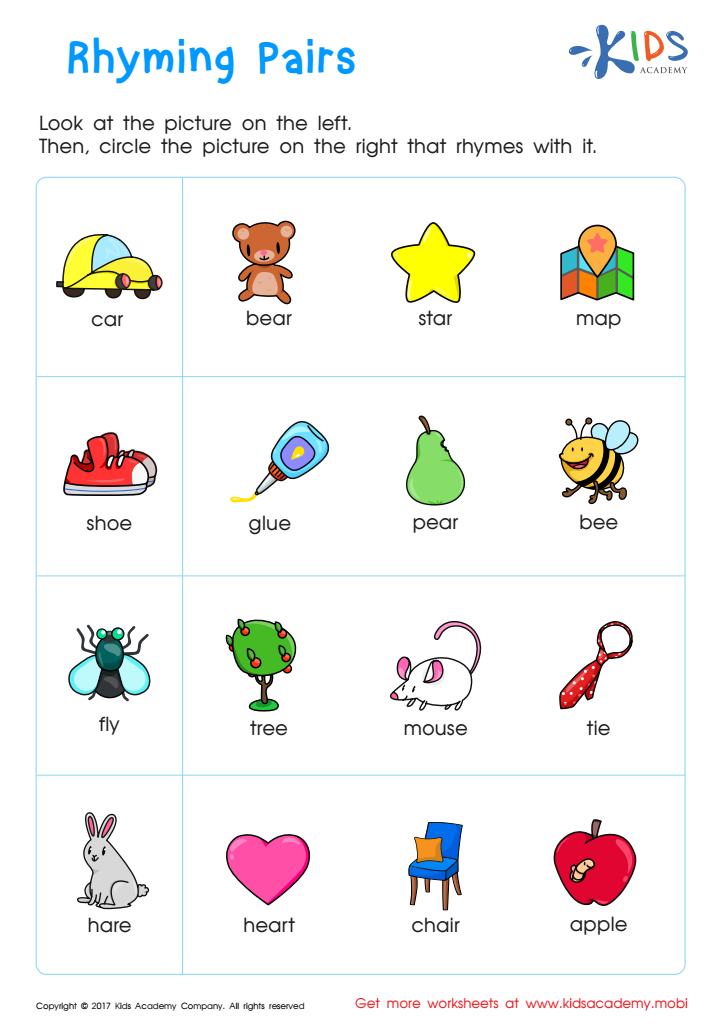
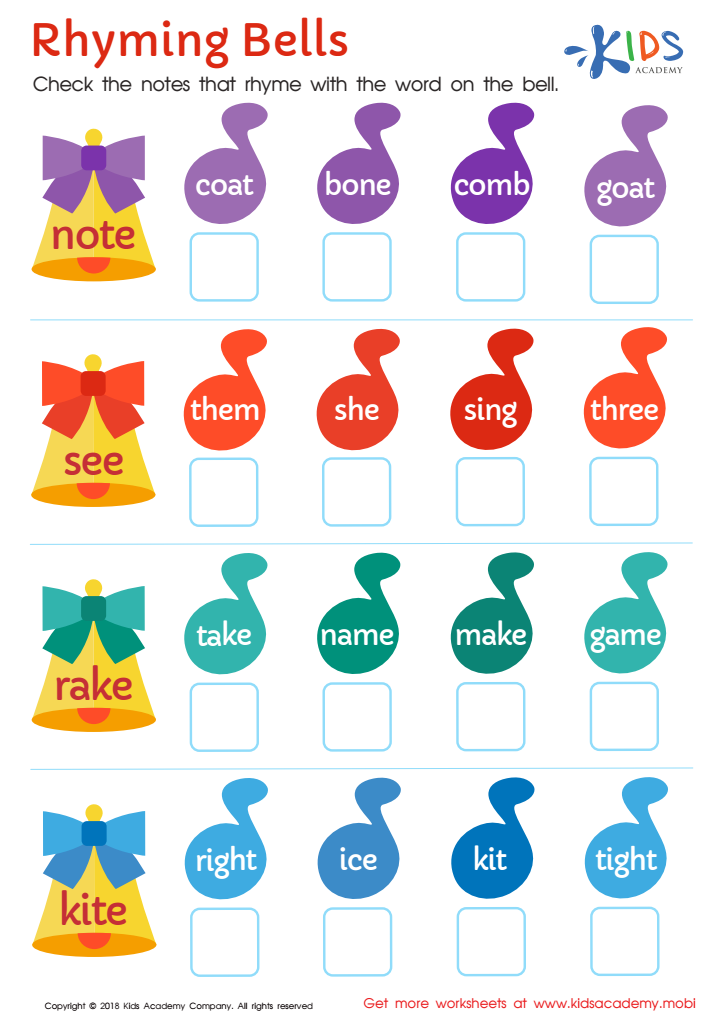
Rhyming Bells Worksheet
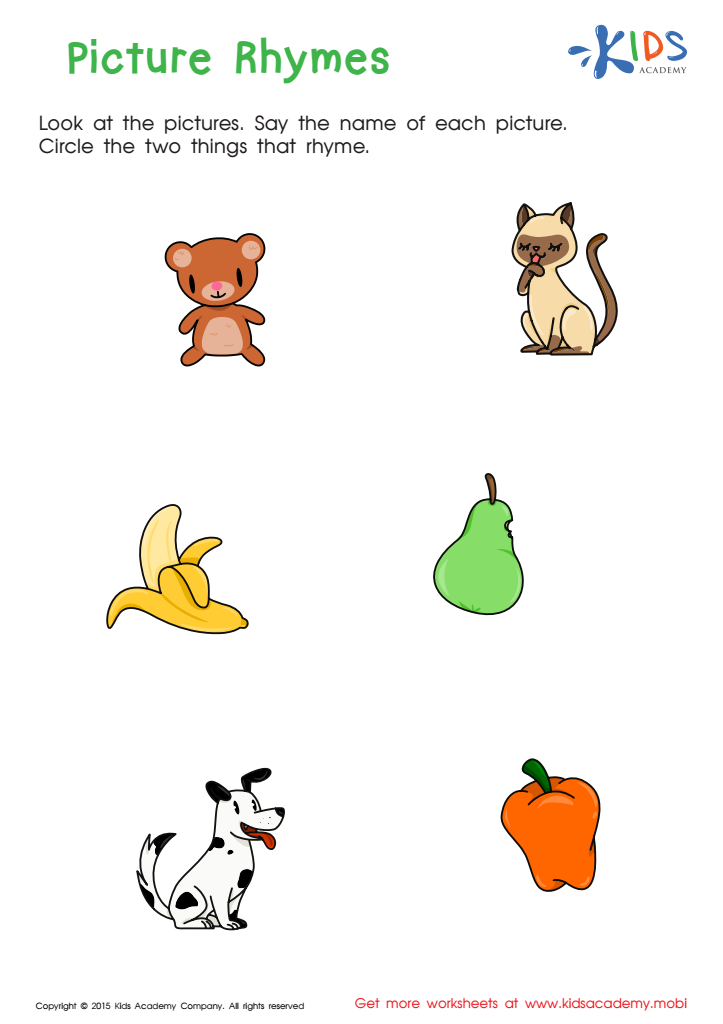
First Words: Picture Rhymes Worksheet







Rhyming skills are a fundamental aspect of early literacy development for children aged 4 to 9. Parents and teachers should prioritize these skills as they serve as a critical foundation for reading and writing. When children engage with rhymes, they enhance their phonemic awareness, which is the ability to hear, identify, and manipulate phonemes in spoken words. This skill is essential for learning to read and helps children decode words more easily.
Moreover, rhyming fosters vocabulary expansion and comprehension. As children explore rhyming words, they increase their familiarity with language patterns and word structures, which aids in constructing meaning. Engaging with rhymes also improves memory and recall, as the rhythmic patterns make it easier for children to remember words and phrases.
In addition to cognitive benefits, rhyming activities promote social and emotional development. Sharing rhymes with parents or peers can enhance bonding and improve communication skills, as it encourages collaborative play and interaction.
Ultimately, by supporting the development of rhyming skills, parents and teachers are equipping children with the necessary tools for future literacy success, laying the groundwork for their academic achievements and love for reading.







