Understanding syllables Normal Alphabet Worksheets for Ages 4-9
3 filtered results
-
From - To
Explore our "Understanding Syllables Normal Alphabet Worksheets" designed specifically for children ages 4-9! These engaging resources help young learners grasp the concept of syllables through interactive activities and fun exercises. Each worksheet encourages children to break down words, enhancing their phonemic awareness and reading skills. By identifying and counting syllables, students build a solid foundation for literacy that will benefit them throughout their educational journey. Our user-friendly worksheets cater to various learning styles, ensuring that every child can thrive. Perfect for at-home practice or classroom enrichment, these worksheets make mastering syllables exciting and enjoyable! Start your phonics adventure today!
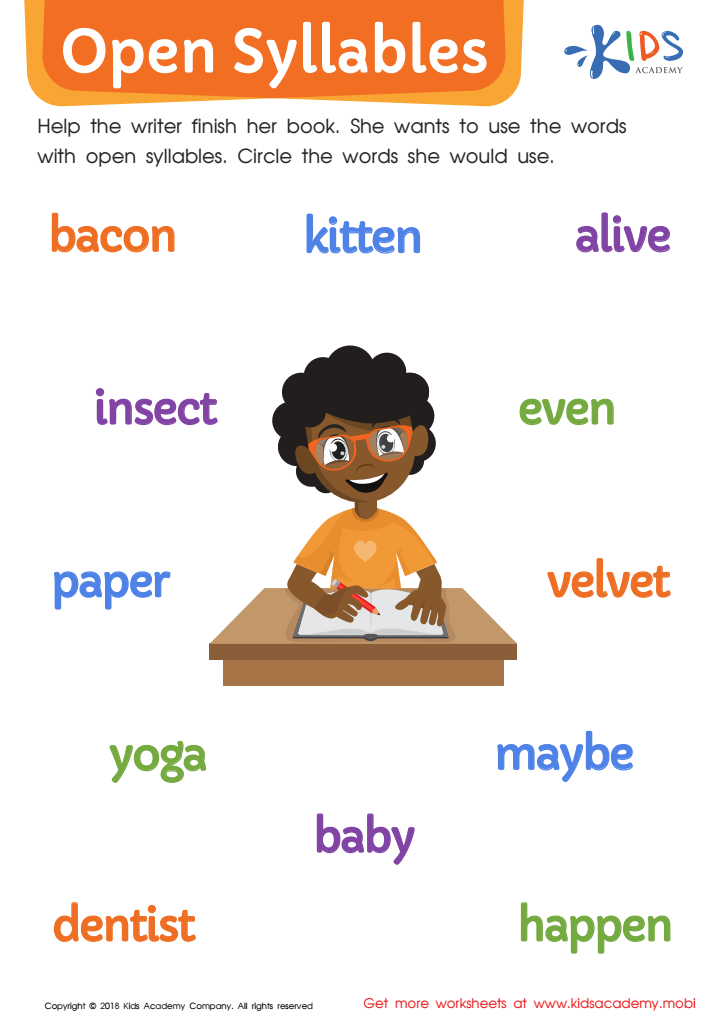
Open Syllables Worksheet
 Assign to My Students
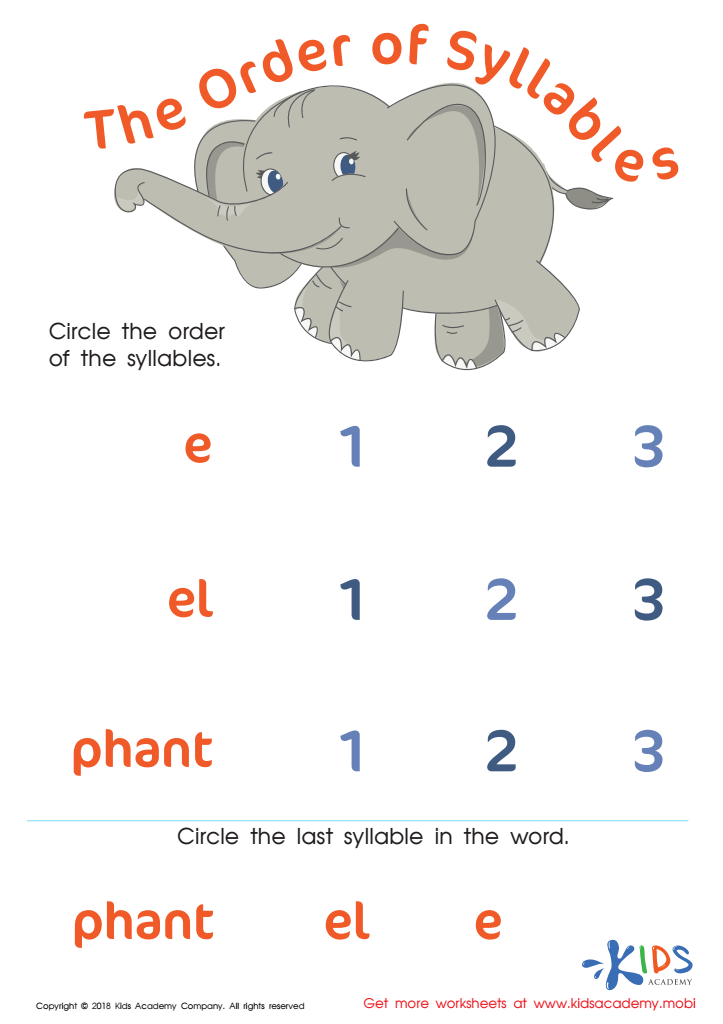
The Order of Syllables Worksheet
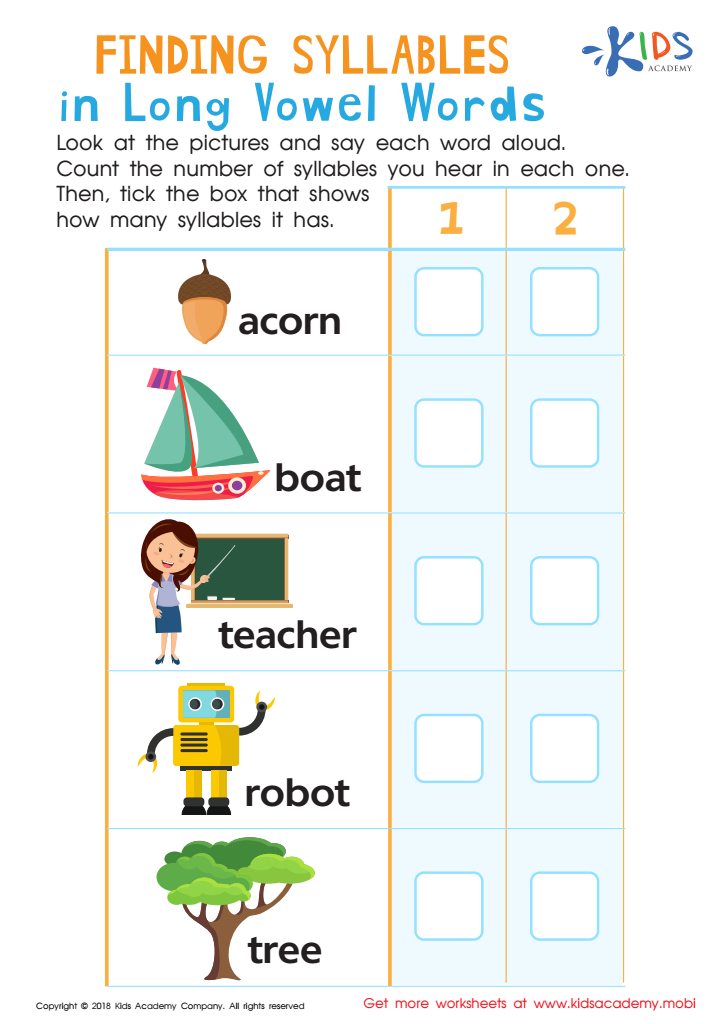
Finding Syllables in Long Vowel Words Worksheet





Understanding syllables and the normal alphabet is crucial for children ages 4-9 as it lays the foundation for effective reading and writing skills. Syllables are the building blocks of words; by learning how to break words into syllables, children improve their phonemic awareness, which is essential for reading fluency. This awareness helps them decode unfamiliar words and enhances their spelling abilities.
For parents and teachers, nurturing syllable understanding can significantly impact a child’s literacy journey. Engaging children in activities that involve counting, clapping, or tapping syllables fosters a fun learning environment and promotes language skills. As children progress, this understanding aids in their vocabulary expansion, enabling them to form complete sentences and express their thoughts more clearly.
Moreover, mastering the alphabet alongside syllables bolsters children's confidence in their literacy skills. A solid grasp of the normal alphabet ensures that they recognize letter sounds, facilitates learning to read, and fosters overall communication. By focusing on these foundational elements, caregivers and educators can help create a love for reading and learning in young children, setting them up for academic success and lifelong appreciation for language. Ultimately, investing time and effort into these skills pays off in stronger literacy outcomes.







