Sight word recognition Normal Phonics Worksheets for Ages 4-9
4 filtered results
-
From - To
Boost your child's reading confidence with our Sight Word Recognition Normal Phonics Worksheets designed specifically for ages 4-9! These engaging, interactive worksheets help young learners identify and master essential sight words through fun activities. By incorporating phonics skills, children will build a strong foundation in literacy, enhancing their ability to decode words and improve reading fluency. Our easy-to-use resources offer a variety of exercises that cater to different learning styles, making learning enjoyable and effective. Perfect for parents and teachers alike, these worksheets are valuable tools to encourage word recognition and ignite a love for reading in early learners. Start your reading journey today!
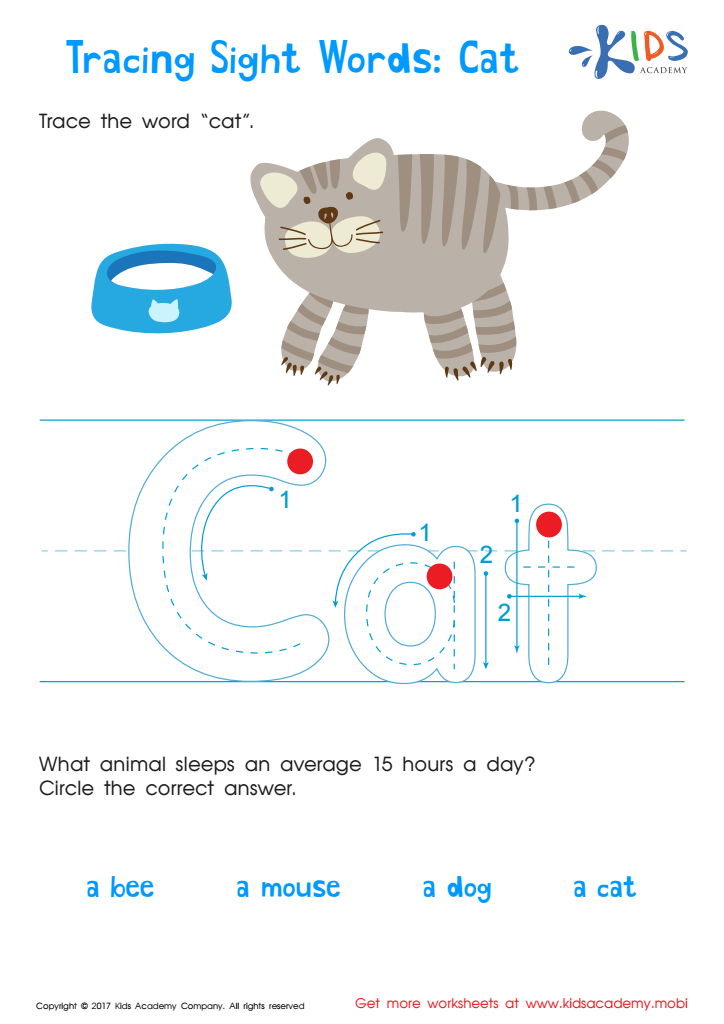
Cat Printable Sight Words Worksheet
 Assign to My Students
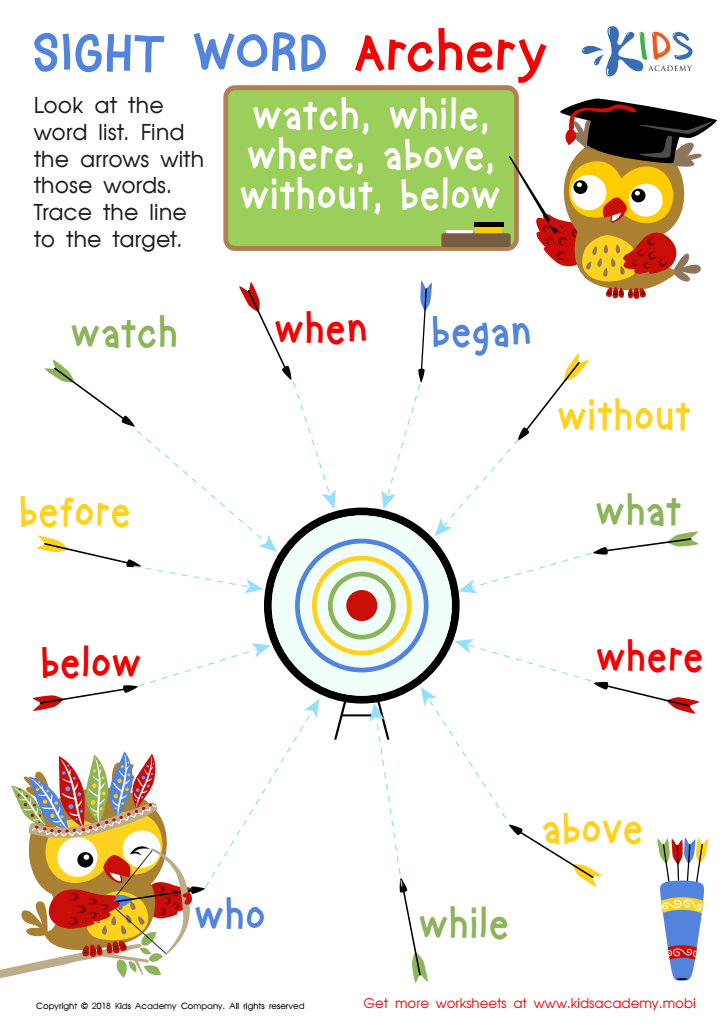
Sight Word Archery Worksheet
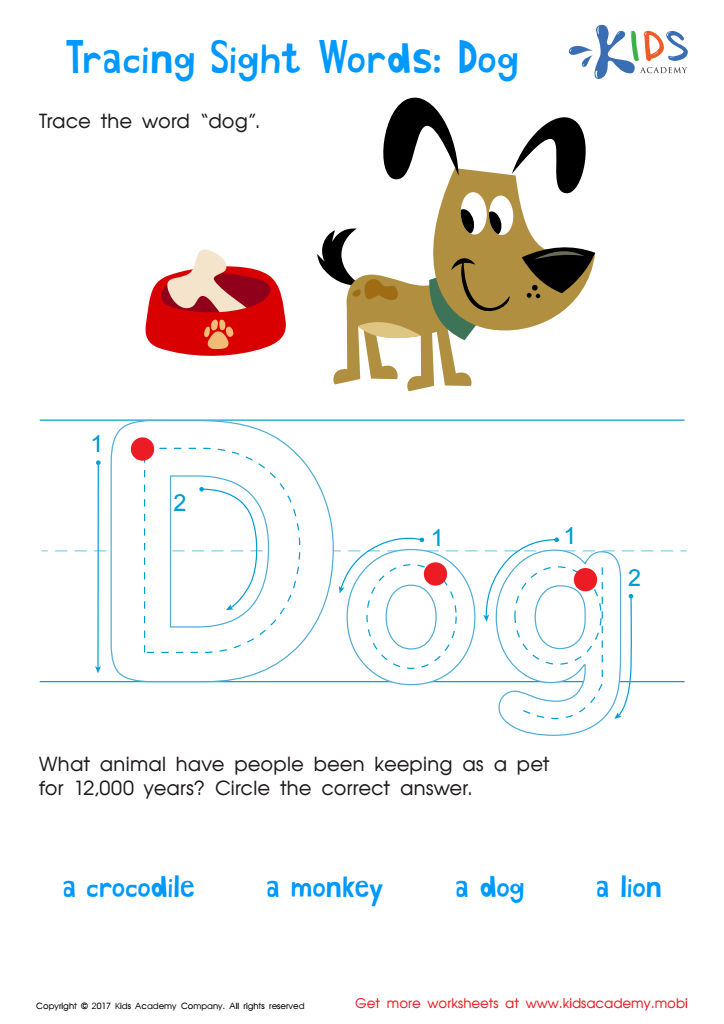
Dog Worksheet Sight Words Worksheet
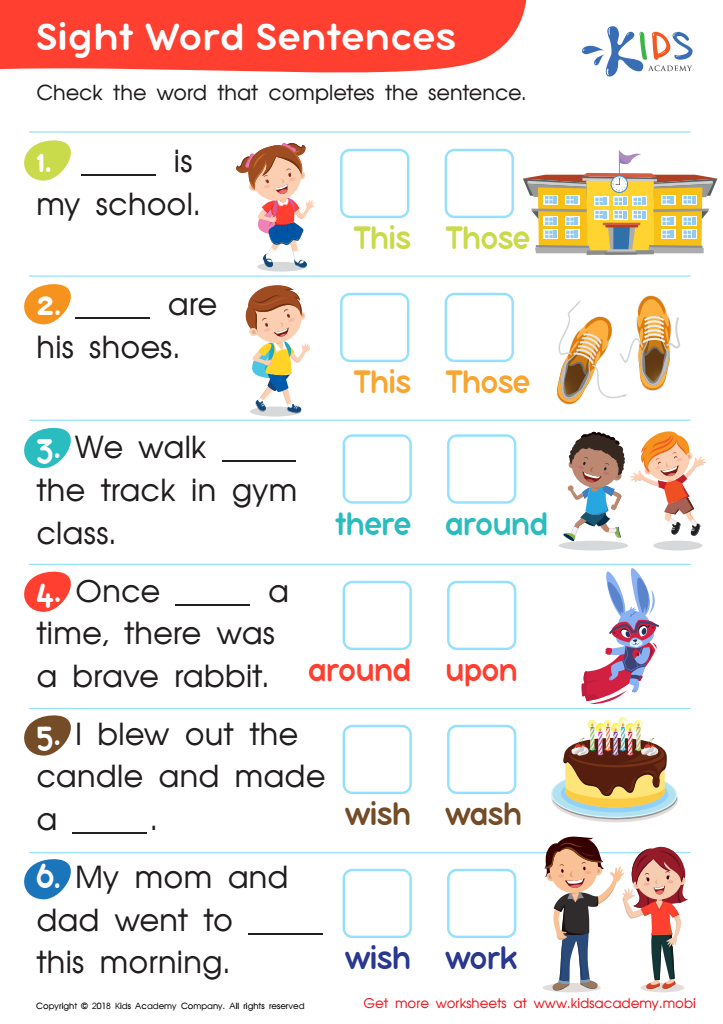
Sight Word Sentences Worksheet








Sight word recognition and phonics are foundational skills in early literacy development critical for children aged 4-9. Sight words, which are frequently used words that children are encouraged to memorize by sight, enable young learners to read fluently and confidently. Recognizing these words instantly accelerates reading development, allowing students to focus on comprehension without getting bogged down in decoding. In contrast, phonics provides the tools necessary for sound-letter correspondence. By understanding how sounds form words, children can decode unfamiliar words, enhancing their vocabulary and reading ability.
Parents and teachers should prioritize these skills as they offer a powerful combination for fostering literacy. Mastery of sight words and phonics allows children to transition from learning to read to reading to learn, which is essential as they progress in their education. Engaging in activities that reinforce these skills builds students' confidence and motivation, making reading a more enjoyable and rewarding experience. Additionally, early proficiency in literacy enhances overall academic performance and opens doors for future learning opportunities. Ultimately, sight word recognition and phonics serve as building blocks for lifelong reading, critical thinking, and communication skills, making them indispensable components of early education.







