Understanding syllables Normal Phonics Worksheets for Ages 4-9
3 filtered results
-
From - To
Unlock your child's reading potential with our "Understanding Syllables Normal Phonics Worksheets for Ages 4-9." Perfectly crafted for young learners, these worksheets help children grasp the crucial concept of syllables. Through interactive and engaging activities, kids will learn to break down words into manageable parts, enhancing their phonics and reading skills. Tailored for ages 4 to 9, our worksheets support literacy development at every stage, making learning fun and effective. Ideal for home or classroom use, these resources are a fantastic tool to boost your child’s linguistic growth and confidence in reading. Dive into the world of syllables today!
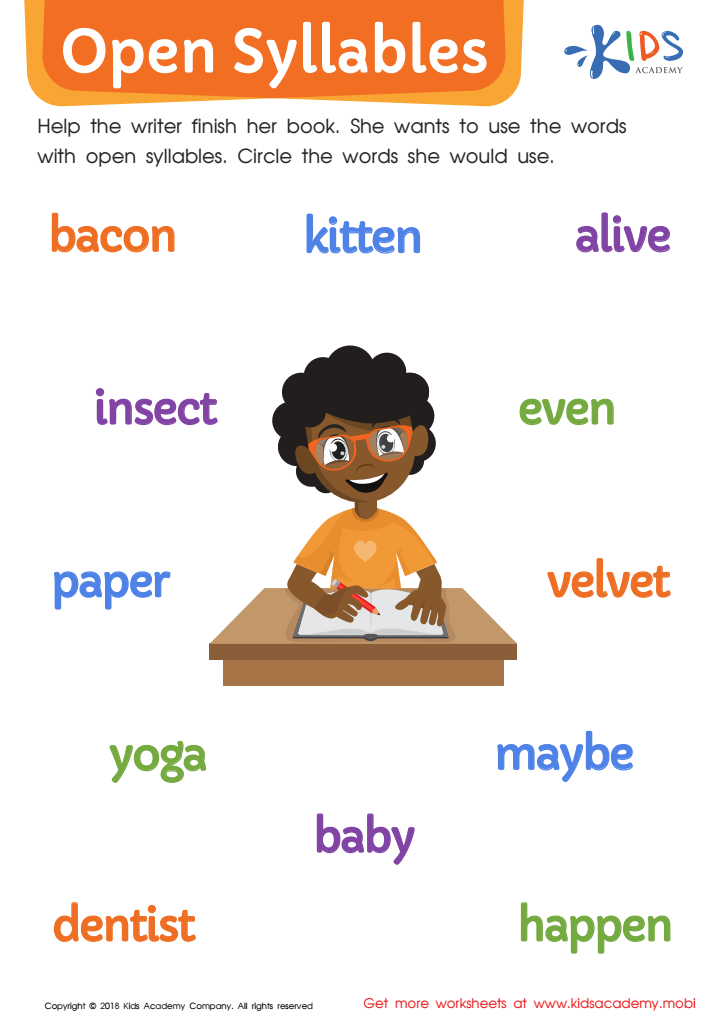
Open Syllables Worksheet
 Assign to My Students
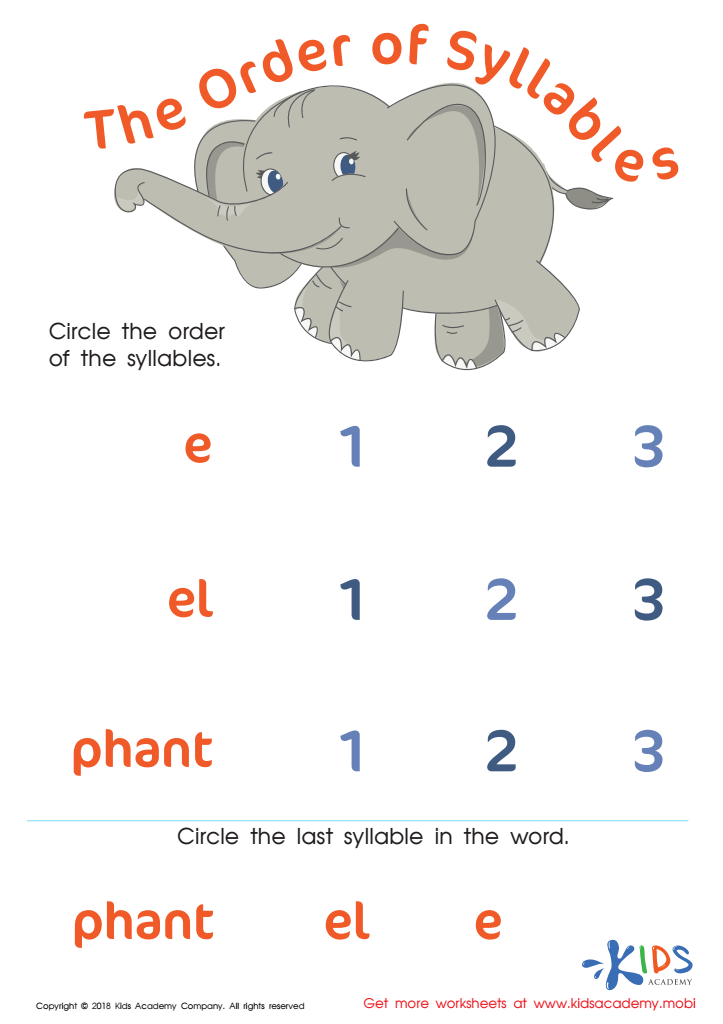
The Order of Syllables Worksheet
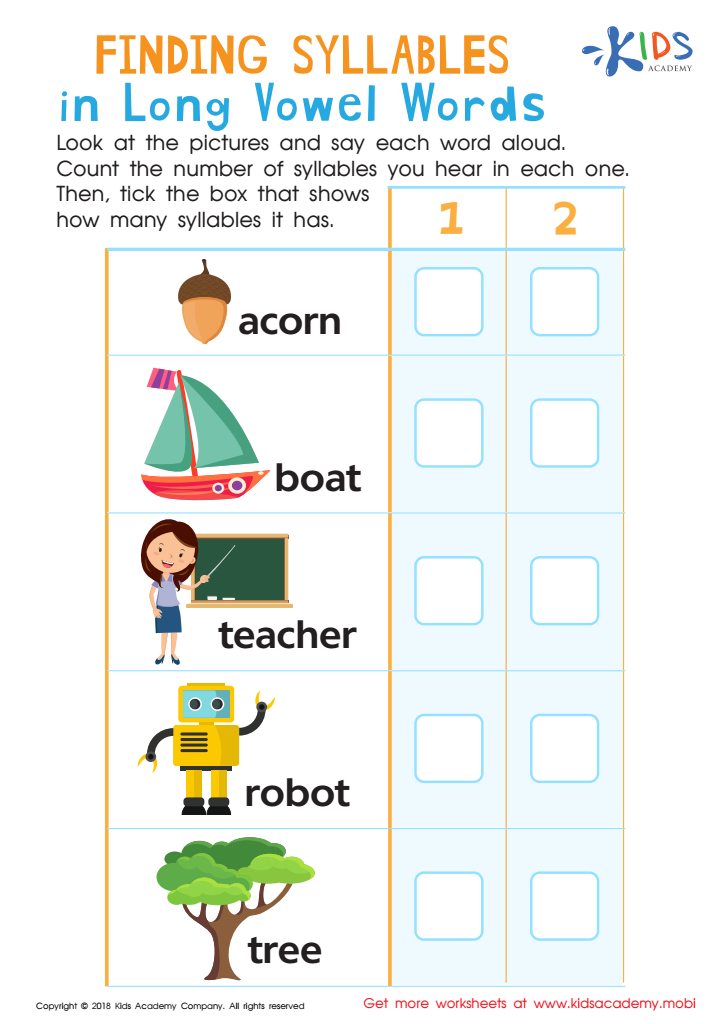
Finding Syllables in Long Vowel Words Worksheet








Understanding syllables and normal phonics is crucial for young learners, and it's vital for parents and teachers to recognize their importance. Syllables, the building blocks of words, help children break down words into manageable parts, making reading less intimidating and more approachable. Knowing how to identify and count syllables aids in developing reading fluency and comprehension. By segmenting words into syllables, children can decode unfamiliar words more easily and enhance their spelling skills by understanding patterns.
Phonics, on the other hand, is the method of teaching reading by connecting sounds with letters or groups of letters. Ages 4-9 is a critical period for developing these foundational skills. Phonics instruction enables children to grasp the sound structure of words, fostering efficient word recognition which is essential for reading proficiency. When children can quickly recognize and pronounce words, it boosts their reading speed and confidence, allowing them to focus more on understanding the content of what they read.
By prioritizing syllable knowledge and phonics, parents and teachers set the stage for lifelong literacy success. This support during early education ensures that children not only become proficient readers but also develop a love for reading that enhances their overall academic and personal growth.







