Letter Tracing Practice Normal Tracing Letters Worksheets for Ages 4-9
3 filtered results
-
From - To
Enhance your child's handwriting skills with our Letter Tracing Practice worksheets, designed for ages 4-9! These engaging activities focus on normal tracing letters, helping young learners develop their fine motor skills and letter recognition. Each worksheet features clear, bold letters for easy tracing, encouraging confidence in writing while making learning fun. As children trace each letter, they will improve their letter formation, making it easier for them to transition to independent writing. Ideal for both home and classroom settings, our printable worksheets are a perfect resource to foster early literacy skills in a playful, interactive way. Start tracing today!

Lowercase Letters j k l Worksheet
 Assign to My Students
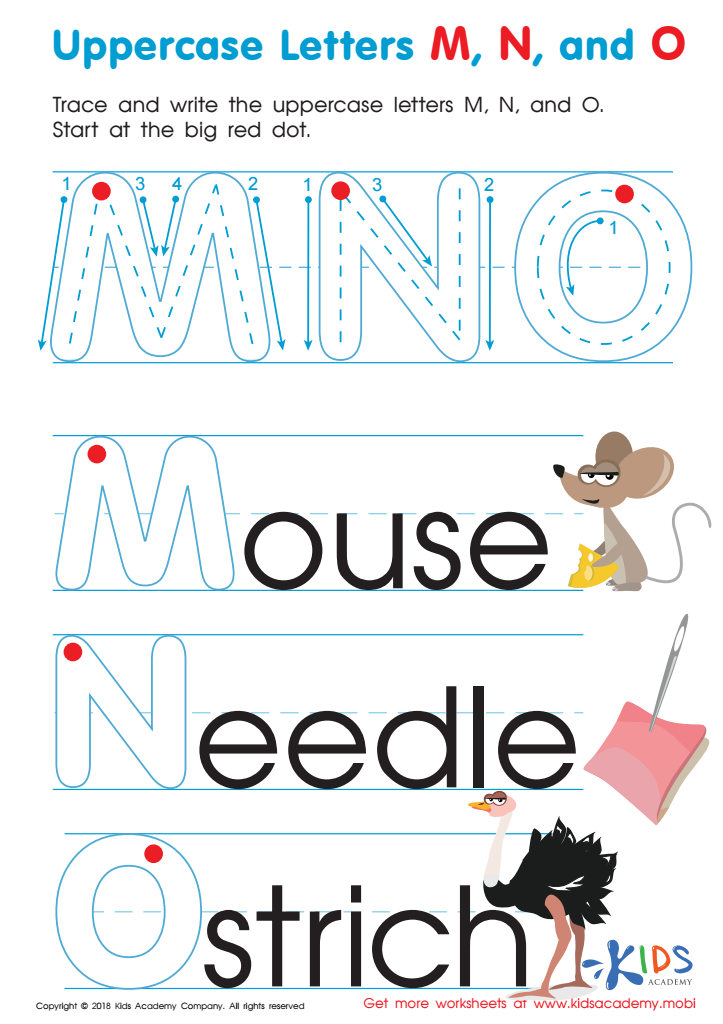
Uppercase Letters M, N, and O Worksheet
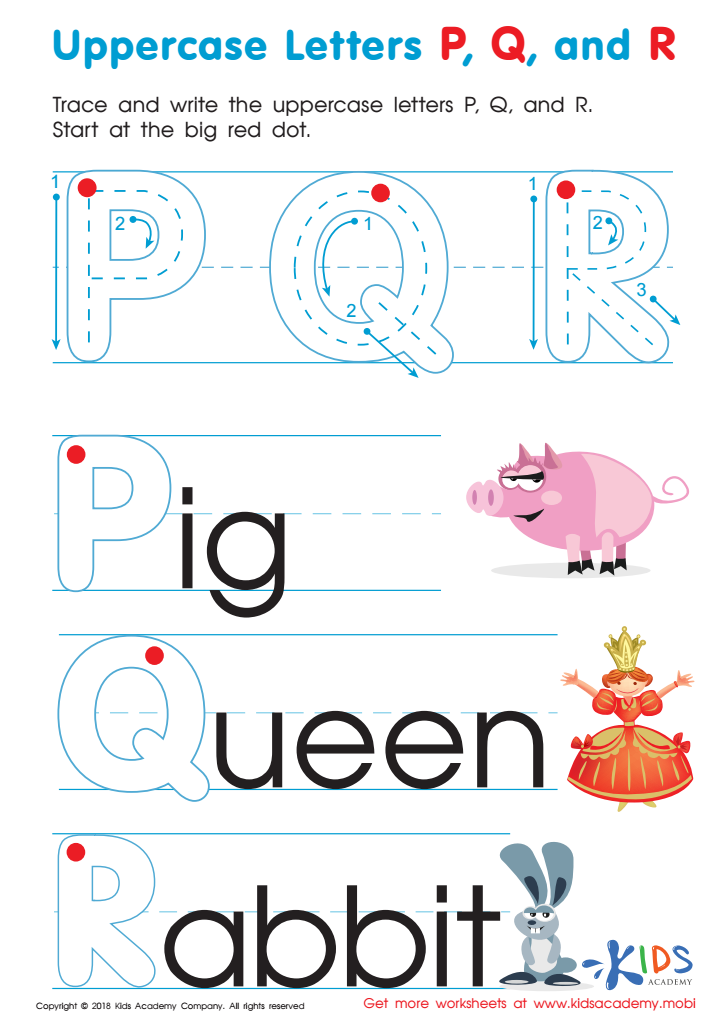
Uppercase Letters P, Q, and R Worksheet







Letter tracing practice is essential for children ages 4-9 as it lays the foundation for strong literacy skills and fine motor development. During these formative years, children are beginning to learn how to write and recognize letters, which are crucial components of reading and writing proficiency. Tracing letters helps reinforce letter shapes, leading to improved letter recognition and recall, which are vital when they progress to independent writing and reading.
Additionally, the act of tracing enhances fine motor skills and hand-eye coordination, enabling children to control their writing tools with greater ease. This not only boosts their confidence but also reduces frustration during early writing experiences. As they effectively learn to form letters and numbers, children develop a sense of accomplishment that fosters a love for writing.
Moreover, tracing can engage children in a fun and interactive way, often incorporating creative tasks that promote a love for learning. By prioritizing letter tracing, parents and teachers can equip children with essential skills for academic success while also cultivating a positive attitude towards writing and literacy that will benefit their educational journey for years to come.








