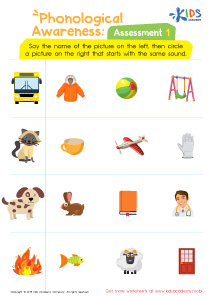
Reading comprehension Normal Two Letter Phonics Worksheets for Ages 4-9
7 filtered results
Difficulty Level
Grade
Age
-
From - To
Subject
Activity
Standards
Enhance your child's reading skills with our engaging Normal Two Letter Phonics Worksheets, designed for ages 4-9. These worksheets help young learners develop essential reading comprehension abilities through interactive phonics activities focused on two-letter combinations. Kids will practice decoding words, recognizing letter patterns, and improving vocabulary, while enjoying colorful illustrations and fun exercises. Perfect for both classroom and home use, these resources are ideal for reinforcing literacy skills and boosting confidence in young readers. Equip your little ones with the foundations of reading success today and watch them thrive academically! Explore our collection and make learning enjoyable!
Favorites
With answer key
Interactive
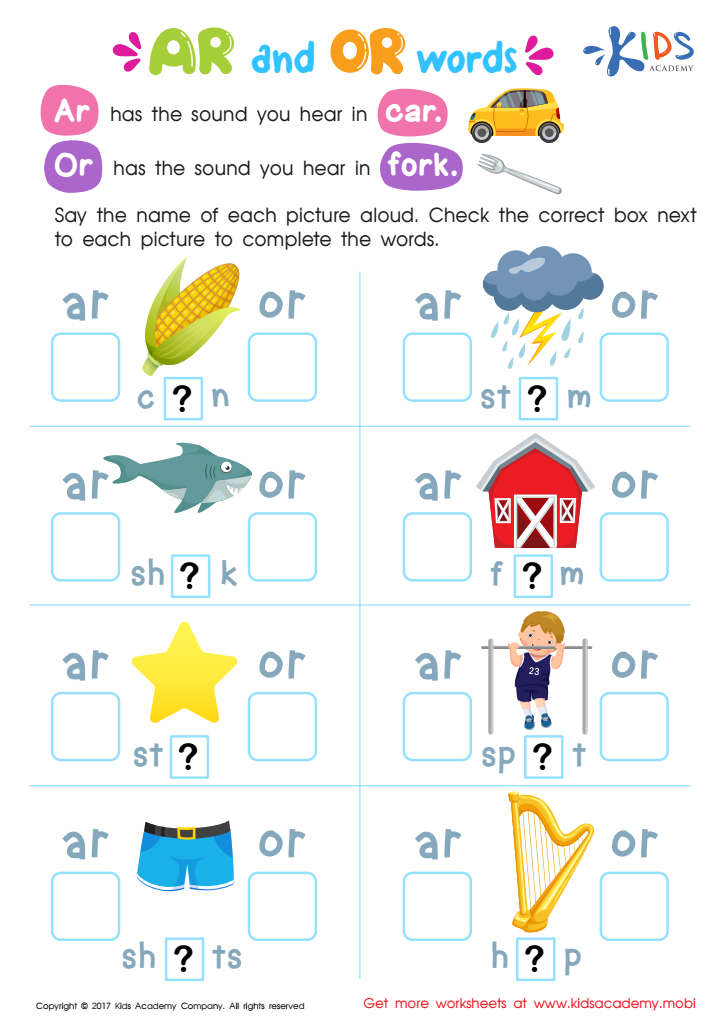
Ar and Or Words Phonics Worksheet
Master the distinct digraphs 'ar' and 'or' with this fun phonics worksheet from Kids Academy! With meaningful illustrations, it'll guide your child to choose the right one. Get ready for the great results!
Ar and Or Words Phonics Worksheet
Worksheet
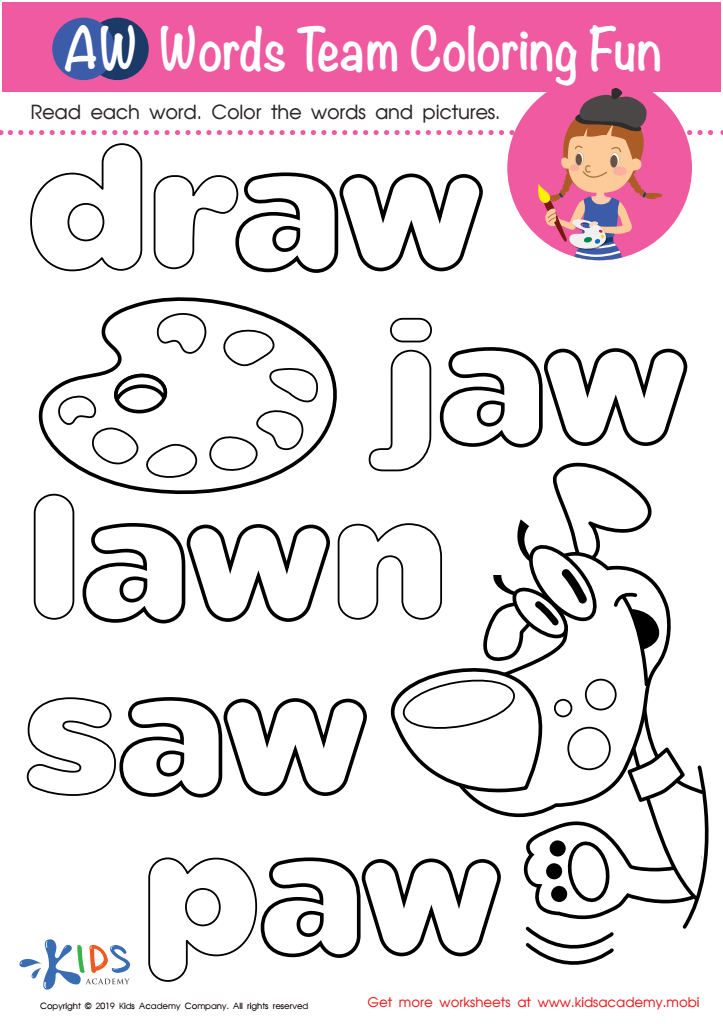
AW Words Team Coloring Fun Worksheet
Coloring words they can read is a blast for little learners! This worksheet offers emerging readers the chance to practice and gain confidence in reading words from the -aw family, while also improving fine-motor and creativity skills. Without knowing it, they'll learn about phonetic teams along the way!
Download (PDF)
 Assign to My Students
Assign to My Students
AW Words Team Coloring Fun Worksheet
Worksheet
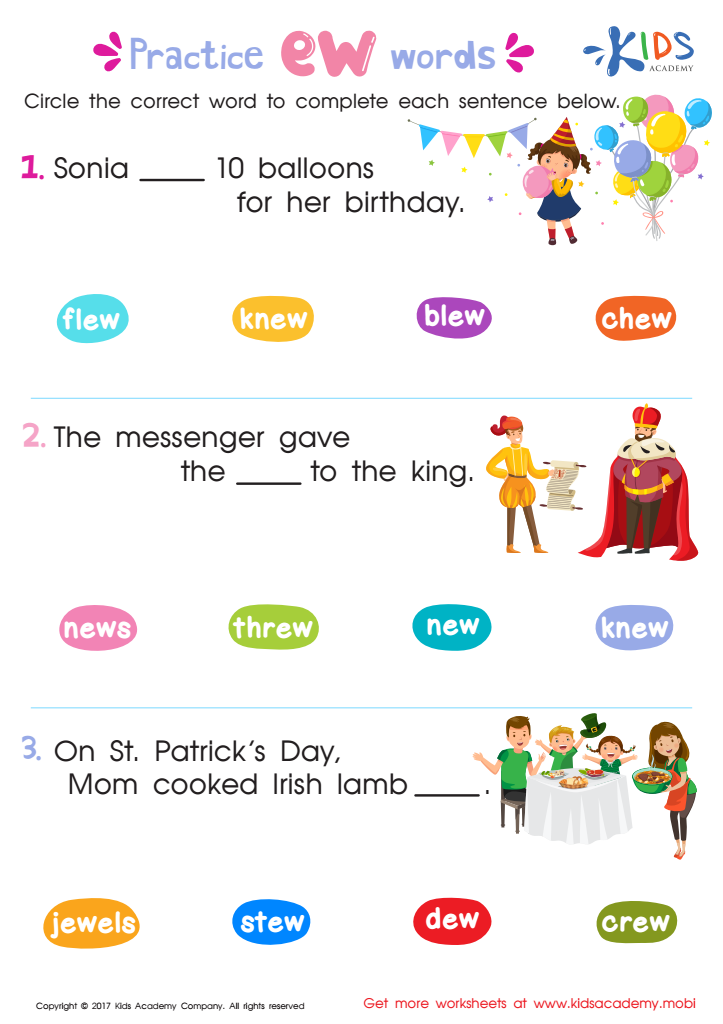
EW Words Worksheet
Practice the diphthong ew and boost your child's vocabulary with this fun ew words worksheet! Filled with illustrations, it will help your child hone their reading and spelling skills. Plus, the tricky words will make it both enjoyable and rewarding!
EW Words Worksheet
Worksheet
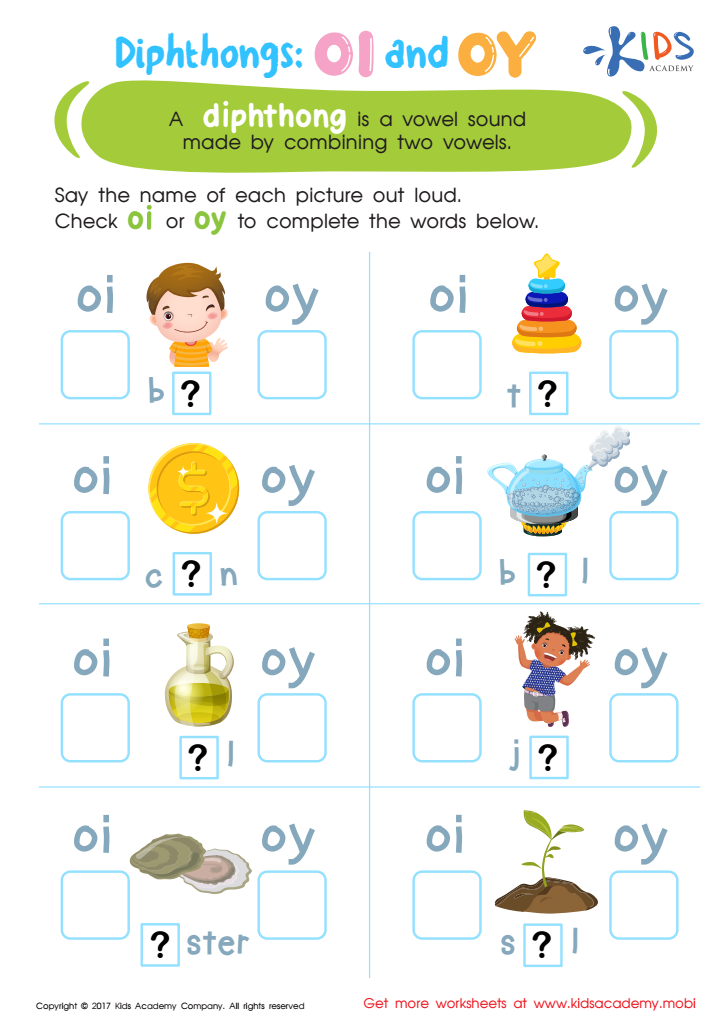
Vowel Diphthongs OI OY Worksheet
It'll help them read and spell accurately. This fun activity is a helpful way to learn tricky spellings of oi and oy diphthongs. It also aids in reading and spelling comprehension.
Vowel Diphthongs OI OY Worksheet
Worksheet
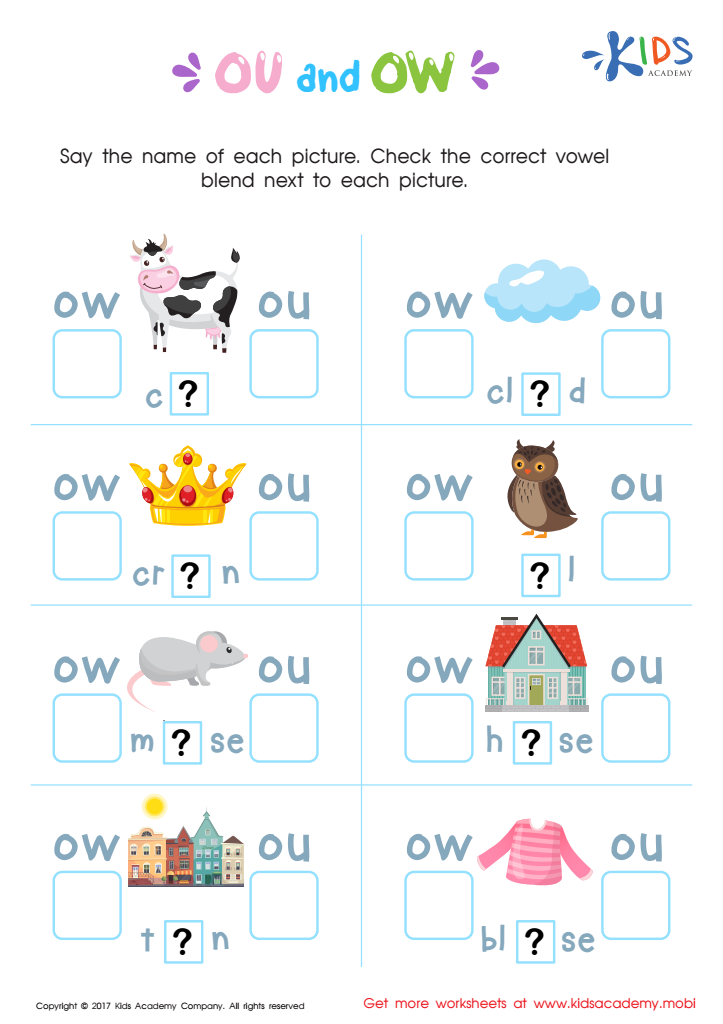
OU and OW Words Worksheet
Enhance your child's reading and spelling with this ou and ow words worksheet! Fun pictures and common words make mastering the diphthongs ou and ow easy and enjoyable.
OU and OW Words Worksheet
Worksheet
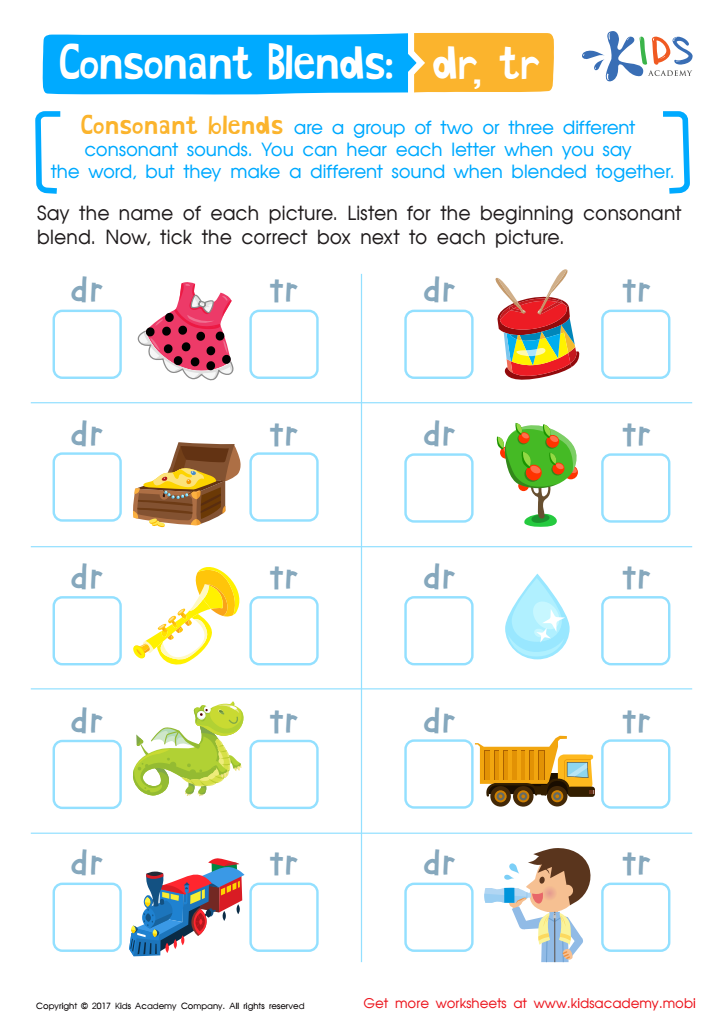
Consonant Blends: "Dr" and "Tr" Printable
Pictures of the words provide a visual cue, and sound-outs help with auditory cues.
Consonant Blends: "Dr" and "Tr" Printable
Worksheet
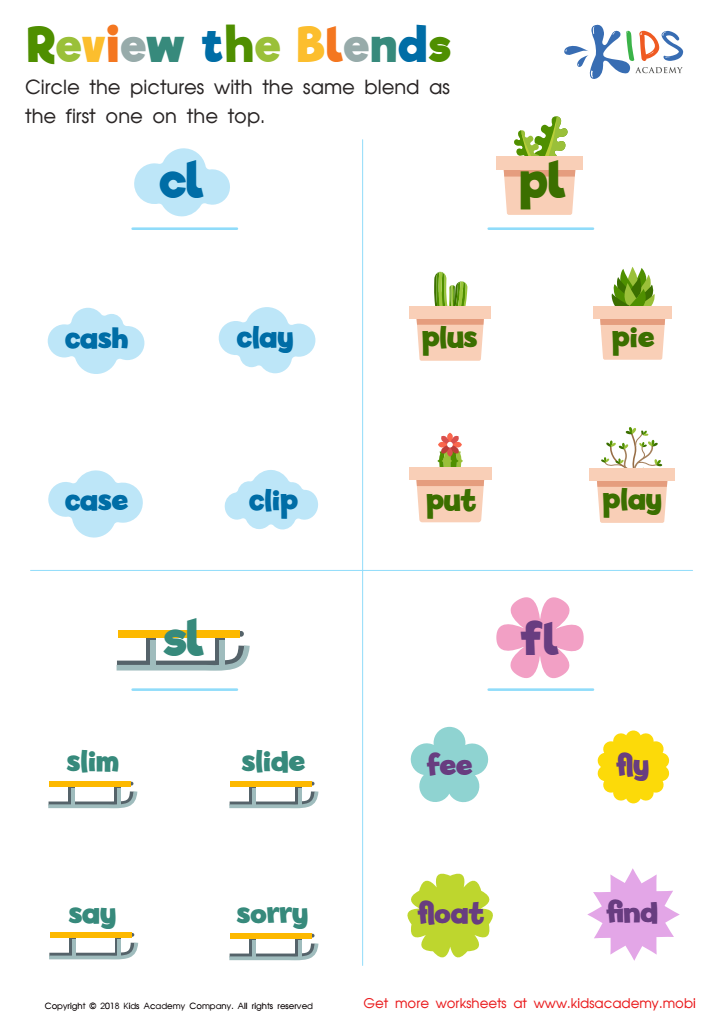
Review the Blends Worksheet
Consonant blends are two or three consonants that make a sound when pronounced together. L-blends like cl, bl, sl, fl and 3-letter blends like str, slp are common. This phonics worksheet helps early readers identify words containing two letter L-blends. Students must circle the words then read them aloud.
Review the Blends Worksheet
Worksheet
Join Kids Academy for Free
Who is primarily going to use this learning content?



Reading comprehension is a foundational skill crucial to a child's academic success and overall development. For children aged 4-9, mastering normal two-letter phonics is key to this comprehension. Phonics, the relationship between letters and sounds, empowers young learners to decode words, a skill that directly influences their ability to understand text.
When parents and teachers prioritize phonics instruction, they enable children to recognize simple word structures, enhancing their confidence and motivation to read independently. Proficient readers are better equipped to engage with texts, which fosters critical thinking and boosts vocabulary acquisition. Early mastery of phonics can also help prevent reading difficulties later on and instill a lifelong love for reading.
Moreover, a strong grasp of phonics aids in fluency, leading to improved comprehension. This gives children the ability to focus on meaning rather than struggling with basic word recognition. Collaborative efforts between parents and teachers in nurturing these skills create a supportive learning environment. Thus, focusing on normal two-letter phonics not only lays the groundwork for successful reading comprehension but also strengthens family and educational ties, ensuring children are prepared to tackle increasingly complex texts as they progress through their education.