Alphabet familiarity Normal Uppercase Letters Worksheets for Ages 4-9
4 filtered results
Difficulty Level
Grade
Age
-
From - To
Subject
Activity
Standards
Welcome to our engaging "Alphabet Familiarity Normal Uppercase Letters Worksheets" designed specifically for children ages 4-9! These worksheets provide a fun and interactive approach to learning uppercase letters, helping young learners develop their alphabet recognition skills. Through a variety of activities, children will practice identifying, tracing, and writing uppercase letters, enhancing their fine motor skills and boosting their confidence in reading and writing. Perfect for at-home learning or classroom use, our worksheets not only make educational experiences enjoyable but also encourage a strong foundation in literacy. Explore our collection today and watch your child's letter familiarity grow!
Favorites
With answer key
Interactive
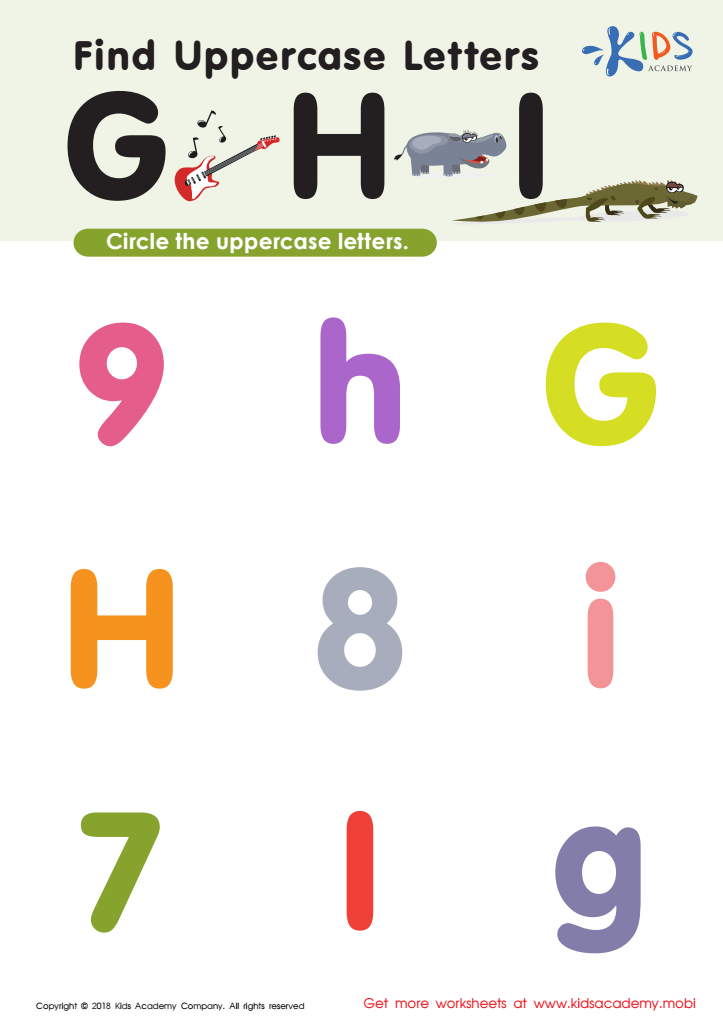
Find Uppercase Letters G, H, and I Worksheet
Find G, H, and I in uppercase with this downloadable worksheet! Numbers are included to challenge your kindergartener's letter recognition skills. Plus, practice G, H, and I sounds using the cute graphics. Perfect for learning letter case recognition!
 Assign to My Students
Find Uppercase Letters G, H, and I Worksheet
Worksheet
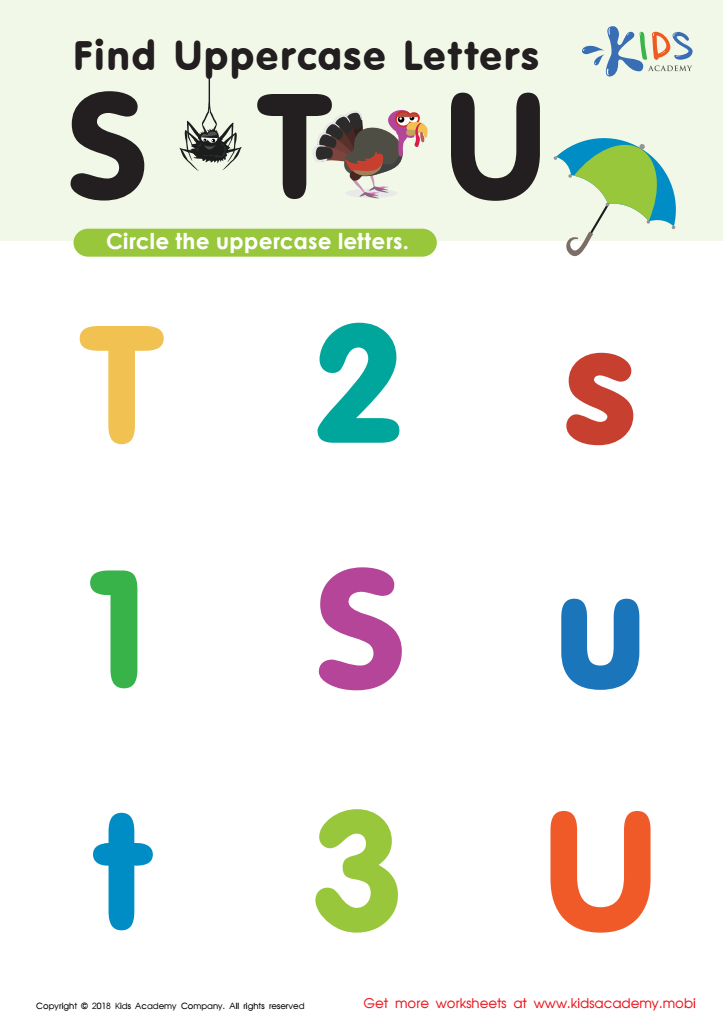
Find Uppercase Letters Worksheet
What level is your kid at now? Can they tell the difference between small and uppercase letters? Ask them to name words beginning with S, T and U, then help them find and circle the uppercase letters S, T and U in a mix of small letters, numbers and uppercase letters.
Find Uppercase Letters Worksheet
Worksheet
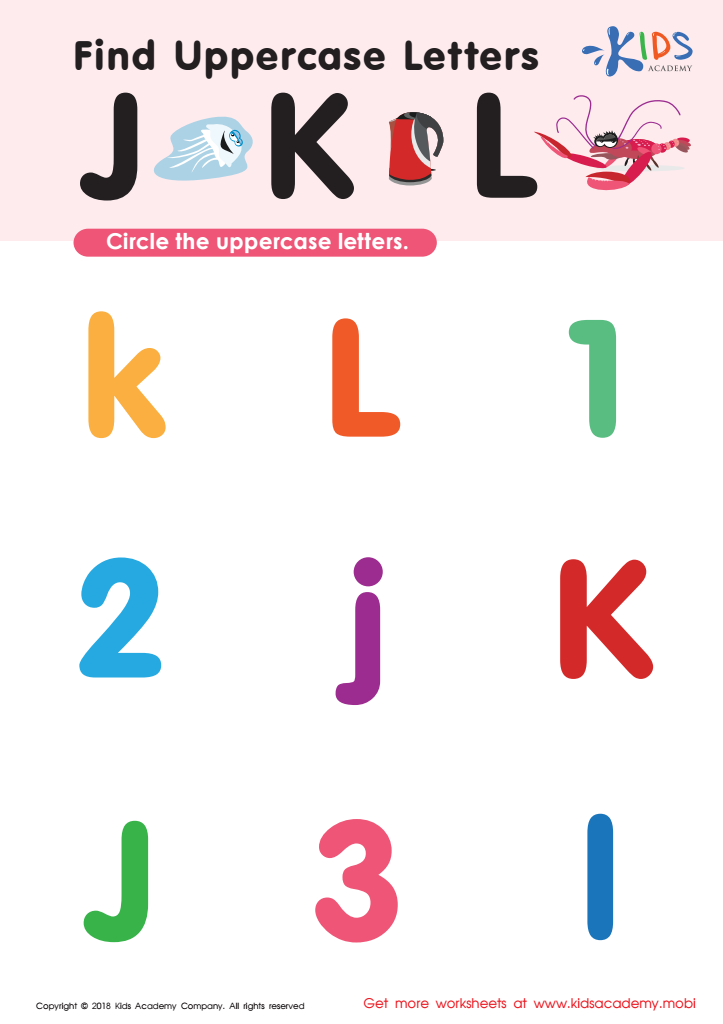
Find Uppercase Letters J, K, and L Worksheet
Search for the uppercase letters J, K, and L in this fun worksheet! Help your child identify the starting sound of each picture, then look for the letters. Keep an eye out for numbers that look like letters. Swim with the jellyfish and solve this delightful puzzle!
Find Uppercase Letters J, K, and L Worksheet
Worksheet
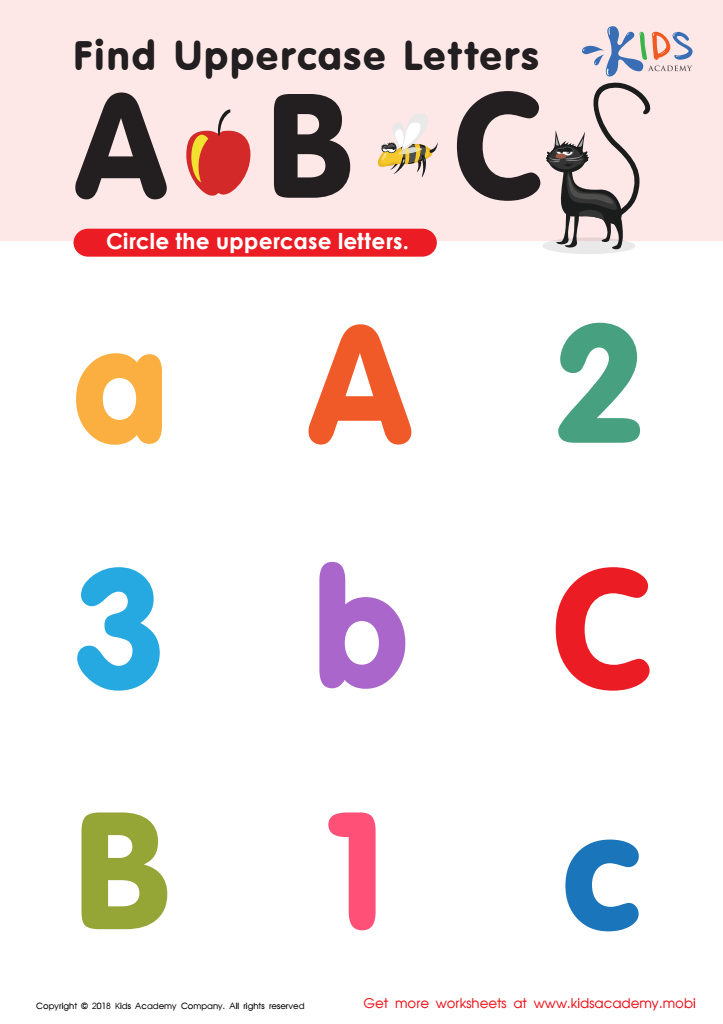
Find Uppercase Letters A, B, and C Worksheet
Check out this PDF worksheet and spot all the capital letters! Arranged as a puzzle, this exercise will test little learners to read and recognize uppercase letters and tell the difference between letters and numbers. To help them, use the pictures on top of the page to practice the sounds A, B and C make! 80 words.
Find Uppercase Letters A, B, and C Worksheet
Worksheet
Join Kids Academy for Free
Who is primarily going to use this learning content?








Parents and teachers should prioritize alphabet familiarity in normal uppercase letters for children aged 4-9 because it lays the groundwork for literacy and cognitive development. During these formative years, children are naturally curious and eager to learn, making it an ideal time to introduce the building blocks of reading and writing. Mastery of uppercase letters helps children recognize and differentiate between letters, which is essential for decoding words and understanding language structure.
Familiarity with uppercase letters aids in handwriting development, enabling children to form letters with the correct proportions and shapes. This skill enhances their ability to write legibly and express themselves effectively. Moreover, many educational texts and resources employ uppercase letters prominently, especially in early childhood materials, such as storybooks and educational worksheets.
Encouraging mastery of uppercase letters also boosts children's confidence. As they successfully recognize and use these letters, they develop a sense of achievement that motivates further learning. Ultimately, familiarity with uppercase letters is not just about reading and writing; it's a vital part of cultivating a lifelong love for learning and communication. By supporting this aspect of literacy, parents and teachers can significantly contribute to their children's academic foundation.