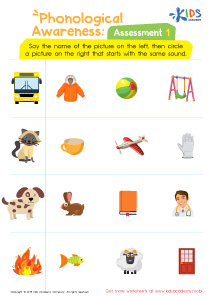
Phonics recognition Normal Vowels Worksheets for Ages 4-9
3 filtered results
Difficulty Level
Grade
Age
-
From - To
Subject
Activity
Standards
Discover our engaging Phonics Recognition Normal Vowels Worksheets, designed for children ages 4-9! These worksheets provide an interactive way for young learners to explore vowel sounds, enhancing their reading and writing skills. Each activity is crafted to reinforce phonetic awareness, allowing kids to identify and practice normal vowels in fun and creative ways. Perfect for at-home learning or classroom use, these worksheets combine unique visuals and enjoyable exercises to captivate students' attention. Watch your child gain confidence in their phonics skills as they master normal vowels with our thoughtfully designed resources. Start building a strong foundation in literacy today!
Favorites
With answer key
Interactive
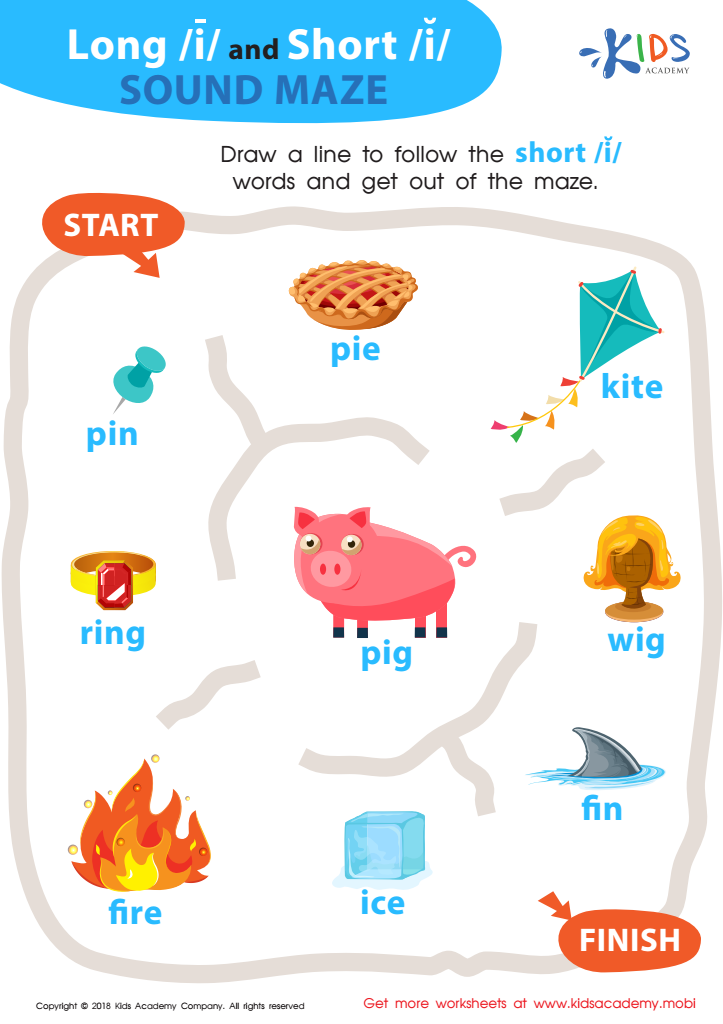
Reading: Long I and Short I Sound Maze Worksheet
Question your students if the worksheet is entertaining. They may respond negatively! Nonetheless, this activity will bring satisfaction while learning the distinction between a long and short I sound. Students read the words in the maze and only follow the words with the short I sound to finish the exercise. Grasping the difference between long and short vowels is demanding, but this worksheet helps students understand this reading skill.
 Assign to My Students
Reading: Long I and Short I Sound Maze Worksheet
Worksheet
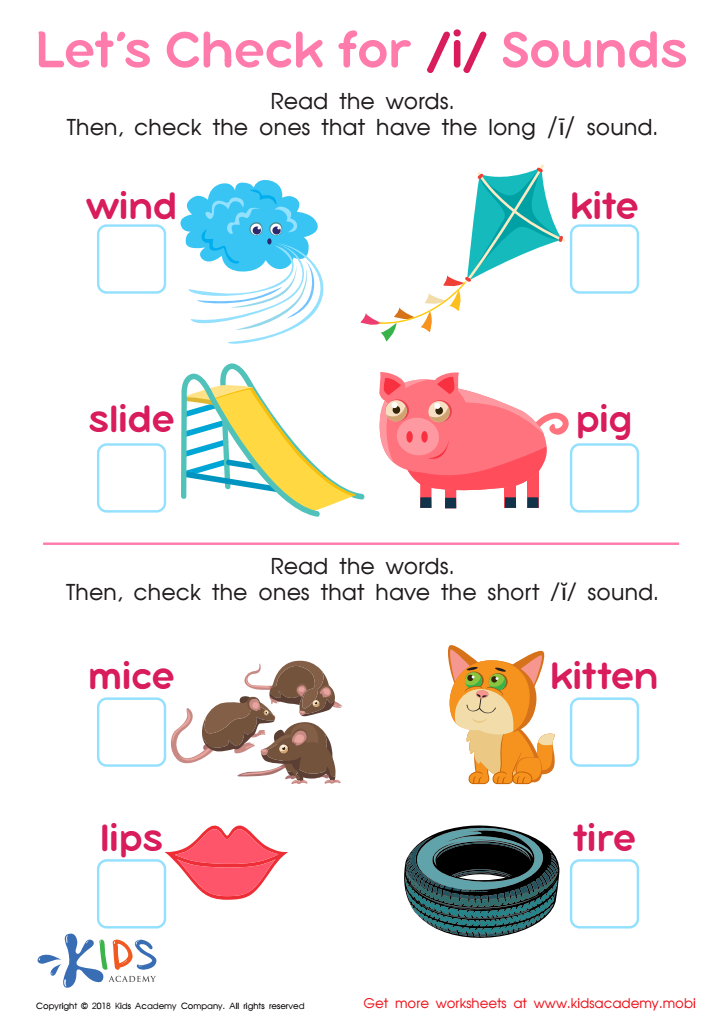
Let's Check for «i» Sounds Worksheet
This fun worksheet with pictures boosts phonics skills - differentiating between long «ī» and short «i» sounds in 1- and 2-syllable words. Kids use picture clues to read words, then check off the correct ones. It's a great way for new readers to practice early reading skills and find success on their own.
Let's Check for «i» Sounds Worksheet
Worksheet
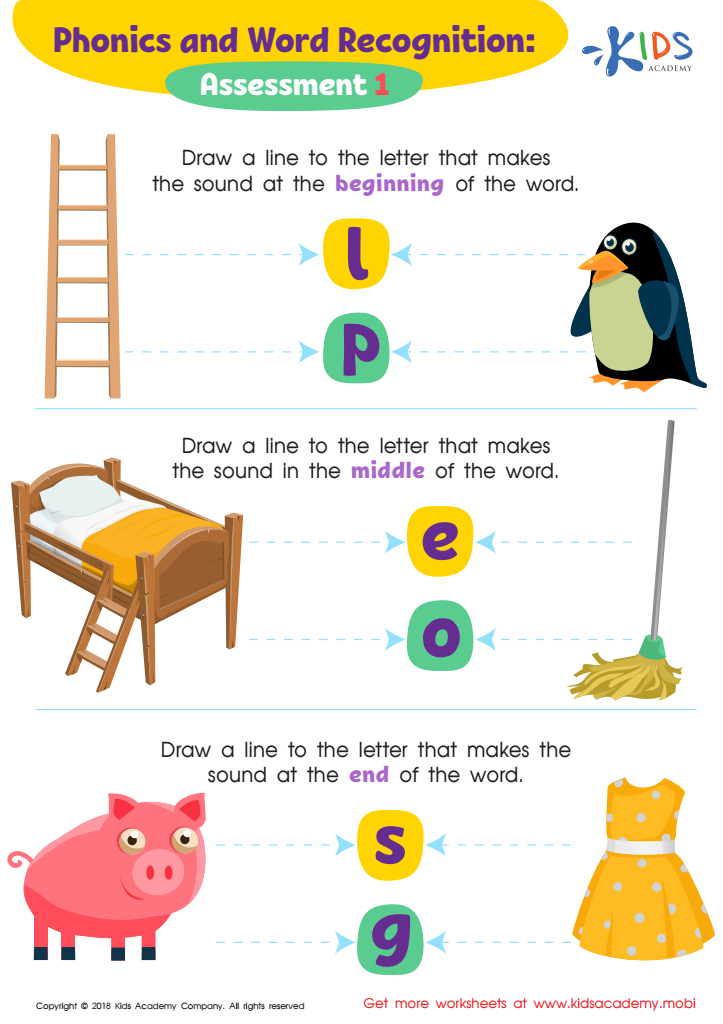
Phonics and Word Recognition: Assessment 1 ELA Worksheet
This fun worksheet tests your child's sound recognition skills for each part of a word. Ask your child to name each image and trace the line to match it with the corresponding letter. Listen for beginning sounds on 1st, middle sounds on 2nd, and ending sounds on 3rd. Encourage learning with this colorful and interactive activity!
Phonics and Word Recognition: Assessment 1 ELA Worksheet
Worksheet
Join Kids Academy for Free
Who is primarily going to use this learning content?





Phonics recognition of normal vowels is crucial for children aged 4-9, as it lays the foundational skills for effective reading and language development. Vowels, being integral to word formation, help children understand how letters correspond to sounds in spoken language. Mastering vowel recognition enables students to decode simple words, paving the way for reading fluency and comprehension.
Parents and teachers should prioritize phonics recognition because it fosters confidence in young learners. When children can accurately identify and articulate vowel sounds, they feel empowered to read aloud and participate in discussions, enhancing their communication skills. This process encourages a love for reading, which is essential for academic success across subjects.
Moreover, strong phonics skills contribute to better spelling and writing abilities, enriching children’s overall literacy development. Effective early intervention can also help identify potential learning difficulties, allowing for timely support. By emphasizing the importance of vowel recognition, parents and teachers can create interactive and engaging learning experiences that foster curiosity and motivation. Early phonics instruction builds not just literacy skills, but also critical thinking and problem-solving abilities, setting the stage for lifelong learning and achievement.