Spelling practice Normal Vowels Worksheets for Ages 4-9 - Page 2
30 filtered results
-
From - To
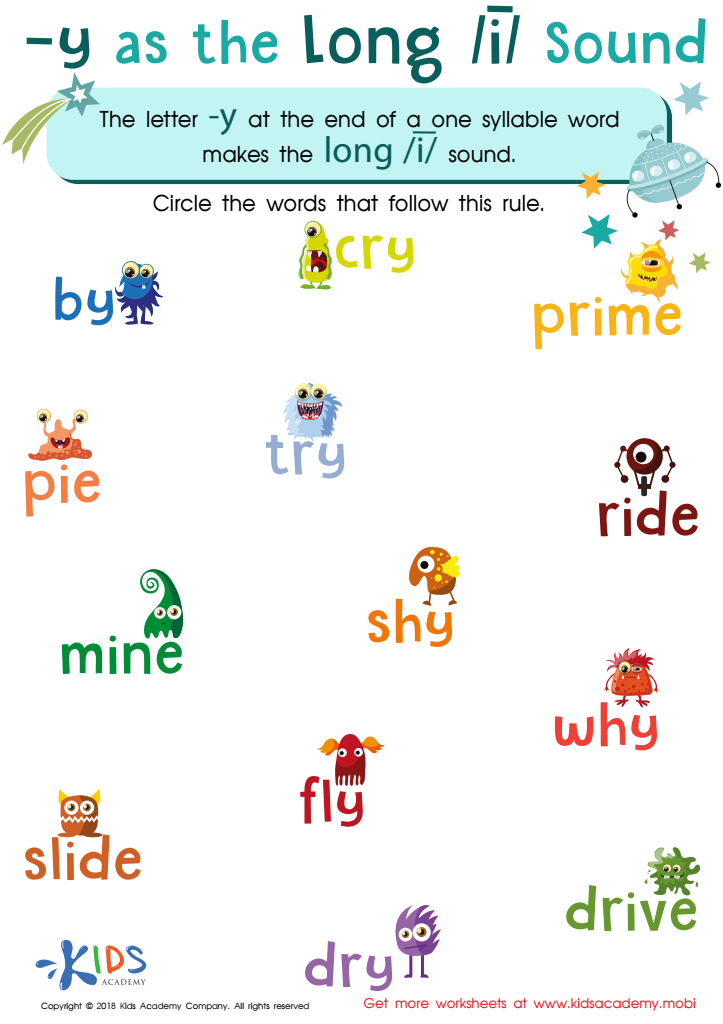
Reading: Y as Long I Worksheet
 Assign to My Students
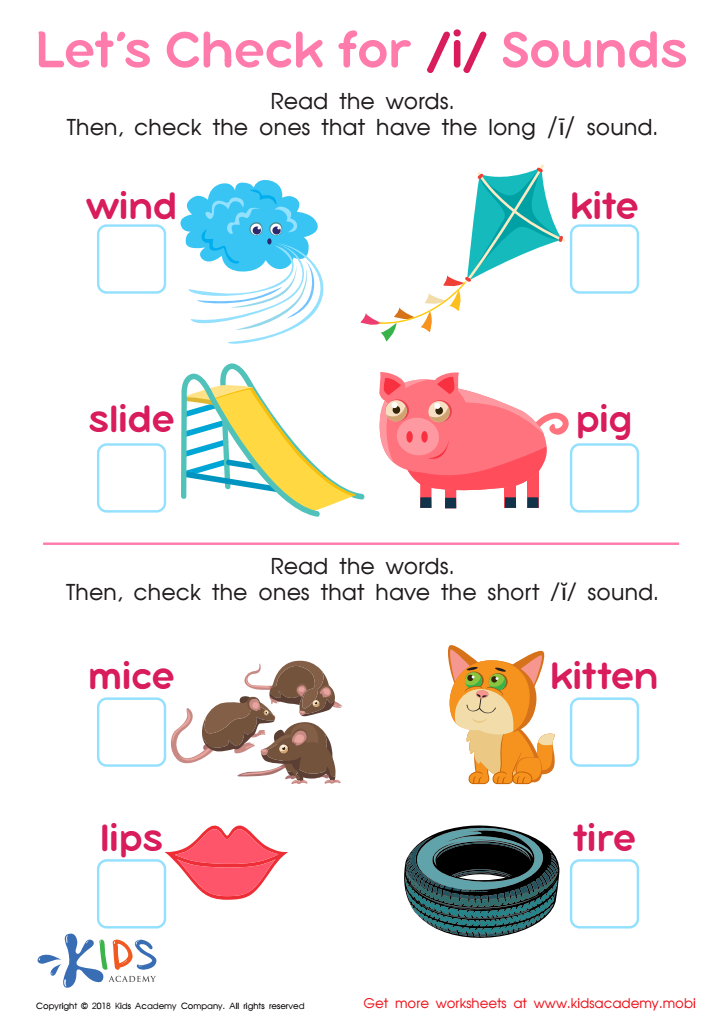
Let's Check for «i» Sounds Worksheet
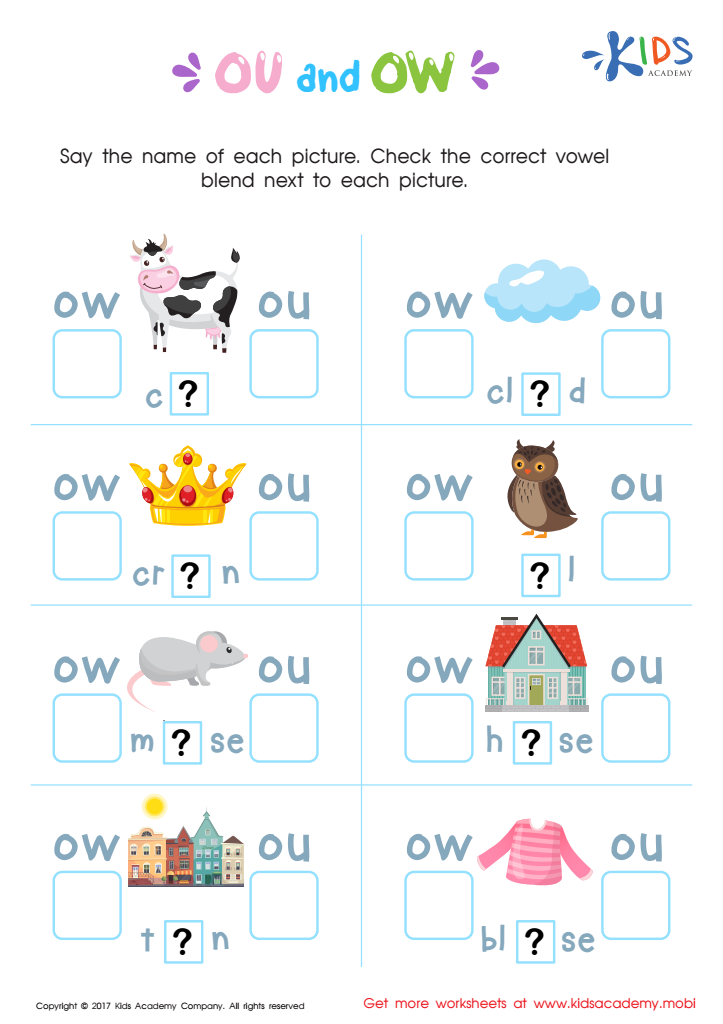
OU and OW Words Worksheet
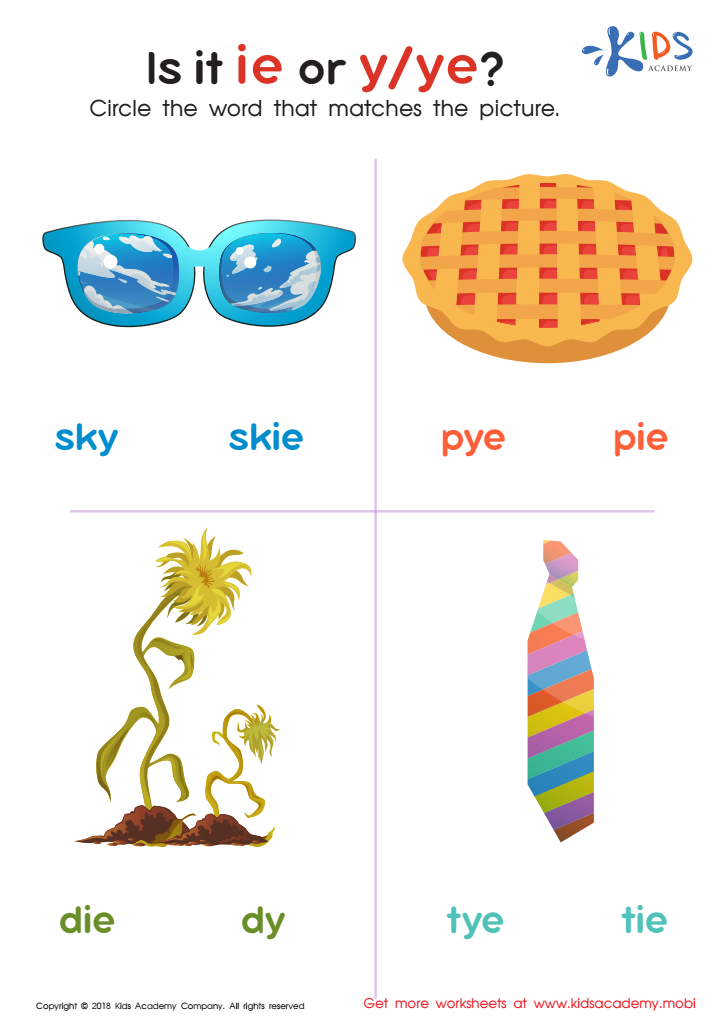
Is It IE or Y/Ye? Worksheet
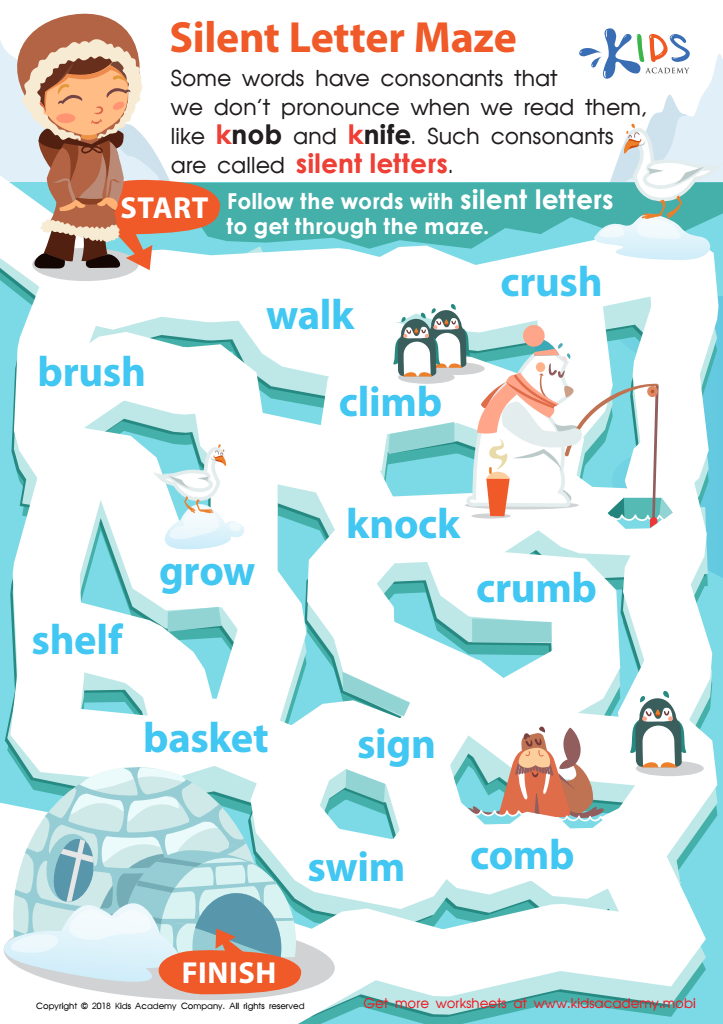
Silent Letter Maze Worksheet
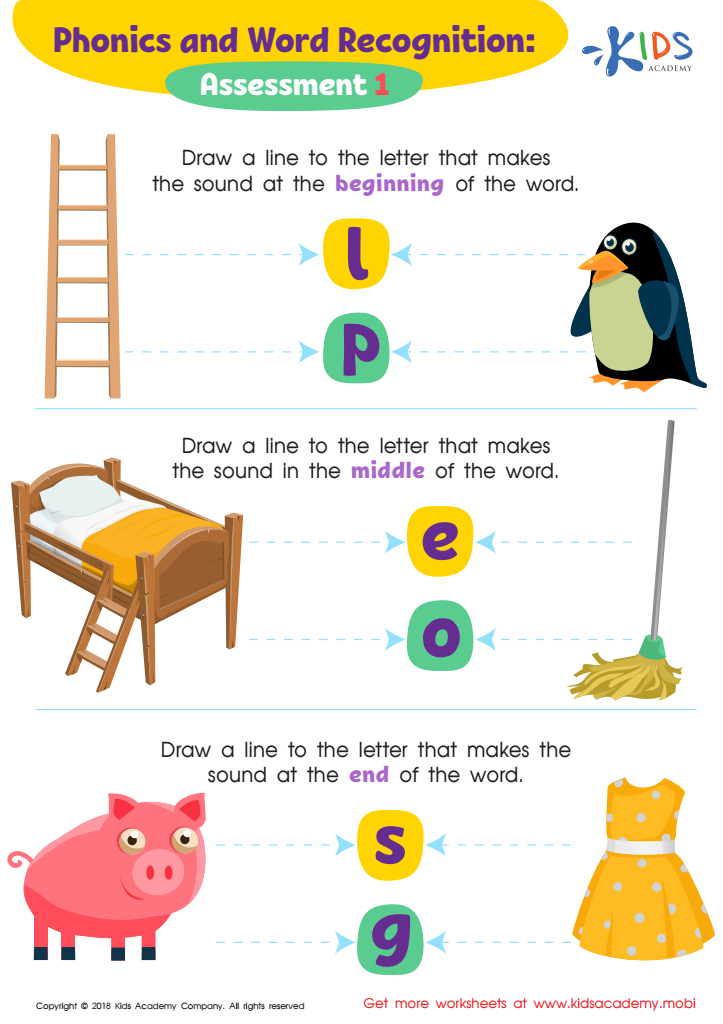
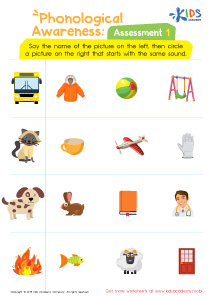
Phonics and Word Recognition: Assessment 1 ELA Worksheet





Spelling practice, particularly focusing on normal vowels, is crucial for children ages 4-9 as it lays the foundation for their literacy development. At this age, children are developing their phonemic awareness—the ability to hear, identify, and manipulate sounds in words—an essential skill for reading and writing. By practicing normal vowels, students learn to recognize and use these critical sounds, which in turn helps them decode words more efficiently.
Effective spelling practices enhance vocabulary, comprehension, and writing skills, enabling children to express their ideas clearly. Moreover, consistent engagement in spelling activities can build confidence in young learners, motivating them to participate actively in reading and language-related experiences.
For teachers and parents, encouraging spelling practice also fosters a love for language and learning. It creates opportunities for discussions about words and their meanings, extending beyond mere rote memorization. Incorporating fun and interactive spelling exercises can make learning enjoyable, which is essential at this impressionable age. Ultimately, prioritizing spelling practice is not just about mastering a skill; it plays a pivotal role in shaping a child’s overall academic journey.