Geography skills Normal Worksheets for Ages 4-9
3 filtered results
-
From - To
Explore the fascinating world of geography with our Normal Worksheets tailored for kids ages 4-9. Designed to develop essential geographical skills, these engaging worksheets help young learners explore maps, understand directions, discover continents, and recognize country flags. Ideal for both classroom and home use, our worksheets blend fun activities with educational content, ensuring kids build a strong foundation in geography. Encourage your child's curiosity about the world with our printable, easy-to-use worksheets that make learning geography an adventure. Equip your little explorers with the knowledge they need to become confident and savvy global citizens. Get started today!
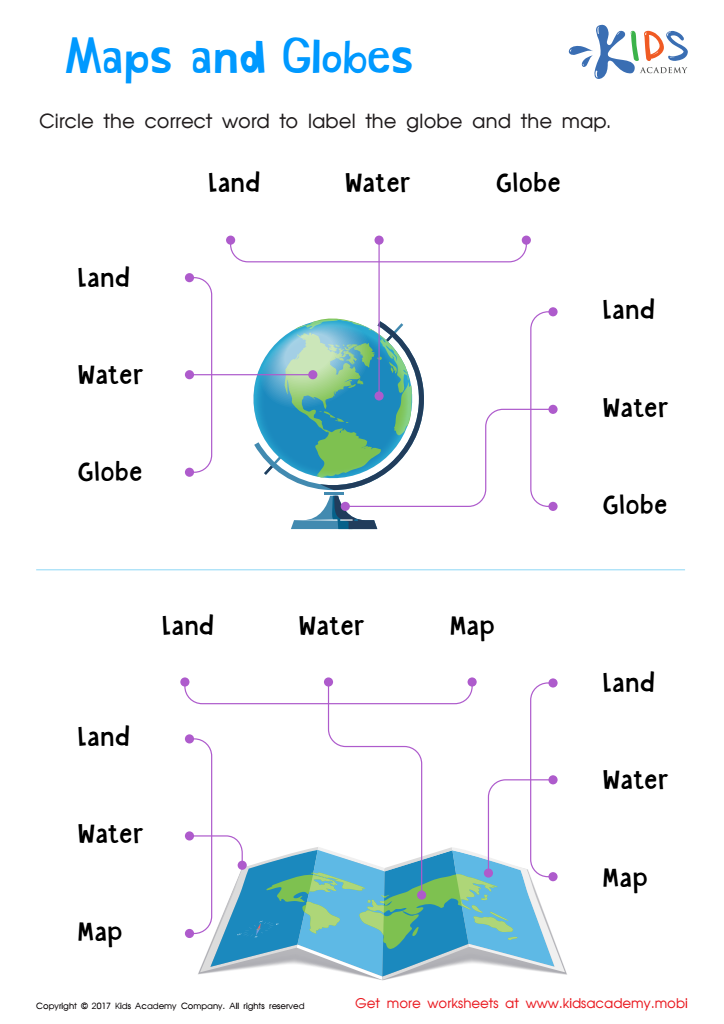
 Assign to My Students
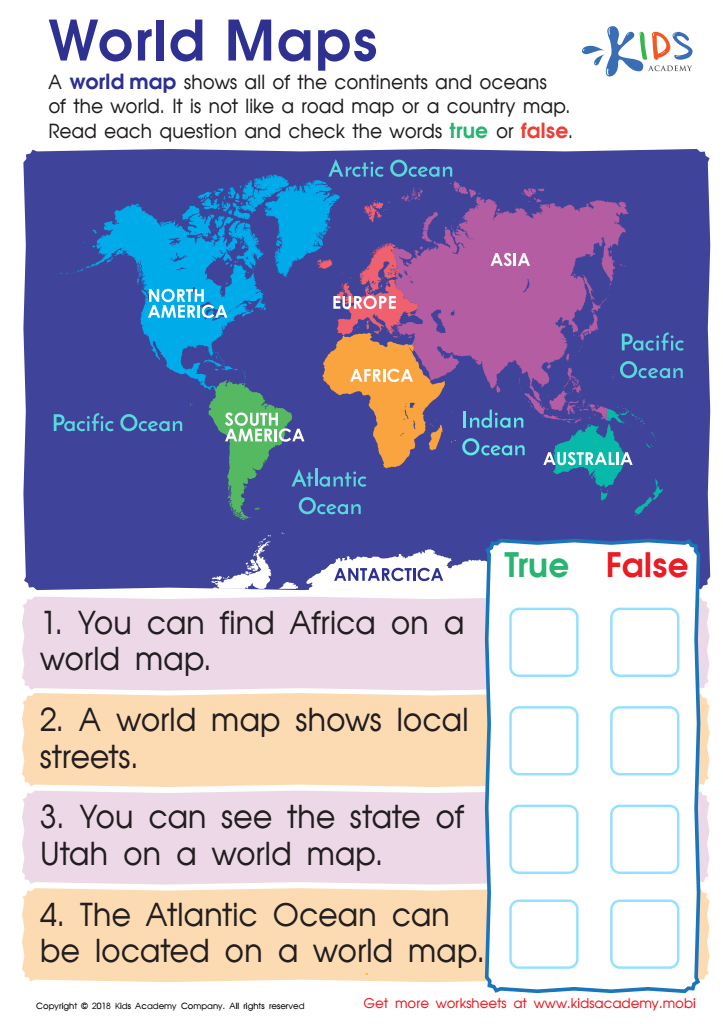
World Maps Worksheet
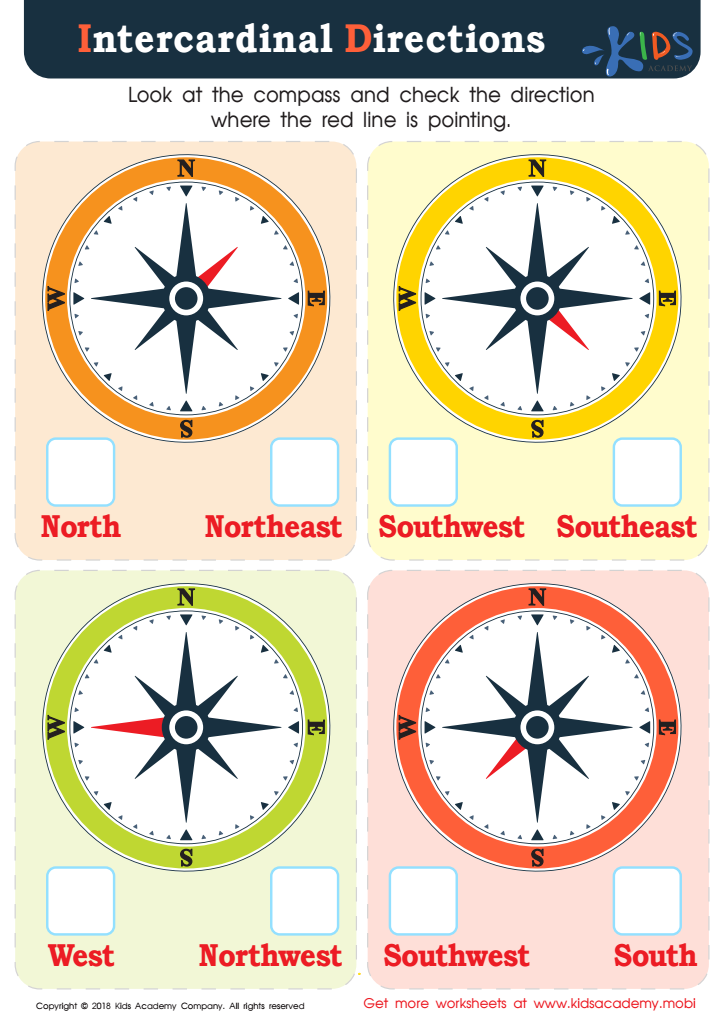
Intercardinal Directions Worksheet




Geography skills are crucial for young children's development and understanding of the world around them. For ages 4-9, these skills help foster a sense of curiosity and awareness about different cultures, landscapes, and global issues. Parents and teachers should prioritize geography because it lays the foundation for lifelong learning and exploration.
Firstly, early geography skills enhance spatial thinking, which is essential for problem-solving and understanding environmental relationships. Recognizing simple maps, directions, and locations helps children grasp complex concepts later in life, such as population distribution, weather patterns, and global connectivity.
Secondly, geography fosters cultural awareness and empathy. By learning about various countries, traditions, and ways of life, children develop an appreciation for diversity and a global perspective. This can reduce biases and encourage respect for different cultures and viewpoints.
Additionally, studying geography at a young age encourages critical thinking and environmental stewardship. Understanding how human activities impact the environment can inspire children to take care of their surroundings and become responsible global citizens.
Incorporating geography into early education can be engaging and fun through interactive activities like map-making, storytelling, and outdoor explorations. By supporting geography skills, parents and teachers equip children with the tools they need to navigate and appreciate the complex world they live in.








