Rhyme recognition Normal Worksheets for Ages 4-9
3 filtered results
-
From - To
Enhance your child's phonemic awareness with our Rhyme Recognition Normal Worksheets, designed for ages 4-9! These engaging and interactive worksheets help young learners develop crucial listening and reading skills through fun rhyme exercises. Students will delight in identifying rhyming words, completing sentences, and participating in creative activities that make learning enjoyable. Our carefully crafted materials align with educational standards, ensuring that your child makes meaningful progress while having fun. Perfect for at-home learning or classroom use, these worksheets foster a love for language and reading. Discover the joy of rhymes and watch your child's confidence blossom with every page!
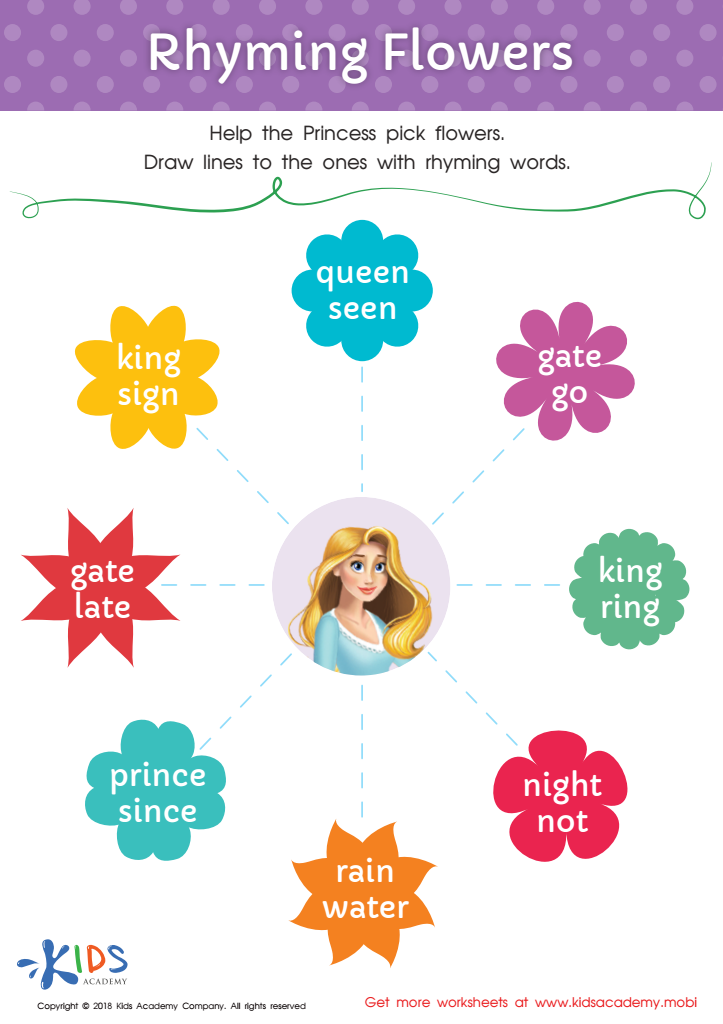
Rhyming Flowers Worksheet
 Assign to My Students
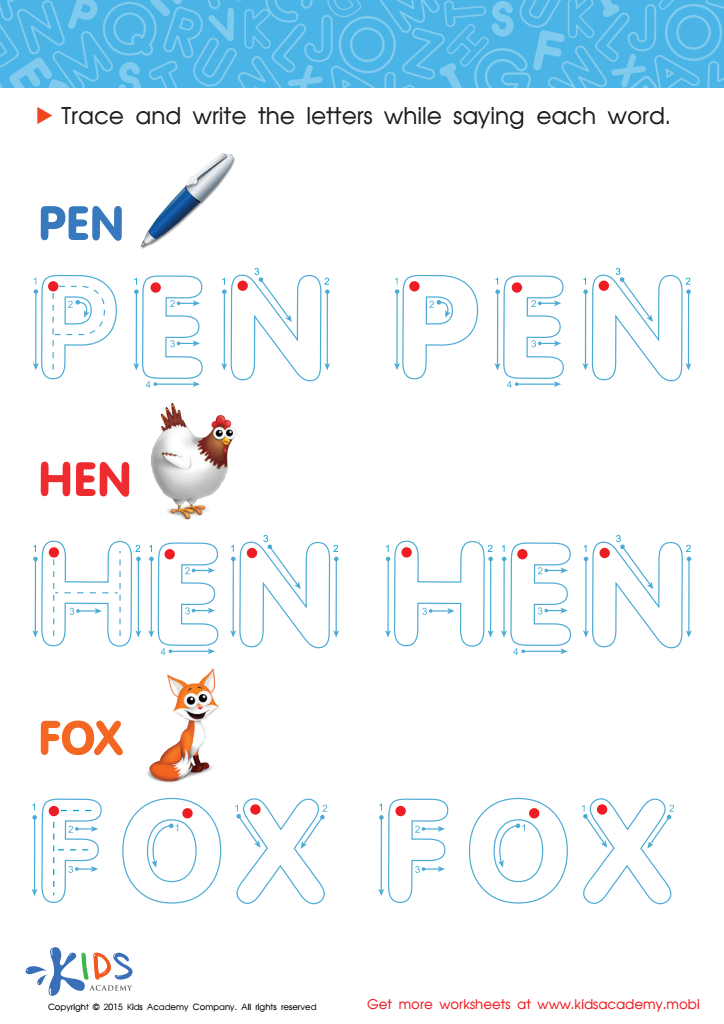
A Pen, a Hen and a Fox Spelling Worksheet
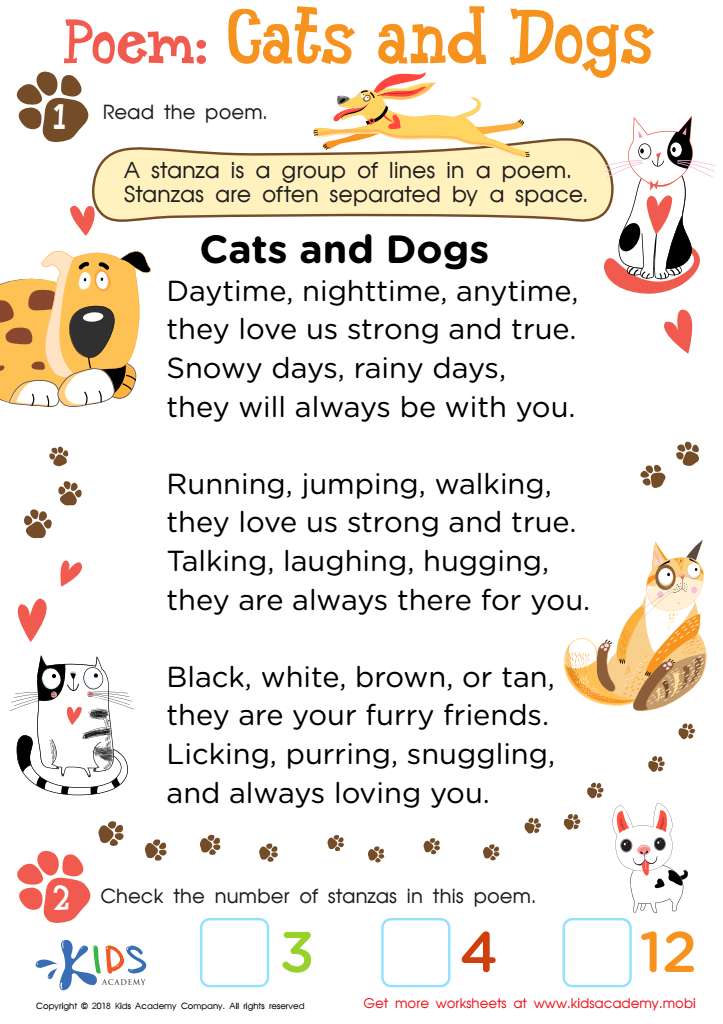
Poem: Cats and Dogs Worksheet







Rhyme recognition is a crucial aspect of early literacy development for children aged 4-9 and should be a significant focus for parents and teachers. At this stage, kids are developing critical phonemic awareness—the ability to hear and manipulate sounds in language—which lays the foundation for reading and writing skills. Recognizing rhymes helps children to identify patterns in sounds, making it easier to decode new words and understand text structure.
Moreover, engaging in rhyming activities enhances vocabulary and comprehension skills. When children learn to recognize and produce rhymes, they become more inclined to experiment with language, fostering creativity and confident verbal expression. Rhyme recognition also supports memory skills, as children often remember words better when they rhyme.
Additionally, rhyming introduces a sense of rhythm and musicality in language, making reading more enjoyable and accessible for young learners. Songs, poems, and stories rich in rhyme can spark interest and motivation to read, ultimately driving literacy engagement.
In summary, encouraging rhyme recognition is essential for shaping strong readers. Parents and teachers can promote this skill through playful activities, games, and stories, paving the way for a confident and instinctive approach to literacy.








