Spelling skills improvement Normal Worksheets for Ages 4-9
3 filtered results
-
From - To
Enhance your child's spelling skills with our engaging Normal Worksheets, designed specifically for ages 4-9. These worksheets provide a fun and interactive way for young learners to practice their spelling through a variety of activities, including word searches, fill-in-the-blanks, and coloring exercises. Each worksheet is crafted to promote phonetic understanding and vocabulary expansion, laying a solid foundation for future reading and writing success. Tailored to diverse skill levels, our resources support gradual learning progression, ensuring your child gains confidence in their spelling abilities. Explore our collection and watch your child excel in their literacy journey today!
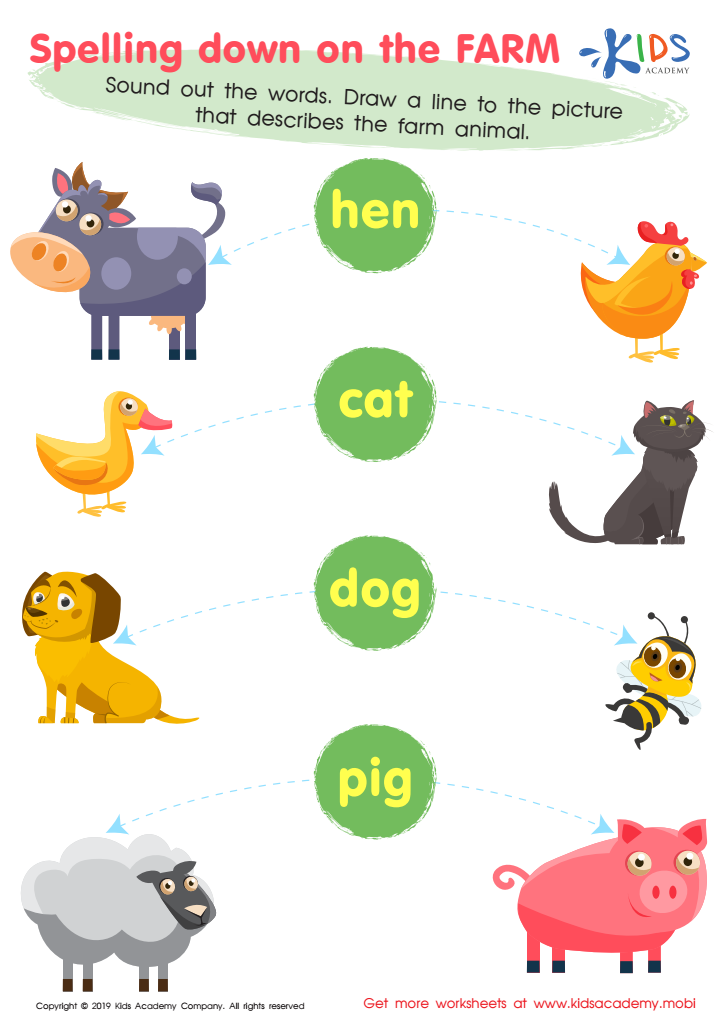
Spelling Down on the Farm Worksheet
 Assign to My Students
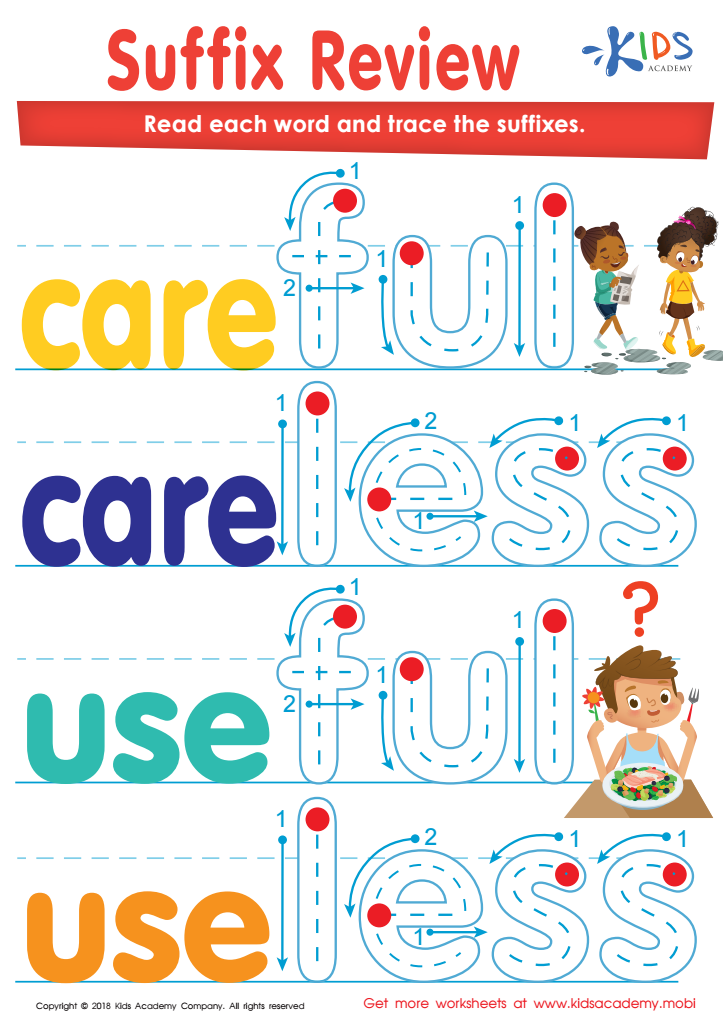
Suffix Review Worksheet
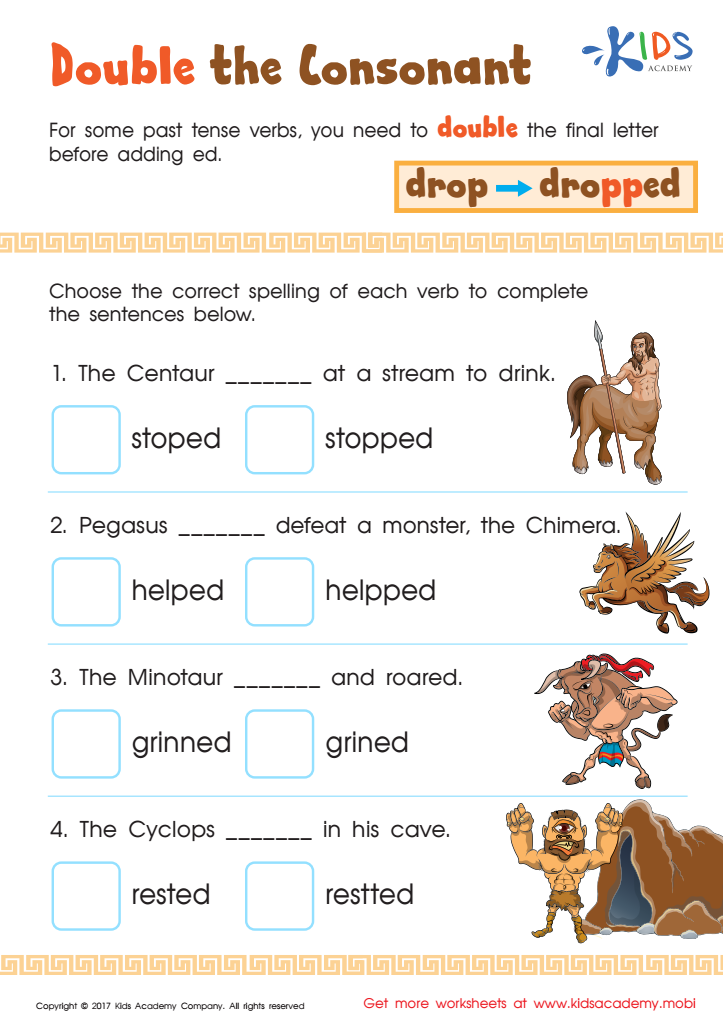
Double Consonant Spelling Worksheet








Spelling skills are crucial for children aged 4-9 as they lay the foundation for effective communication and literacy development. At this stage, children are typically learning to read and write, making it essential for them to grasp the building blocks of words. Strong spelling abilities enhance their vocabulary and fluency, enabling them to express their thoughts clearly and confidently.
Furthermore, spelling proficiency boosts self-esteem. When children can spell correctly, they feel a sense of accomplishment, encouraging them to take risks in their writing. This confidence can lead to improved participation in classroom activities and discussions.
Furthermore, learning spelling rules helps children recognize patterns in words, which assists in reading comprehension. It bridges the gap between phonetics and writing, allowing them to predict how to write new words based on their sound structure.
Additionally, in an increasingly digital world, where written communication through texts and emails predominates, strong spelling skills remain critically important. Poor spelling can lead to miscommunication, misunderstandings, and even negative perceptions in social or academic contexts.
Overall, investing in spelling skills during these formative years provides children with essential tools for academic success and lifelong learning. Parents and educators should prioritize this vital aspect of literacy development.








